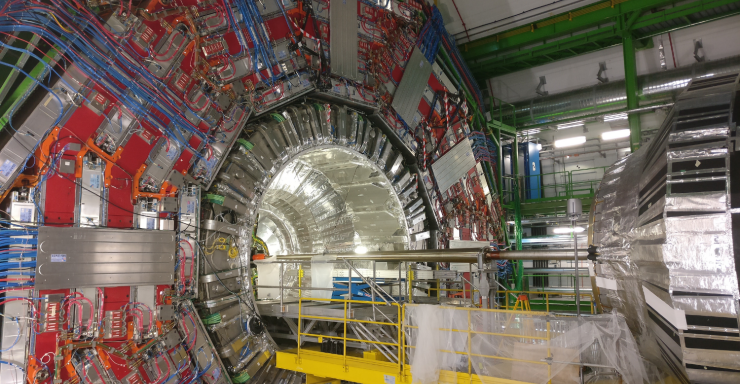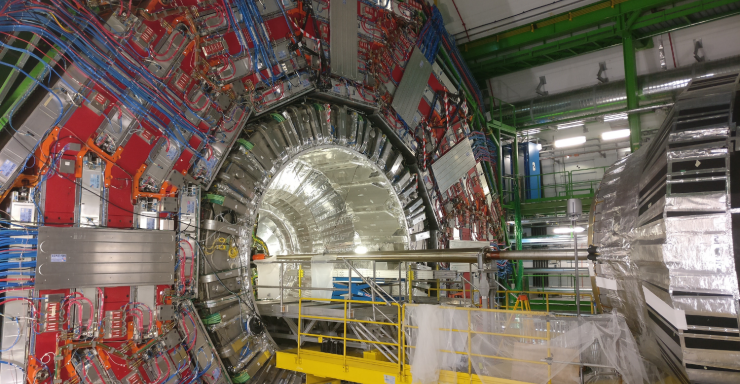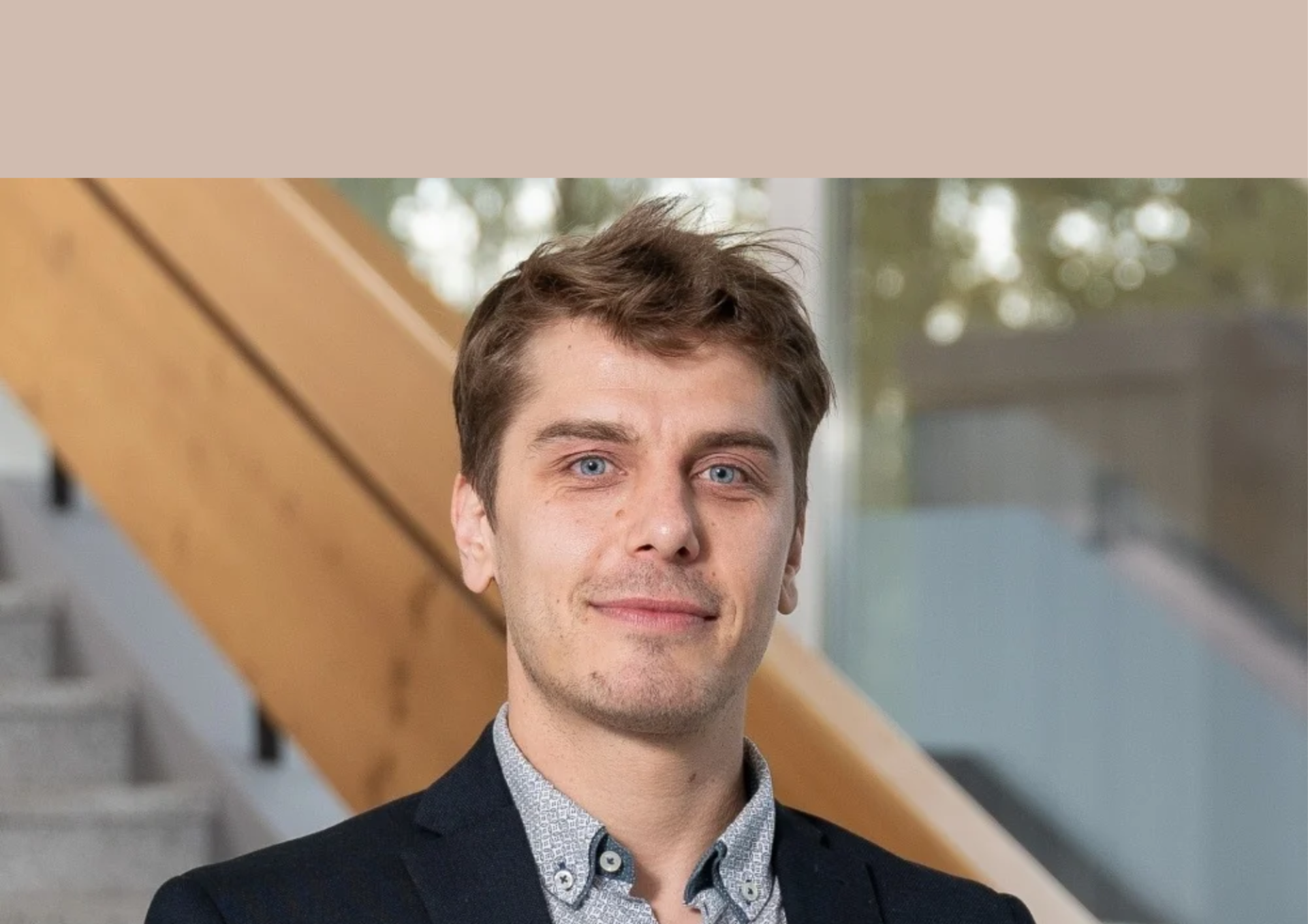
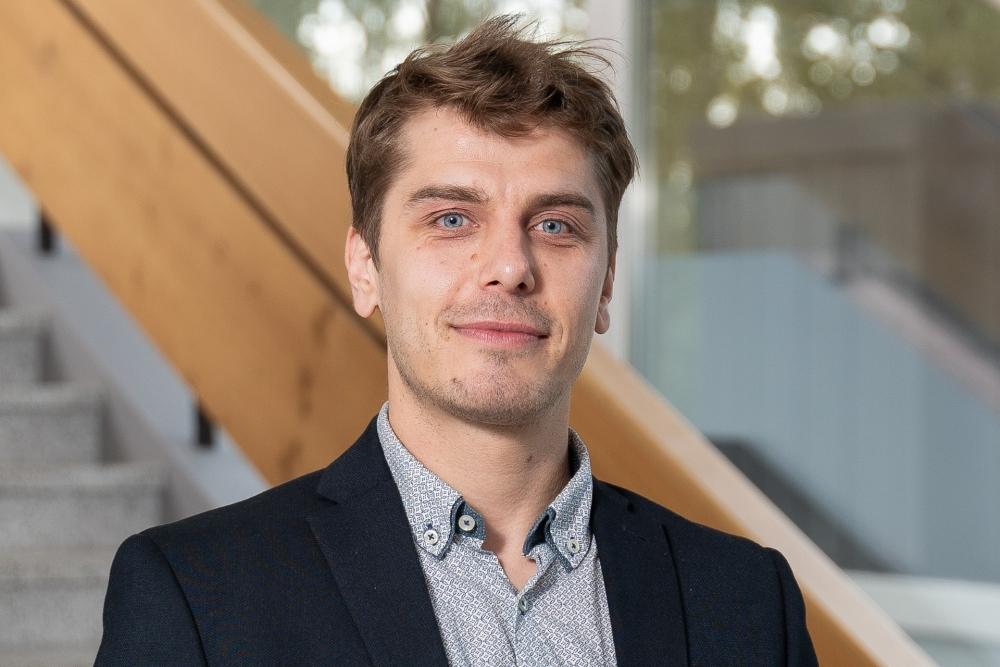
Latvian scientists have opportunities to participate in world-class research and achieve internationally significant results. However, Latvia's scientific potential is still not being fully utilised. Why is it important to invest in science, even if tangible results are not obtained immediately? What does academic freedom mean to a scientist, and can it be threatened by dependence on state funding? LV portāls discussed these and other questions with KĀRLIS DREIMANIS, Director of the Institute of Particle Physics and Accelerator Technologies at Riga Technical University, Associate Professor, Leading Researcher, high-energy particle physicist and Head of the Latvian Group at the European Organization for Nuclear Research (CERN).
From your perspective, how are science and scientists doing in Latvia at present?
It is difficult for me to compare the current situation with the past, as I spent a lot of time outside Latvia back then. However, in the current situation, I can say that science in Latvia is doing well, but it could be doing even better.
The main reason why we are not currently reaching our full potential is that we have not learned to invest sufficiently in science. In Latvia, it is characteristic of all fields, not just science, to start investing cautiously, with small amounts, and then, if successful, to invest more. However, there are fields, including science, where, if you do not invest enough, you might as well not invest at all. In other words, there is a financial threshold for survival, but that is not enough to thrive.
Although Latvia has only 1.8 million people, the proportion of geniuses living here is the same as anywhere else in the world. This means that we have good human capital, but we need to find ways to make use of this potential.
To sum up: science is doing well, but it should be doing even better if we want to use it as a driver of the economy in the future.
In your opinion, does the state fail to sufficiently recognise the importance of science?
The Ministry of Education and Science is very well aware of the value of science, but the same level of support is not felt from other ministries.
The problem also lies in the fact that we view science and innovation almost as two different concepts. As if we could invest either in science or in innovation. However, in reality, science is what we can invest in and what can give rise to innovations. Innovation itself is just a buzzword.
We cannot give two brilliant people money and tell them to innovate. However, we can give these two brilliant people money, explain what our problem is, and ask them to solve it. It is precisely in the process of solving a problem that innovations can emerge.
Science is a large-scale problem-solving process. Consequently, investing in scientific activity often means investing almost directly in innovation as well.
Perhaps this sounds a little critical, but I get the impression that in Latvia, there is often a tendency to pursue the word “innovation” without fully understanding where innovation actually comes from.
Concerns have been raised about restrictions on academic freedom and political interference in science. What does freedom mean in a scientist's work, and how do you assess the current level of freedom scientists have in their professional activities?
Serious scientific activity, provided that it is conducted with integrity, cannot take place without absolute academic freedom.
As soon as there is any kind of interference, it will affect the results. Therefore, if we want to obtain results that are as close to reality as possible, any interference becomes a problem.
In my opinion, academic freedom in Europe is currently at a very high level, especially compared to other regions of the world. Even in places where we have so far taken academic freedom for granted, such as the USA, research is being suppressed for political reasons. This may be related both to people's individual values and to so-called identity politics. People are no longer interested in whether what a researcher is doing in their field is true or not. They are interested in whether the research results align with their own beliefs. However, if scientific results contradict a person's individual beliefs, then this contradiction must be accepted. A person must be able to change their beliefs based on scientific evidence. Unfortunately, this does not happen in many places.
For comparison: in the social media environment in which we all live, a person believes that their opinion is the only correct one because the people in their immediate social circle share the same opinion. They do not see views outside their social circle. Therefore, as soon as someone with an academic degree says something to the contrary, it provokes dislike or even hatred. The perception arises that academics sit in their ivory towers and do not think about ordinary people. The situation in Latvia can also be similar. To people who are not involved in science or academia, the value of research may seem lower than it actually is because they do not see its immediate purpose.
Many studies have no immediate practical application. This applies to research in both cultural studies and fundamental sciences. However, studies whose necessity people tend to question often provide answers to questions that are important to society as a whole. For example, why a country needs a particular economic activity or a certain immigration policy.
Therefore, academic freedom is absolutely essential. Without it, science cannot be independent, which in turn can lead to incorrect conclusions and results. At the same time, we scientists must also be able to communicate with society and convince people to elect political forces that understand the value of academic freedom.
You previously emphasised the importance of state funding for the development of science, but does the state, as the main funder, not pose risks to academic freedom? Could science in Latvia develop at all without state funding? How can a balance be found between financial support and scientists' independence?
In a modern and developed country such as Latvia and most European countries, science cannot survive without state support. This is because, as I mentioned earlier, a large proportion of scientific research does not generate immediate returns. Sometimes there are no returns at all, apart from scientific findings.
The private sector does not have the responsibility to fund things for some distant, idealised future. Of course, the private sector can help, make donations and engage in philanthropy, but philanthropy is not structured support. It also depends on goodwill, which can disappear at any moment. Therefore, state support for science is necessary. This applies particularly to fundamental science, which cannot exist without state funding.
At the same time, it is important to understand that the state, through the relevant ministry, has the right to determine which fields of science it wishes to develop and research. The state cannot support all fields of science. That will never happen. However, once the state has chosen to support a particular field of science, it can no longer interfere in the science itself, even if findings emerge that the political authorities do not like.
Of course, we would like every scientist to be able to choose what to do and receive support for it, but in that case, funding for science would become too fragmented. Resources would be distributed across many small areas, and it would be difficult for the state to pursue objectives of national importance. Therefore, a balance is needed between scientists' freedom and the priorities set by the state.
At the same time, scientists must be given the opportunity to demonstrate that another field outside those currently prioritised by the state is also important and should be included in the overall funding pool in the future.
You have the opportunity to compare different scientific environments. What are your conclusions about the greatest strengths of our scientists?
One of our strengths is that we are somewhat hard workers. In other words, we are willing to work more for slightly less monetary or other forms of compensation. Given our limited human capital, this allows us to achieve results similar to those elsewhere.
I do not want to sound pessimistic, but in my opinion, we do not have any other outstanding advantages.
I should mention another problem that, in my view, affects our ability to be competitive. Very recently, I saw a study online about the level of interpersonal trust in different countries. In Latvia, it is low. This means that when we commit to doing something, we are often assigned three supervisors. Each of these supervisors could be doing something themselves, but their only task is to supervise. As a result, work efficiency decreases. This is a problem both in science and in other sectors.
So far, we have overcome all of this through hard work. However, it is only possible to work hard up to a certain point. Beyond that, it is no longer possible because there are only 24 hours in a day. Therefore, if we trusted each other a little more, it would undoubtedly help us develop better and faster.
Latvia has been an associate member state of CERN since 2021. In August this year, a significant step was taken towards Latvia potentially becoming a full member state of CERN as early as 2030, provided the process is successful. This would allow Latvia not only to participate in CERN's activities but also to vote on the organisation's future and strategic decisions. You have emphasised that being granted such status cannot be taken for granted. What does this mean? How must Latvia prove itself?
We will not be assessed solely on whether we are prepared to invest funds. Consideration will also be given to whether our science is sufficiently strong overall and in CERN's most important fields, particularly particle physics. In other words, whether we have sufficient capacity to generate scientific value once we become a full member state with voting rights in strategic decision-making. Consequently, it is necessary to invest in science here in Latvia. If we do not develop a sufficiently strong physics sector, CERN as an institution will have no interest in admitting us as a member.
As an associate member state, we are already valuable today – there is no doubt about that. However, to become a full member state, we must demonstrate that we truly recognise the need to support Latvian science in this particular field. Here we return once again to state funding. If the state provides sufficient support for science, we will be able to become a full member state of CERN and gain various benefits, including influence over European science policy-making and, of course, the industrial component – our companies will be able to participate more fully in CERN programmes and procurement procedures.
The next generation of scientists is also important for the development of science. How do you assess the current education system's ability to spark students' interest in science and prepare young potential scientists?
As a graduate of Riga State Gymnasium No. 1, I have a particular perspective on secondary education in Latvia. It has already become something of a joke – people always laugh that graduates of the First Gymnasium think differently from everyone else.
In my opinion, due to the aforementioned shortage of human resources, Latvia faces difficulties in providing all young people with an equal level of education. By failing to provide young people outside Riga and the surrounding region with a high standard of education, we are somewhat shooting ourselves in the foot.
It is similar to investing in the third pension pillar – the earlier you start investing, the more your savings grow over your lifetime. The same applies to education. If we do not help young people maintain their curiosity about different things in the early grades, we may lose them in certain fields. Of course, this is not always a bad thing, because people are needed in all fields, not just science. However, the shortage of teachers outside the Riga metropolitan area is certainly one of the factors that puts us at a somewhat greater disadvantage when it comes to preparing future scientists.
In your opinion, how can a scientist who works in an international environment and whose discoveries can benefit the entire world express their sense of belonging to Latvia through their work?
I would say that any work into which you put both your heart and, as they say in English, your back, is a form of patriotism. A scientist is undoubtedly one of the professions that can help promote a country's name around the world, especially in an international environment.
For example, when I am at CERN, people often ask me where I am from because of my accent. When I answer that I am from Latvia, they say, “Oh, from Lithuania!” I explain, “No, I am not from Lithuania, I am from Latvia.” In this way, I teach them that Latvia exists.
Perhaps this is just my anecdotal observation, but over the six years since I joined the Latvian team at CERN, there have been fewer instances of Latvia being confused with Lithuania. I would like to believe that this is because we are here increasingly often and are becoming more visible. In this way, we promote Latvia's name around the world.
It may seem trivial, but when voters in other countries need to approach their governments with the message that they want their country to defend Europe's eastern flank against potential aggressors, it is good that they know who we are – diligent, hardworking people who want to cooperate. Therefore, I think that it is precisely in the international environment that scientists have a wonderful opportunity to be patriots of Latvia simply by being there and carrying out their work conscientiously.