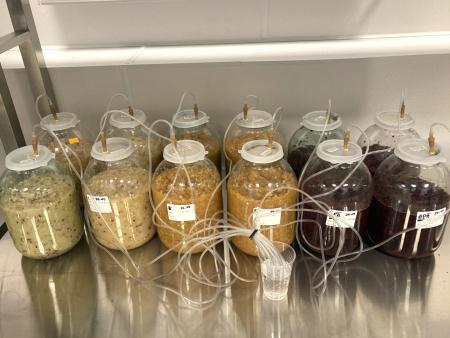
Every year, the food industry generates a significant amount of by-products. Modern food science increasingly views these not as waste, but as untapped resources with high added value. The sustainable utilization of such resources, including the production of vinegar from apples, Japanese quince, and various berries, represents one of the current directions in food research.
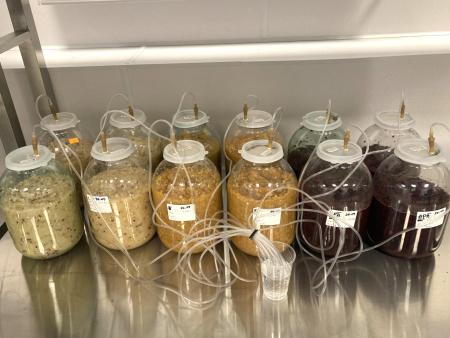
By-products can be utilized in various ways, as fruit and berry pomace remaining after juice pressing still contains valuable bioactive compounds—dietary fiber, polyphenols, organic acids, and antioxidants. These components form a suitable basis for functional products that can provide both nutritional value and health benefits.
Fermentation and Preservation of Bioactive Compounds
One of the most promising solutions for preserving these compounds and improving their availability in the human body is fermentation, particularly vinegar production. During fermentation, natural microorganisms convert sugars present in fruits into acids while simultaneously enhancing the bioavailability of bioactive compounds. Scientific studies show that during fermentation, bioactive substances are not only preserved but may even become more biologically active, increasing their potential beneficial effects on health.
Health Potential of Berry and Japanese Quince Vinegars
While apple cider vinegar is well known, berry vinegars remain relatively underexplored. They possess significant potential in terms of bioactive compounds, offering both health benefits and unique sensory properties.
Blackcurrants and red currants are rich in anthocyanins, which give vinegar an intense color and strong antioxidant properties. Japanese quince vinegar, in turn, is distinguished by a high content of phenolic compounds and organic acids, making it a valuable resource for functional products.
These vinegars may positively influence the digestive system, gut microbiota balance, and metabolic processes, highlighting their value as promising functional products in future food innovations.
From Vinegar to a Functional Beverage
Today, consumer demand for products that are both tasty and health-promoting is high. Therefore, one research direction focuses on the development of a functional beverage in which fermented vinegar is used not as the main source of acidity, but as an active ingredient. The beverage is supplemented with inulin, chokeberry and elderberry juices, as well as various spices.
Under laboratory conditions, the effects of such a beverage on gut microbiota are studied using specialized bioreactors that simulate the human digestive system. This approach allows for a safe and ethical assessment of potential health benefits.
Sustainable Approach and Societal Benefits
An important part of the research is the production of vinegar directly from fruit and berry pomace rather than juice, comparing different fermentation approaches. This strategy reduces food waste, enables the creation of new value-added products, and offers practical solutions for small-scale producers. Vinegar thus becomes more than just a salad condiment—it evolves into a scientifically substantiated functional ingredient that combines health, flavor, and responsible resource use. Often, everything begins with what was once considered waste.
Research Implementation and Societal Impact
The research is carried out at the Latvia University of Life Sciences and Technologies (LBTU) in cooperation with international partners. The results are intended not only for scientific publications but also for public education through lectures, press articles, and the development of new product prototypes.
The project “In-depth Functional Evaluation of Vinegars Produced from Apple, Japanese Quince, and Northern European Berry Pomace and Their Adaptation for New Product Development” (1.1.1.9/LZP/2/25/212) is implemented in accordance with the European Union Cohesion Policy Programme for 2021–2027, Specific Objective 1.1.1: “Strengthening research and innovation capacity and introducing advanced technologies into the overall R&D system.”