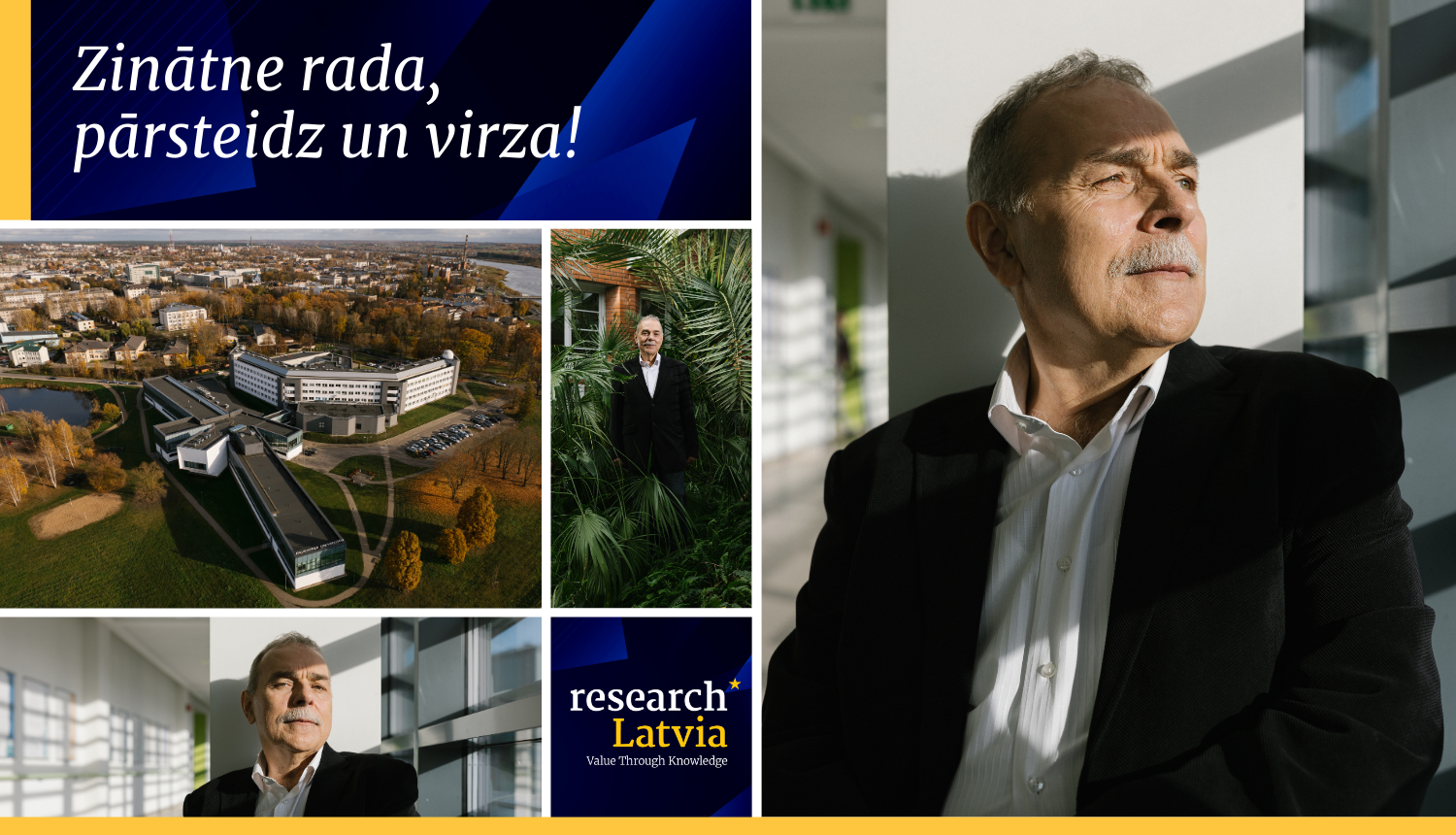
The protection of water resources and the preservation of biodiversity are becoming increasingly important for both scientists and society. A significant contribution in this field is made by Professor Dr. biol. Artūrs Škute from Daugavpils University (DU), who has dedicated more than thirty years to research, academic work, and the conservation of Latvia’s natural resources.
Daugavpils University has become a prominent research center in Latvia, particularly in the field of life sciences. Under the leadership of Professor Škute, the Institute of Life Sciences and Technologies has developed a strong and dynamic research environment that attracts both local and international students and scientists. His research primarily focuses on the protection and sustainable use of aquatic biological resources – topics that have gained importance in the context of climate change and environmental degradation.
One of the professor’s current key areas of work is the conservation of rare and protected species. Together with his team, he is actively involved in an international project dedicated to the study of the European pond turtle (Emys orbicularis) – an ancient and endangered species whose history dates back to the time of dinosaurs. The pond turtle is listed in Latvia’s Red Book as a critically endangered species. “It’s fascinating to imagine how these animals lived here in ancient times. The pond turtle is essentially a contemporary of the dinosaurs – they existed long before Homo sapiens appeared,” explains Professor Škute.
In his work, the professor also emphasizes the importance of education. His lectures focus not only on sharing knowledge but also on inspiring students. “My academic background is in biology and chemistry teaching, but today’s scientific foundation has advanced significantly – now have access to unique research technologies,” says Professor Škute. He stresses how important it is that students learn something exciting in lectures, particularly about global challenges. “Not everyone is ready to go into a swamp or jump into a lake – some are more interested in the laboratory environment and precise technologies that allow us to explore the mysteries of life and death.”
The professional path of Professor Artūrs Škute is an inspiring example of how science, higher education, and nature conservation can intertwine in a unified mission – to discover, understand, and preserve our environment for future generations.
______
About the “Science Calendar 2025”
This activity is implemented within the framework of the ERDF project No. 1.1.1.1/1/24/I/001 “More Effective and Smarter Implementation and Management of Latvia’s Science Policy”, carried out by the Ministry of Education and Science.
The project developers include the creative team of SIA "Entuziasti Digital", featuring Mārtiņš Pavasaris, video director Kristaps Mozgirs, and photographer Mārtiņš Goldbergs, as well as the researchLatvia team.
Since 2018, the Science Calendar "Research Latvia" and traveling exhibition have been created to promote awareness of Latvian scientists' achievements, enhance public understanding of the importance of science, and inspire young people to engage in scientific fields.