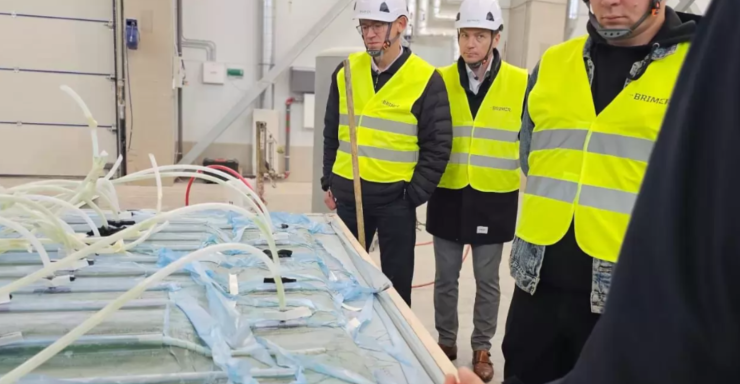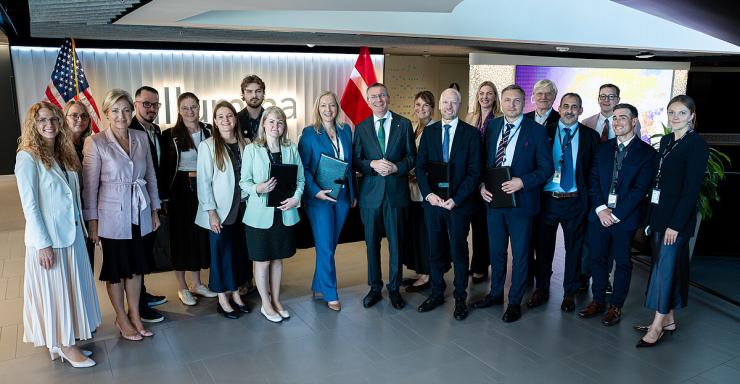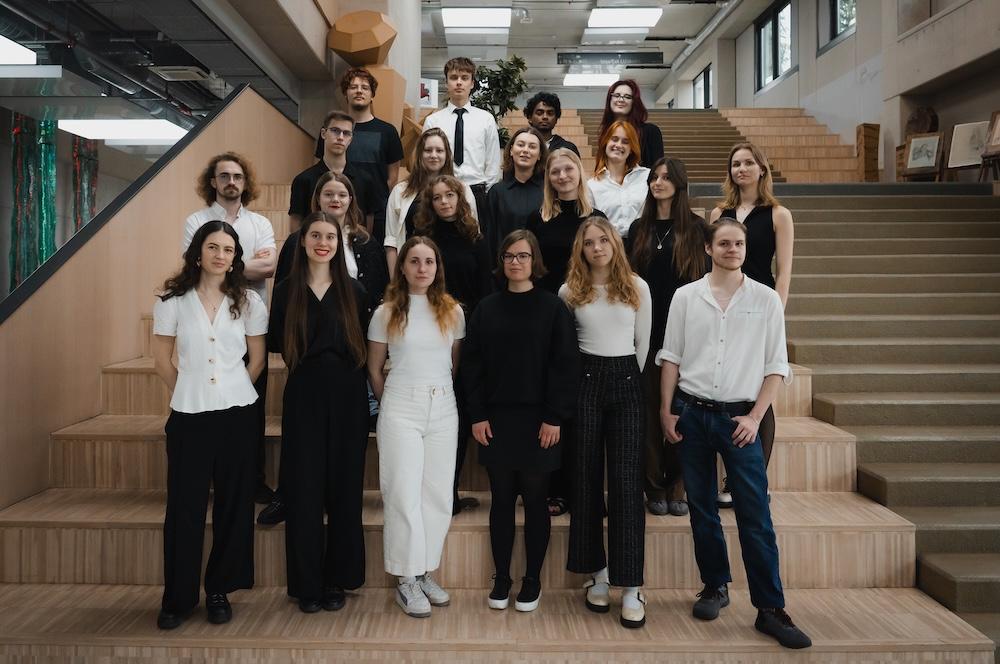
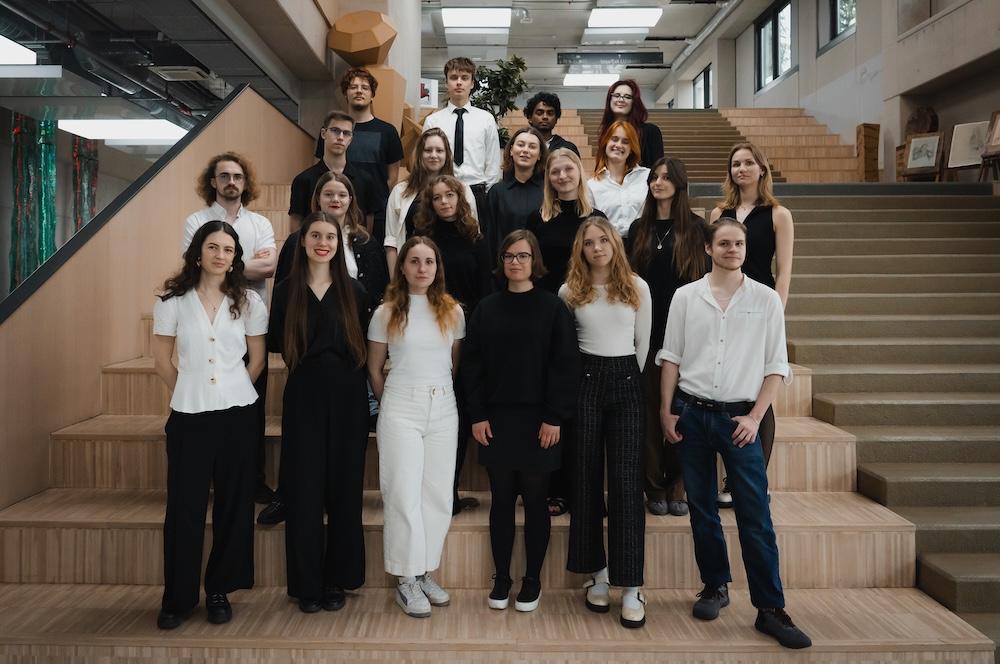
The Latvian student team “iGEM Latvia-Riga 2025” is developing an alternative method for treating burn wounds based on natural compounds, called “Caseinova.” With this project, the team will participate in the world’s largest synthetic biology competition – the iGEM Competition, organized by the International Genetically Engineered Machine (iGEM) Foundation.
The goal of Caseinova is to create a biocompatible and antibacterial protein matrix made from propolis and milk protein casein to support cell division and promote burn wound healing. According to the team’s social media representative Amēlija Taranda, the fibers forming the matrix will be produced using electrospinning, creating a spatial structure that fosters uniform cell division. Casein will provide the structural framework, while propolis contributes antiseptic, antimicrobial, and antioxidant properties.
“This material will be a nature-friendly and effective alternative to synthetic wound dressings, promoting healing and improving patient well-being,” promises A. Taranda.
The matrix will also be combined with a crosslinked casein-hyaluronic acid hydrogel top layer, providing mechanical protection for the wound and ensuring a microenvironment suitable for tissue regeneration. To enhance the hydrogel’s antibacterial properties, the team plans to incorporate bacteriophages – viruses that infect bacteria.
Solving Real Problems Through Biology
The idea arose from the team's desire to address a real medical challenge while exploring natural bioactive substances. Burn wound treatment remains a major concern – available dressings are often expensive, synthetic, and only moderately effective. The team aimed to develop an eco-friendly, biocompatible, and antibacterial material using propolis and casein – natural components with healing properties. The concept emerged through literature reviews, expert consultations, and analysis of societal and healthcare needs.
“We’ve begun lab work and are actively moving forward with the experimental phase. Our goal is to develop an initial prototype of our biocompatible wound-healing matrix in time for the iGEM Grand Jamboree 2025,” says team co-leader Anna Kozlova.
A fully finished product is not required at the competition. What matters most is to demonstrate scientific rationale, feasibility, and potential impact. This includes experimental results, material property testing, modeling, and public engagement assessment.
In addition to lab work, the team is actively involved in public education and science communication. In spring, they visited several Latvian schools to introduce students to synthetic biology and the iGEM competition. They also plan to participate in wider public events such as European Researchers’ Night, International Microorganism Day, the “Alfa” educational camp, and “Smart and Safe”.
Team co-leader Teodors Mincis notes that these activities help raise awareness of modern biotechnology and foster dialogue between scientists and the public.
“Public engagement and feedback are essential for the responsible development of our project and are a core part of the iGEM philosophy,” he says.
Representing Latvia on the Global Stage
The iGEM Competition brings together student and high school teams who use bioengineering and biotechnology to tackle pressing environmental, medical, and social challenges. Participants not only gain experience in scientific research but also project management, public relations, science communication, and bioethics, making it a truly interdisciplinary experience.
“iGEM is an opportunity for Latvian students to represent the country at a global forum of science and innovation, develop a broad range of valuable skills, and forge new collaborations with local and international experts,” emphasizes A. Taranda.
Winners are selected based on the ability to design and document an innovative, scientifically sound, and socially impactful synthetic biology project. From among the gold medal recipients, the best teams are nominated for the Grand Prize, based on experimental quality, sustainability, and impact potential. Teams also compete across 15 thematic tracks, earning special awards for achievements such as best engineering, education, or presentation.
Competition is intense – over 400 teams from more than 50 countries participate each year, including top-tier universities and research institutions. “Teams work on a wide range of projects, and those with similar themes compete within their field. This means the level of competition varies slightly by topic. But competition can also be inspiring – it fosters idea exchange and collaboration, which are core values of iGEM,” says T. Mincis.
To support their participation, the team has also launched a crowdfunding campaign. Donations can be made [here].
Latvia’s Outstanding iGEM Achievements
Latvia has participated in iGEM since 2022. In its first year, the team won a bronze medal for high-value crocin biosynthesis in yeast, reported Labs of Latvia. In 2023, the team received a gold medal for a project dedicated to producing antimicrobial peptides as a sustainable alternative to pesticides. In 2024, the Latvian team earned a silver medal for developing hypoxia detector constructs, contributing significantly to cancer research.
“Previous successes are not only inspiring but motivating – they give us confidence that a team from Latvia can also compete successfully at a global level. Many former team members are now supportive mentors, ready to share their experience and guide us,” notes A. Kozlova.
Most of this year’s team members are new to iGEM, but two participants – Teodors Mincis, who joined in 2023, and Everita Elīna Siņicina, lab group leader in 2024 – bring valuable experience to this year’s project and daily teamwork.
When asked what the team will do after the competition regardless of results, A. Taranda says they plan to continue developing the project, evaluating its potential for scientific publication or real-world application in collaboration with academic and industry partners. The team also hopes to share their experience, inspire future iGEM participants in Latvia, and remain active in promoting science – especially in biotechnology and synthetic biology.
She adds, “Many iGEM projects evolve into startups or become the foundation for further research.”