November 10 – World Science Day for Peace and Development

Author
researchLatvia

November 8, 2024

World Science Day for Peace and Development, celebrated annually on November 10, is an opportunity to highlight the significance of science in addressing global challenges and its contribution to sustainable development. Latvia proudly marks this day, emphasizing its notable achievements and contributions to the international scientific community.

The Minister of Education and Science, Anda Čakša, states, "The strength of Latvian science lies in its ability to combine knowledge with practical applications, fostering stable and sustainable development. Latvia's research ecosystem creates a favorable environment for innovation and scientific excellence, which helps our country remain competitive within the European scientific community. On this day, we honor every researcher and scientific institution that contributes to the future of our society through their work."

Since 2010, Latvia has more than doubled its impact within the science community of European Union countries. Scientific collaboration has significantly increased, with around 50% of all results achieved in partnership with foreign scientific institutions.

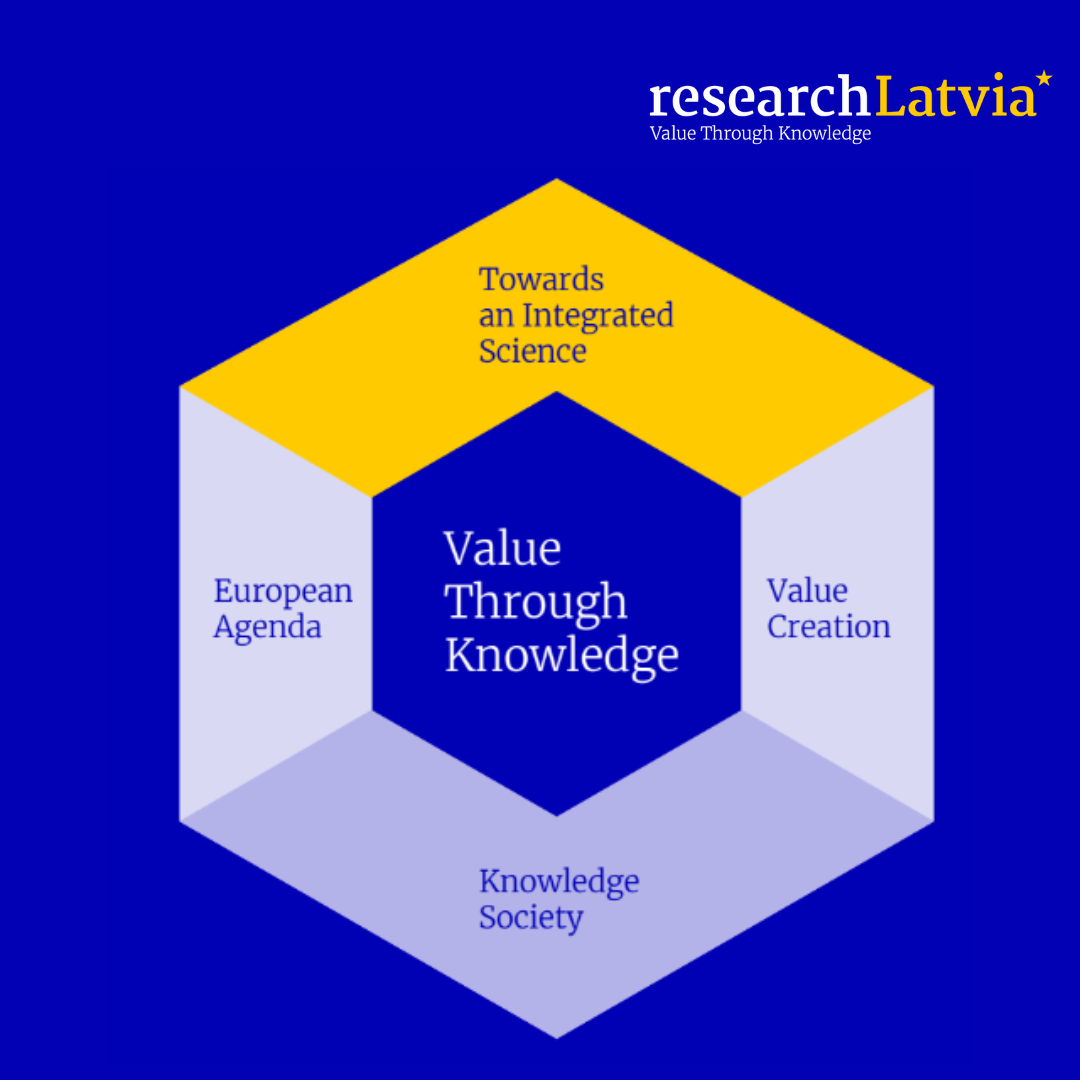
The boundaries between various scientific fields are disappearing. Latvia's integrated science model is based on the value of knowledge, leading toward integrated science, value creation, a European dimension, and a knowledge-based society. Latvian scientists are engaged in outstanding research across a wide range of fields—from biomedical and sustainable energy solutions to the development of artificial intelligence, quantum algorithms, and innovations. This research activity is vital for both the local community and on a global scale, allowing Latvia to occupy a significant position within the European Research Area.

Knowledge creates, surprises and drives forward!

Additional information on current research and discoveries in Latvia can be found on the Ministry of Education and Science’s communication platform, researchLatvia, which interacts across various scientific fields and institutions, society and academia, business and culture, and the national and global scientific worlds.
Pasaules zinatnes diena.png
Shape of the diamond represents our belief that knowledge generates sustainable value for people, society and the country. It is the key to development on all levels –
from the personal to the universal.


Recommended articles

research

Saving humanity by combing bees – LVMI “Silava” scientists explain how they study pollinator diversity

Environmental engineer Santa Ieviņa from the Latvian State Forest Research Institute "Silava" (LSFRI "Silava") has prepared a popular science article within the framework of the Latvian Council of Science-supported project Forest roads as multifunctional ecosystems: biodiversity, ecosyste…

Latvian State Forest Research Institute "Silava"

March 18, 2026

research science communication

How Researcher Velga Polinska Is Changing Attitudes Toward Easy Language

"Easy language is not an alternative to literature – it works like glasses for those with poor eyesight," emphasises University of Latvia (UL) researcher Velga Polinska, who in November represented Latvia in an international science communication competition in France, presenting her research on ea…

Ieva Lazdiņa |Editor of the University of Latvia publication "Alma Mater"

March 17, 2026

research space international collaboration

University of Latvia launches the European Commission’s Copernicus Atmosphere Monitoring Service National Collaboration Programme in Latvia

At the Faculty of Science and Technology (FST) of the University of Latvia (UL), the implementation of the European Centre for Medium-Range Weather Forecasts (ECMWF) Copernicus Atmosphere Monitoring Service National Collaboration Programme (CAMS NCP) in Latvia has been launched. This initiative is …

Faculty of Science and Technology

March 17, 2026

research research

How Can Electrical Resistance Reveal Fake Honey?

Honey is one of the most frequently adulterated food products in the world. At first glance, it may appear flawless – golden, fragrant, and enticing – yet it is often diluted with inexpensive sugar syrups derived from sugar beet or corn. Such adulteration is nearly impossible to detect by sight or …

University of Latvia Foundation

March 13, 2026