Through the collaboration of several Latvian researchers, food products have been developed for use in extreme conditions. By utilizing freeze-drying technology, food can also be enhanced to reduce drowsiness or, conversely, to promote relaxation.

To ensure that tourists, soldiers, and anyone facing challenging conditions can properly nourish themselves, researchers from the Turība University, Riga Technical University (RTU), and the National Guard’s Science, Research, and Innovation Implementation Center have developed specialized food products.
The initiative to create food suitable for extreme situations came from the National Guard’s Science, Research, and Innovation Implementation Center, as soldiers require lightweight food packs that do not need special storage temperatures and are ready for immediate consumption.
Guiding Principle – Light, Convenient, Fast, and Nutritious
Using a special method, the products are freeze-dried in a vacuum, then blended and compressed into bars. This way, an entire meal—retaining its nutritional value—can fit in a pocket, explained Guna Bīlande, director of the Nutrition bachelor’s program at Turība University and a nutrition specialist.
“For soldiers, it is crucial to have everything easily portable. If it doesn’t fit in a pocket, it’s not truly practical for them. That is one of our main guiding principles—to ensure the food is light, convenient, quick to use, and still nutritionally complete and high-quality,” Bīlande emphasized.
The head of the National Guard’s Science, Research, and Innovation Implementation Center, Juris Ķiploks, revealed that this technology can also enhance the nutritional intake of soldiers:
“Since soldiers operate in special and varying conditions, they require food supplements that not only boost endurance but also enhance cognitive abilities—helping maintain alertness, reduce drowsiness, or, in specific cases, even promote relaxation.”
This can be achieved by adding dietary supplements, caffeine, or vitamins to the energy bars.
The project is funded by both universities and the National Guard’s Science, Research, and Innovation Implementation Center from internal resources. The developed products are still undergoing testing and refinement.
Tested in Extreme Conditions
The first person to test these bars in real-life conditions was alpinist and National Guard member Juris Ulmanis, who took them on an expedition to the South Pole in January. In an interview with Latvian Television, he shared that the compact size was a major advantage, as it provided full nutrition to combat hunger while maintaining a fresh taste, just like a regular meal.
Transforming Almost Any Food
The freeze-drying equipment can process almost any food. The lyophilization process begins with freezing the product, preserving its shape and nutrients. Then, in a vacuum chamber at extremely low temperatures, water transitions directly from ice to vapor, skipping the liquid phase.
This method extends the shelf life of food for up to 25 years while significantly reducing its weight, explained Jānis Baroniņš, lead researcher and head of the sublimation laboratory at Riga Technical University (RTU):
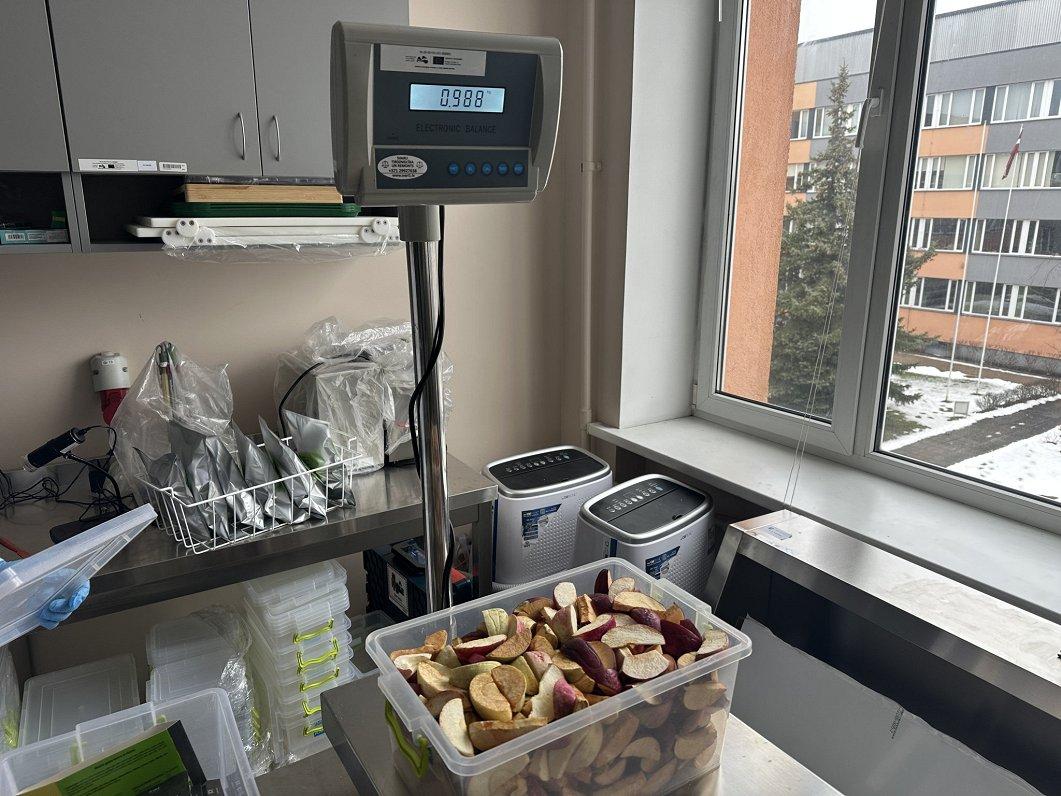
“For example, fresh apples, fruits, and vegetables contain about 80–90% water. After freeze-drying one kilogram of such products, we are left with approximately 100–200 grams of final product.”
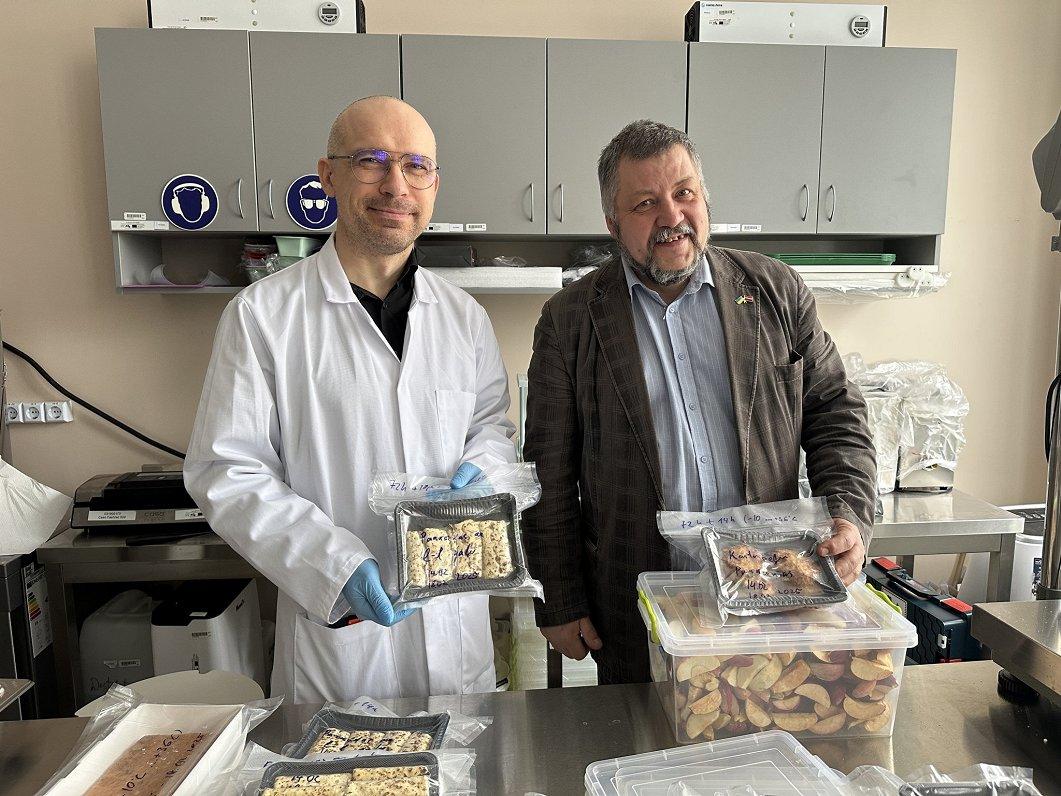
Photo: Evelīna Paula Vāvere / Latvijas Radio
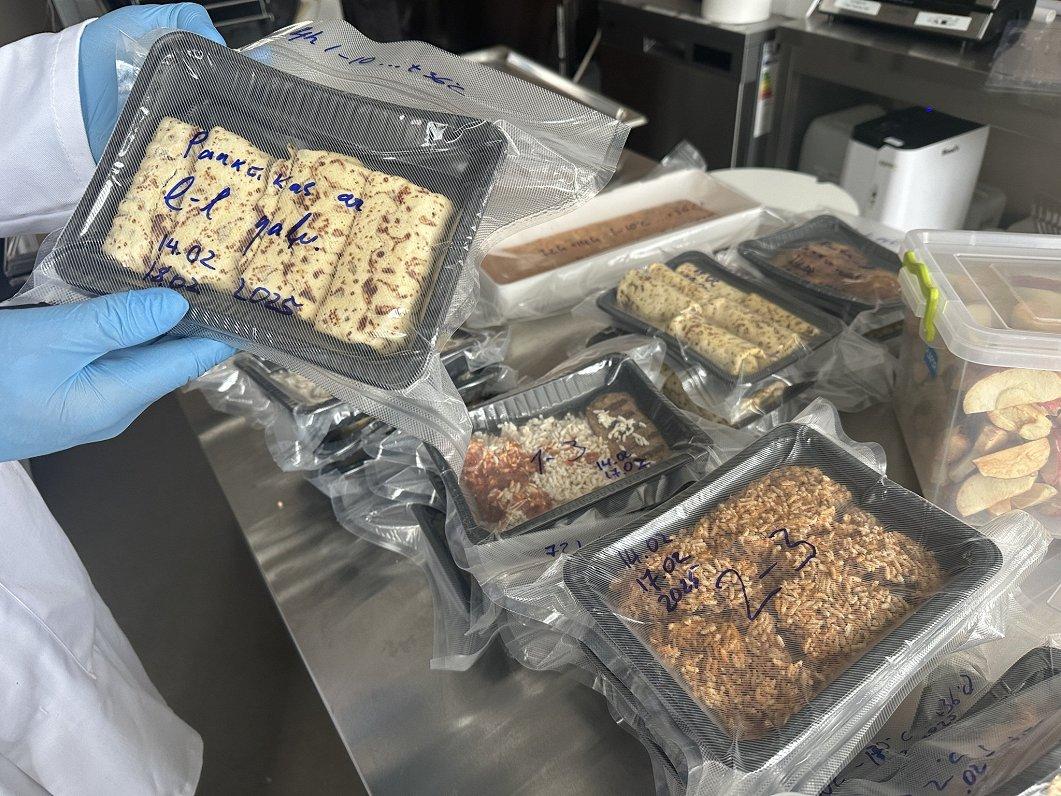
Currently, researchers are also testing the freeze-drying of civilian foods such as pilaf, pancakes, and pasta. At present, food for civil protection needs is typically frozen. However, freezing has its downsides—if there is a power outage, frozen food can no longer be stored safely. Additionally, frozen food contains a high water content, meaning it must be consumed relatively quickly before it spoils.
In contrast, freeze-dried food eliminates these issues. It can be stored at room temperature—placed on a shelf or in a bag—and safely eaten even five or ten years later.
Food as a Critical Strategic Resource
Nutrition specialist Guna Bīlande emphasized that, given the aggressor country next door, it is crucial not to overlook the strategic importance of food. Scientists must continue to develop innovative food preservation methods to ensure long-term security and sustainability.