As part of the development of the framework for Latvia's development strategy "Latvia 2050", researchers from the University of Latvia (UL) have initiated consultations with social partners and experts on Latvia’s long-term development scenarios. The first consultations took place on August 29 of this year at the annual Economists Association 2010 summer conference. These will be followed in the autumn by focus groups and consultations with experts from various sectors across all regions of Latvia. The results of the study will be presented at several conferences organized by the Saeima and UL at the end of the year.
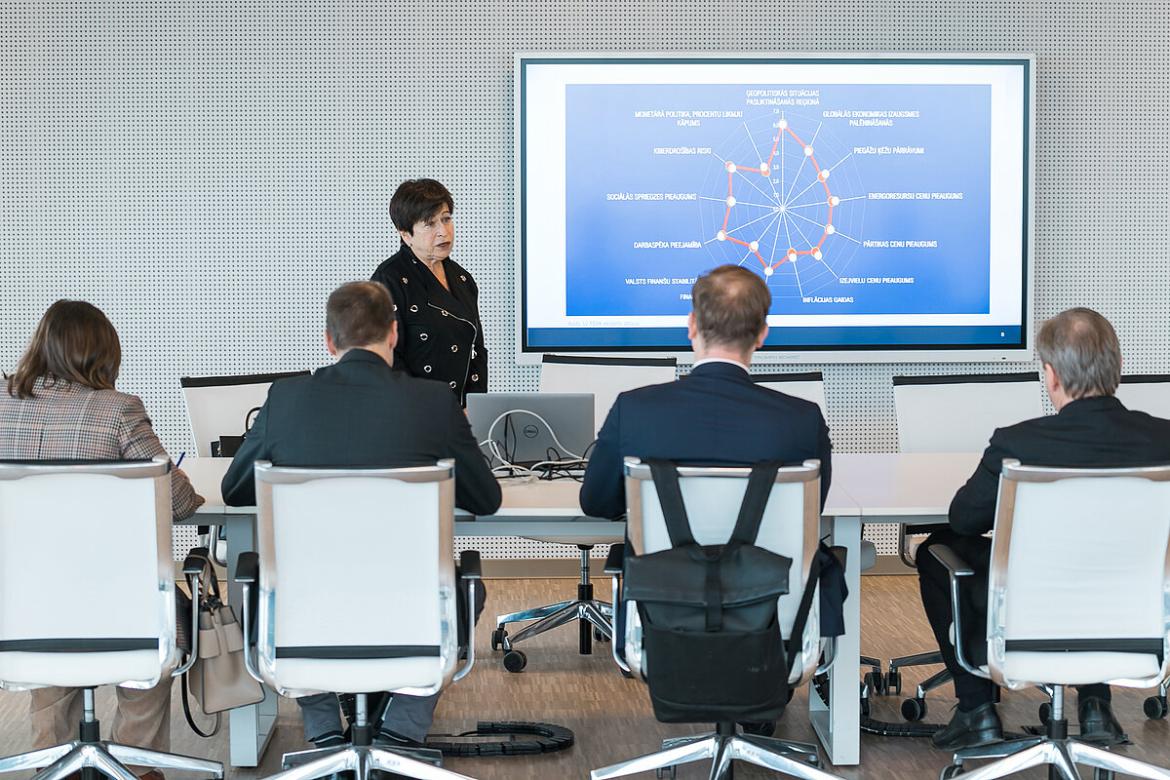
“The development of a long-term strategy is particularly relevant at this time, given the rapid changes in the geopolitical situation and the new priorities being pursued within the European Union, where each member state—including Latvia—must define its own position. The strategy development process is taking place under conditions of great uncertainty—we do not know how digital transformation and artificial intelligence will evolve, what role the EU will play in strengthening defense, which political regimes will dominate in neighboring countries, or how global supply chains will shift in light of rising protectionism and trade conflicts.
Even under these circumstances, it is necessary to clearly define Latvia’s core values and long-term goals to ensure consistent and future-oriented guidelines for decision-making in the coming decades,” emphasized UL Rector Prof. Gundars Bērziņš.
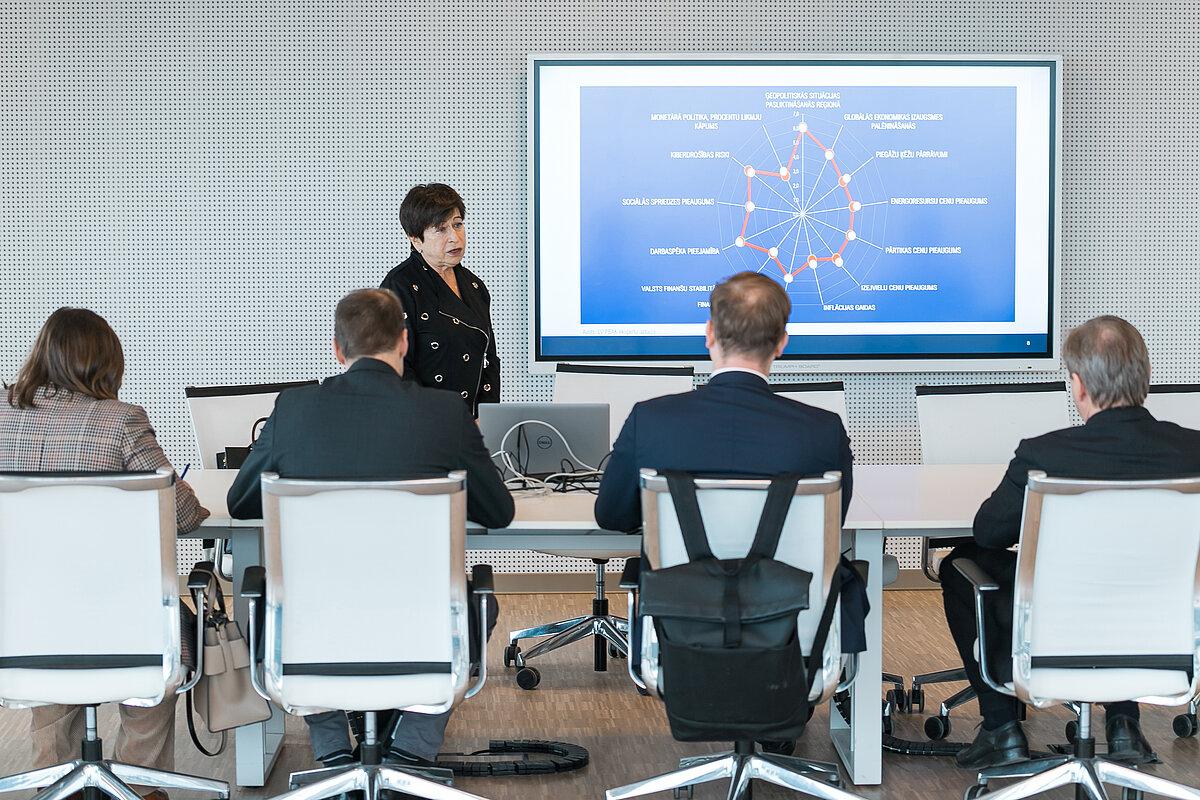
During the Economists Association 2010 summer conference, the study’s authors discussed with experts the results of the research project "Shaping the Vision for National Development Until 2050" in the field of energy. UL was represented at the conference by Prof. Inna Šteinbuka and Dr. oec. Olga Bogdanova, researchers at the Scientific Institute for Productivity of the Faculty of Business, Management and Economics—University of Latvia Think Tank LV PEAK. Among the conference participants were European Commissioner responsible for Economy and Productivity Valdis Dombrovskis, Vice-President of the European Parliament Dr. oec. Roberts Zīle, President of Economists Association 2010 Dr. oec. Ojārs Kehris, CEO of Primekss Jānis Ošlejs, Luminor Bank Chief Economist Pēteris Strautiņš, and CEO of the energy company Alexela Latvia Māris Avotiņš, among others.
As part of the conference agenda item “Energy Strategy and the Role of Climate Neutrality in the Latvian Economy,” two possible national policy scenarios were discussed for achieving climate neutrality while simultaneously promoting the development of local production. The proposed policy is focused on reaching climate neutrality targets without directly linking them to economic growth.
During the discussion, conference participants recognized that, in Latvia’s case, the shift toward climate neutrality represents an opportunity to increase self-sufficiency and create new business niches—partially replacing imported fossil resources along their entire value chain with more sustainable local goods and services. Creating a business environment that motivates local companies to engage in sustainable economic sectors—developing as a result of the EU’s drive toward climate neutrality—plays a key role in strengthening the country’s competitiveness and economic development, with a positive impact on job creation.
The study “Vision for National Development Until 2050” is being developed as the analytical foundation for the LV2050 strategy. It is commissioned by the State Chancellery. The overarching aim of the study is to develop development scenarios, identify key performance indicators to be achieved by 2050, and formulate practical policy recommendations. These encompass areas such as human capital, defense, competitiveness, and climate policy. This requires careful selection of policy instruments and well-considered decision-making among various potential solutions.
In shaping the vision, it is essential to identify mechanisms that promote Latvia’s sovereignty and security, define effective tools for improving the well-being of the population, and clearly formulate goals in the economic, social, and environmental fields—while also assessing Latvia’s role in a dynamically changing global environment.