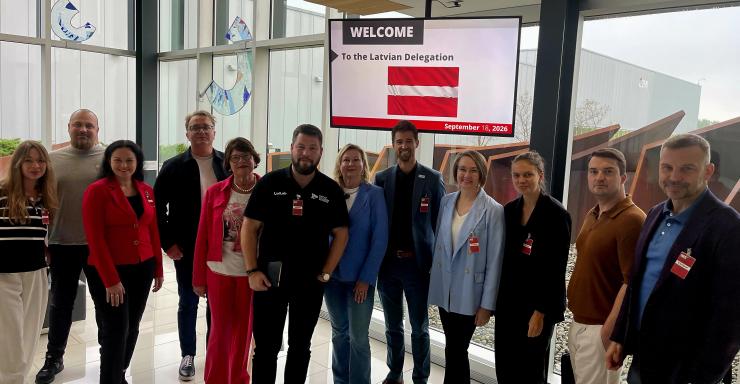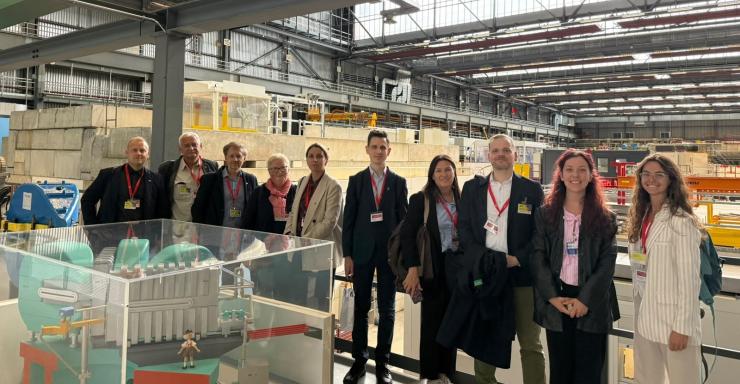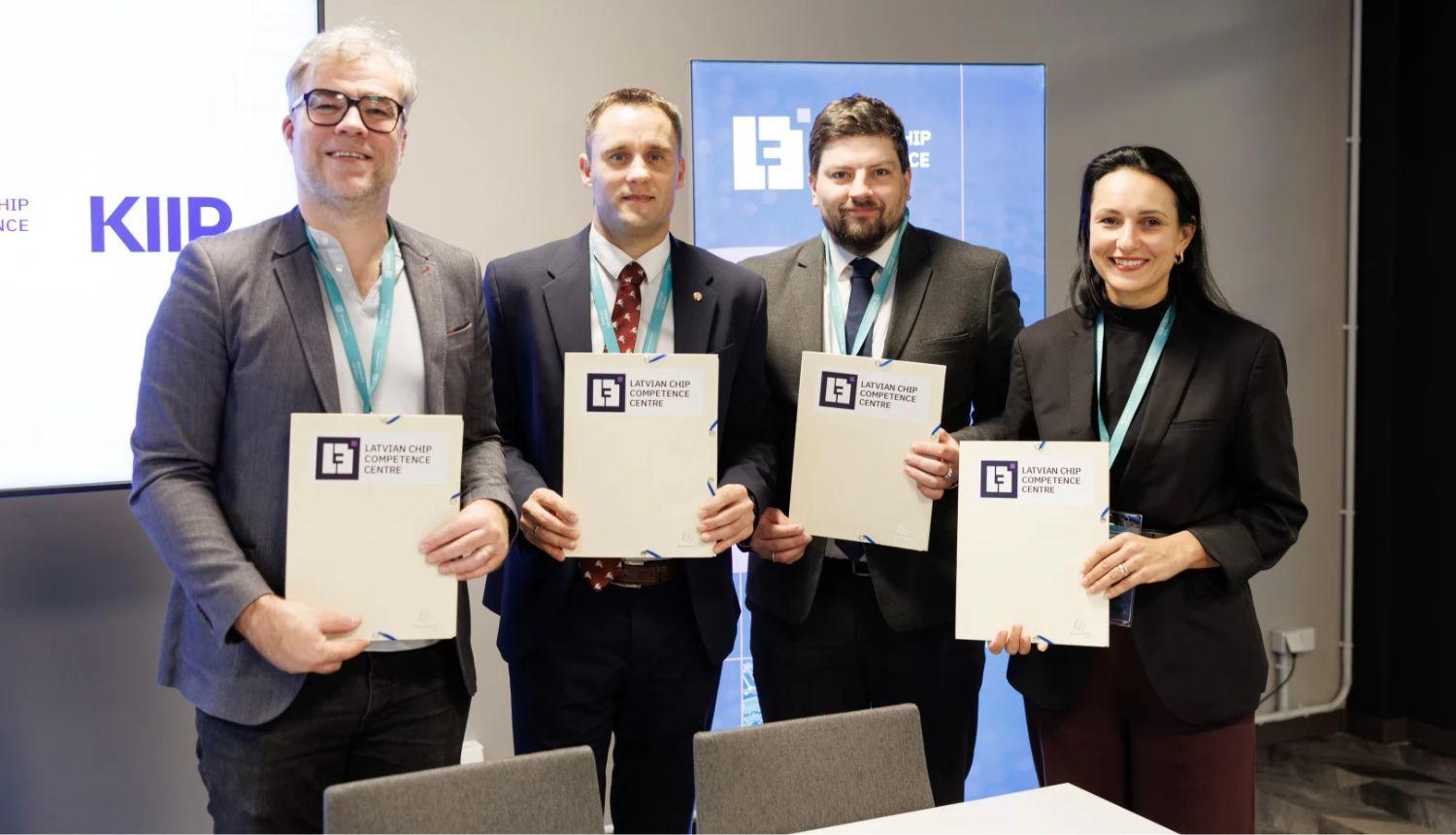
Three Baltic nations – Latvia, Lithuania, and Estonia – today signed a Memorandum of Understanding (MoU) to strengthen cooperation between their national chip competence centres. By aligning national strategies and pooling expertise, the countries aim to accelerate innovation, expand research capacity, and strengthen the Baltic-Nordic region’s role within Europe’s semiconductor value chain.
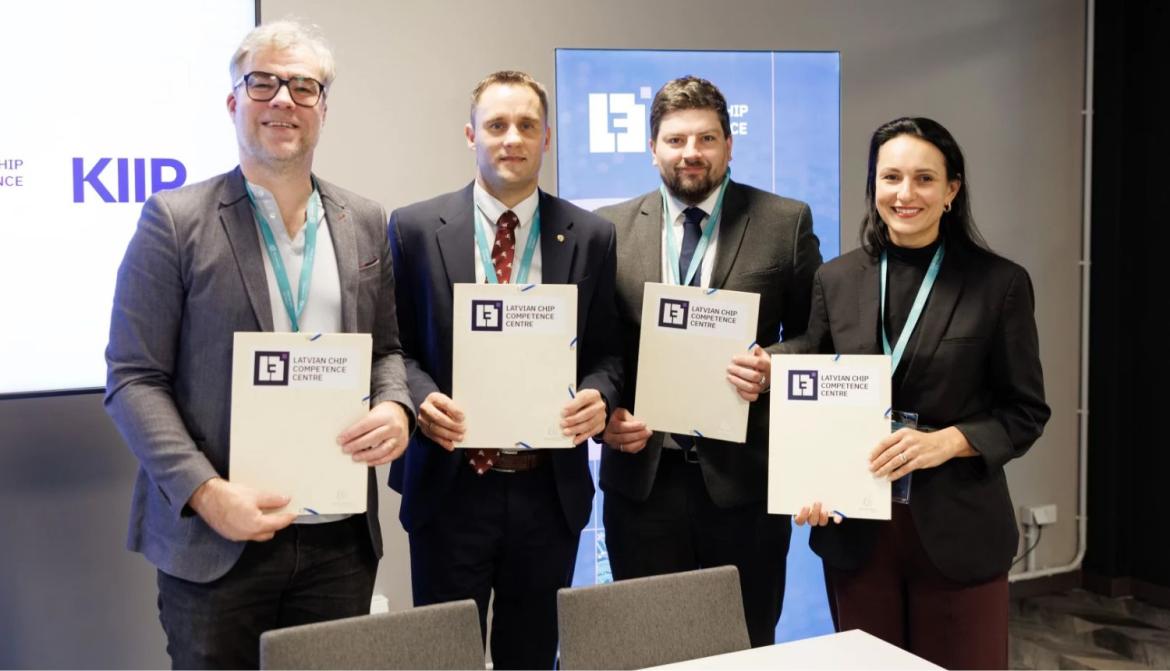
The signing ceremony took place at the Techritory Forum 2025. The memorandum brings together organisations representing chip competence centres in the respective countries: Riga Technical University (RTU) and University of Latvia, Lithuania’s Centre for Physical Sciences and Technology (FTMC), and Estonia’s Metrosert Applied Research Centre.
The agreement comes at a time when Europe works to strengthen its semiconductor autonomy amid growing geopolitical uncertainty and global supply-chain pressures. In March 2025, the aCCCess initiative (Alliance of Chips Competence Centres for Enhanced Semiconductor Services) was launched to deepen EU-wide collaboration in this field. By signing the MoU, the Baltic countries set an example of international cooperation and support the EU’s goal under the European Chips Act to double the region’s semiconductor capacity by 2030.
"RTU, as the leading partner in the Latvian Microchip Competence Centre, has taken the initiative to strengthen cooperation at the Baltic level, and the next step is to expand this initiative to the Nordic countries," says RTU Vice-Rector for Innovation Liene Briede. "This week in Riga, we are bringing together representatives from the national chip competence centres of all three countries to agree on the future directions of this cooperation. This partnership will give new momentum to the region’s microchip ecosystem – benefiting small and medium-sized enterprises, startups, and research institutions alike. Moreover, it is an excellent opportunity to strengthen the region’s role in global supply chains," she adds.
The Baltic countries are putting a strong focus on the semiconductor industry, with steady growth across the region. The semiconductor markets in Estonia and Lithuania are expected to grow by around 5% annually between 2023 and 2028, rising from roughly €41 million to €53 million combined. Meanwhile, Latvia’s semiconductor exports are forecast to grow by about 6% per year from 2021 to 2026.
The Memorandum will focus on three key areas of collaboration:
- To boost innovation and visibility through joint international representation and investor outreach, positioning the Baltic region as a rising hub for semiconductor development.
- To promote research and education through shared training programs, knowledge exchange, and access to research infrastructure to accelerate breakthroughs in chip design, materials, and systems.
- To provide support for startups and SMEs to help them connect with pilot lines and R&D infrastructure under the Chips Joint Undertaking (Chips JU) programs.
"By joining forces with our Baltic partners, we are taking a concrete step towards establishing a stronger, more resilient semiconductor ecosystem in our region. The Estonian Chip Competence Centre, based at Metrosert’s Applied Research Centre, focuses on supporting companies directly and developing practical industry solutions. Through Baltic collaboration, Estonia ensures that innovations in chip technology are swiftly transferred from the realm of knowledge into the world of business, thereby helping to strengthen Europe’s technological sovereignty and competitiveness," said Indrek Tulp, Metrosert’s Member of the Management Board and Head of the Applied Research Centre.
The next step for the Baltic partners is a joint HORIZON-CSA application to map the regional semiconductor ecosystem and develop a joint strategy for a Baltic-Nordic semiconductor alliance. This will pave the way for future EU projects to strengthen research infrastructure and support startups and SMEs across Estonia, Latvia, and Lithuania.
"By joining forces through the Baltic Chips Competence Centres, we are creating a powerful regional platform that connects knowledge and competencies across the Baltic and Nordic countries. For Lithuania, this collaboration means turning our strong research base – led by FTMC and our university partners – into tangible industrial impact. By combining our expertise in chip design, power electronics, photonics, and advanced integration, we can help companies strengthen their capabilities, accelerate innovation, and grow within the European semiconductor value chain. Together, we are building a more connected and competitive semiconductor ecosystem that strengthens Europe’s technological sovereignty." – PhD Ramūnas Skaudžius, Director of the Centre for Physical Sciences and Technology (FTMC)
The MoU between the Baltic Chip Competence Centres follows the Latvian Chip Memorandum signed in 2022, which aimed to boost the semiconductor ecosystem in Latvia. The memorandum led to the establishment of the Latvian Chip Competence Centre (LCCC) in March 2025, which supports the EU’s European Chips Act.
Both the Latvian and Baltic semiconductor memorandums were signed during the Techritory Forum, this year taking place on October 22–23 in Riga, Latvia. For eight consecutive years, Techritory has brought together European and global industry leaders, academic pioneers, policymakers, and innovators, serving as a platform where ideas evolve into impactful solutions.
Techritory is organised by the Electronic Communications Office of Latvia, powered by the Investment and Development Agency of Latvia (LIAA) and the European Union’s Recovery and Resilience Facility. It is created in cooperation with the International Telecommunication Union, strategic partners – LMT, the Nordic Council of Ministers, the City of Hamburg, and the golden partner, Latvian State Radio and Television Centre.
The event was financed with the support of the European Union’s Recovery and Resilience Facility – NextGenerationEU.
The views and opinions expressed are solely those of the author(s) and do not necessarily reflect the views of the European Union or the European Commission. Neither the European Union nor the European Commission can be held responsible for them.