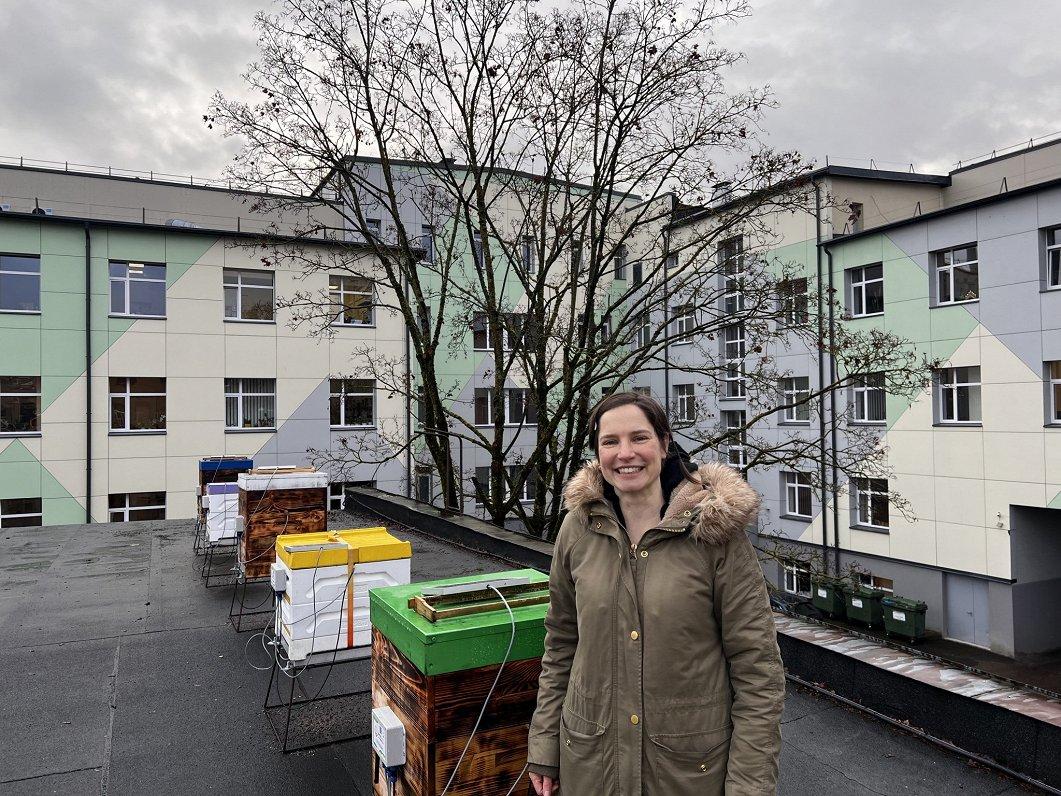
Researchers at the Latvian State Institute of Wood Chemistry are studying how to protect bees during temperature fluctuations — they are installing materials inside hives that reflect heat, helping bees maintain the necessary temperature. This three-year project began this summer, and its goal is to help beekeepers maintain bee colonies without creating unnecessary expenses. Interestingly, the hives are located right here in Riga, on the roof of the Institute of Wood Chemistry.
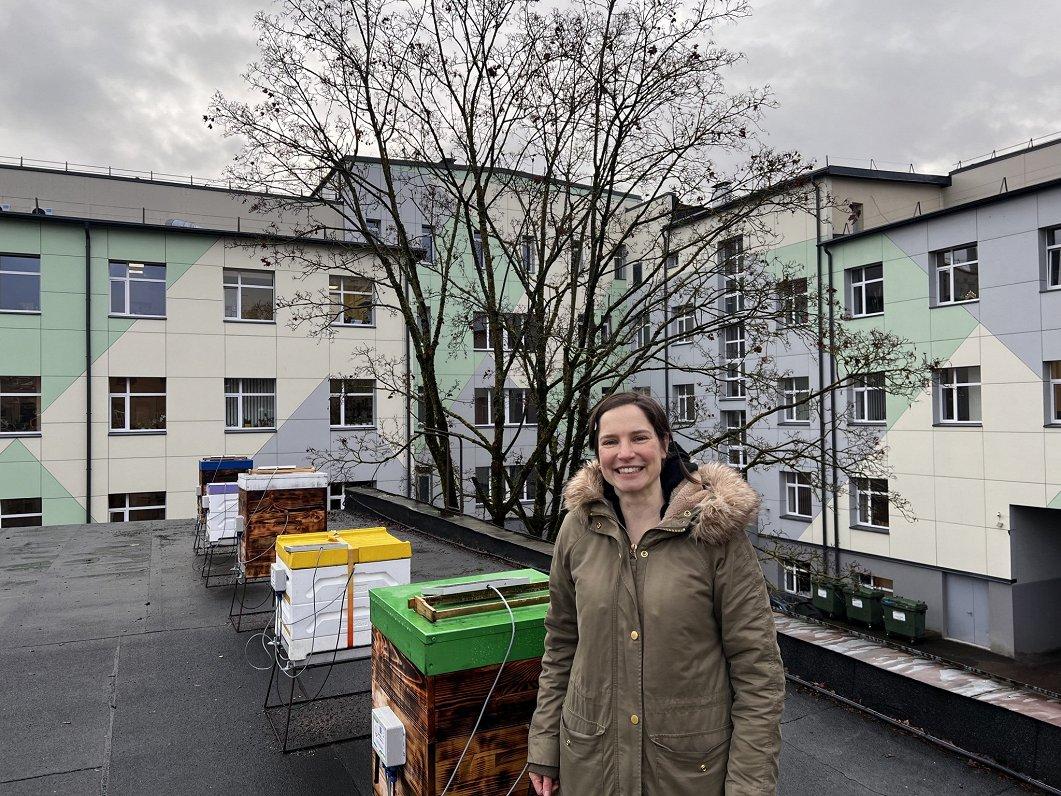
On the roof of the institute, 36 beehives have been installed — half of them made of wood, the rest of foam. This allows researchers to compare how bees fare in different environments. Each hive is equipped with a device and scales that help measure changes in the hive, including internal temperature and humidity. The hives are divided into six groups, indicated by the color of the lid. It is also the largest urban apiary in Latvia.
Most likely — also in Europe and even in the entire world, noted Ulla Milbreta, lead researcher at the Institute of Wood Chemistry.
“We have various hive-screening materials inside, which we compare to see which works best to create this thermos effect — to better reflect the heat emitted by the bees so that during winter they need to spend less energy heating the winter cluster that contains the queen. The greater the temperature loss during rapid temperature fluctuations, the more bees in the outer part of the cluster die, and the smaller the colony becomes — it may either collapse entirely or begin the spring very weak and be unable to develop,” the researcher explained.
The so-called screening principle is similar to a foil blanket — in cold weather it prevents freezing, and in hot weather it prevents overheating. Another growing threat to bees today is warm winters and warm autumns, because during these periods wasps attack the bees, unable to find other insects that have already gone into winter dormancy.
“What was once mentioned merely as a possible factor is now becoming extremely important. We ourselves have experienced that in hives without screening — without this insulation — the colonies are unable to resist wasps. This happens in autumn. Meanwhile, if the winter is warm, the bees may begin their spring flight much earlier. If rapid drops in temperature follow, the colony becomes somewhat disoriented and can no longer form a proper cluster, cannot maintain warmth, and dies,” Milbreta explained.
Researchers will observe the bees until May 2028. Nearly 95,000 euros have been allocated for the project. A study lasting three winters will allow for more reliable data, Milbreta noted, promising to prepare recommendations for beekeepers afterward. In addition, over the three years, the institute plans to develop a hive material that will not be as heavy as wood but more durable than foam.
Each winter in Latvia, 14% — more than 15,000 — of bee colonies die, according to the Latvian Beekeepers’ Association, which monitors bees in cooperation with the international project COLOSS.
It has been concluded that temperature fluctuations are not the main cause of bee mortality. The association’s head, Valters Brusbārdis, explained: “The most important factors causing bee colony losses are a small parasite called the varroa mite, which causes varroosis; second, the quality of food; and third, genetics. These are the three key elements currently essential for successful overwintering. In my view, today’s hives are already well designed and sufficiently high-quality for bee colonies to overwinter successfully.”
The association says it would gladly welcome the new hive materials the institute plans to develop.