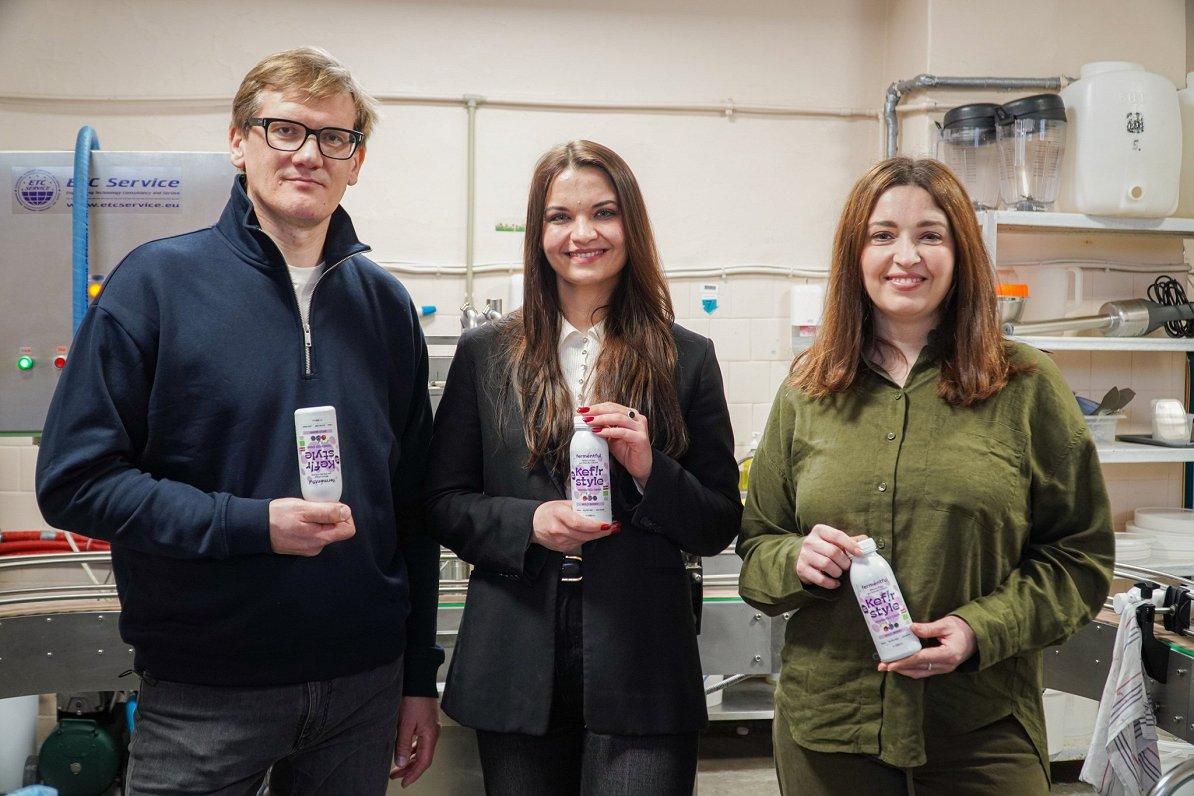
Buckwheat plus kefir – Latvia’s export product. The fermented buckwheat drink Fermentful is rapidly gaining shelf space in stores both in Latvia and across Europe. The unique product was created in collaboration with food technologists, and the company has earned an internationally recognized sustainability certification. The producer of Fermentful, Plant Made Foods Ltd., is cautiously awaiting its first million in turnover before proudly calling itself a fully fledged business.
Business Card
In 2025, Plant Made Food Ltd. reached a turnover of €61,324, an increase of 1.02% compared to the previous year. The company has operated at a loss for the past three years — in 2025, losses amounted to €55,530.
Plant Made Food was founded in 2020, with a paid‑up share capital of €2,800. The majority owner, holding 71% of the shares, is Anda Penka.
The company has received a total of €156,702.91 in various forms of support. The largest contributions came from the Investment and Development Agency of Latvia (LIAA) — €66,302.91, and from the Latvia University of Life Sciences and Technologies (LIAA Innovation Voucher) — €50,000.
Source: Lursoft, Plant Made Food.
The European Union (EU) supports a wide range of sectors. To maintain the region’s competitiveness, its goal is to become the global leader in life sciences by 2030. Life sciences encompass several interconnected disciplines that study living systems — from humans, animals, plants, and microorganisms to ecosystems and their interactions. The strength of life sciences lies in innovations driven by technology — biotechnology, digitalization, and artificial intelligence. The EU provides an ecosystem where innovative life‑science companies in health, food, and sustainability can emerge. Products developed by such companies help improve people’s lives, strengthen a competitive economy, and protect the planet.
The EU also aims to turn cutting‑edge research into real‑world solutions that enhance public health, promote clean technologies, and support the development of new industries and high‑quality jobs in Europe.
The Latvian company Fermentful is an excellent example of how food scientists here can create a new, healthy product that is in demand across Europe — a product that requires building a factory and hiring highly qualified specialists.
From the Fashion Industry to a Trendy Food Product
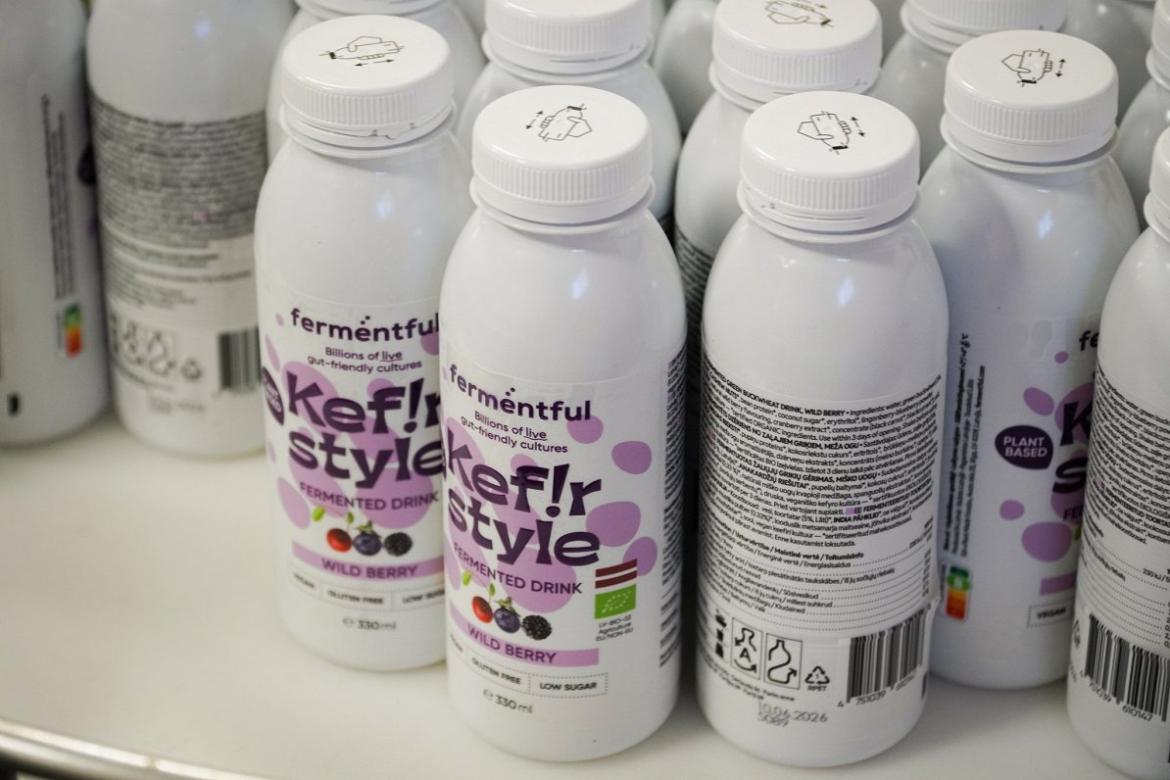
It all started with the idea of a plant‑based product — a green buckwheat drink with a taste similar to cow’s milk. Previously working in the fashion industry, Anda Penka entered various business accelerators with this concept four years ago. The idea of a fermented product emerged during one of these programs. The plant‑based milk market is highly saturated, and buckwheat milk would simply be one more milk alternative. But a kefir‑like drink — a fermented beverage — was something entirely new. The accelerator’s jury recognized this potential.
Of course, developing a product that didn’t yet exist raised new concerns: “If no one else is making anything like this, maybe it’s not even possible?”
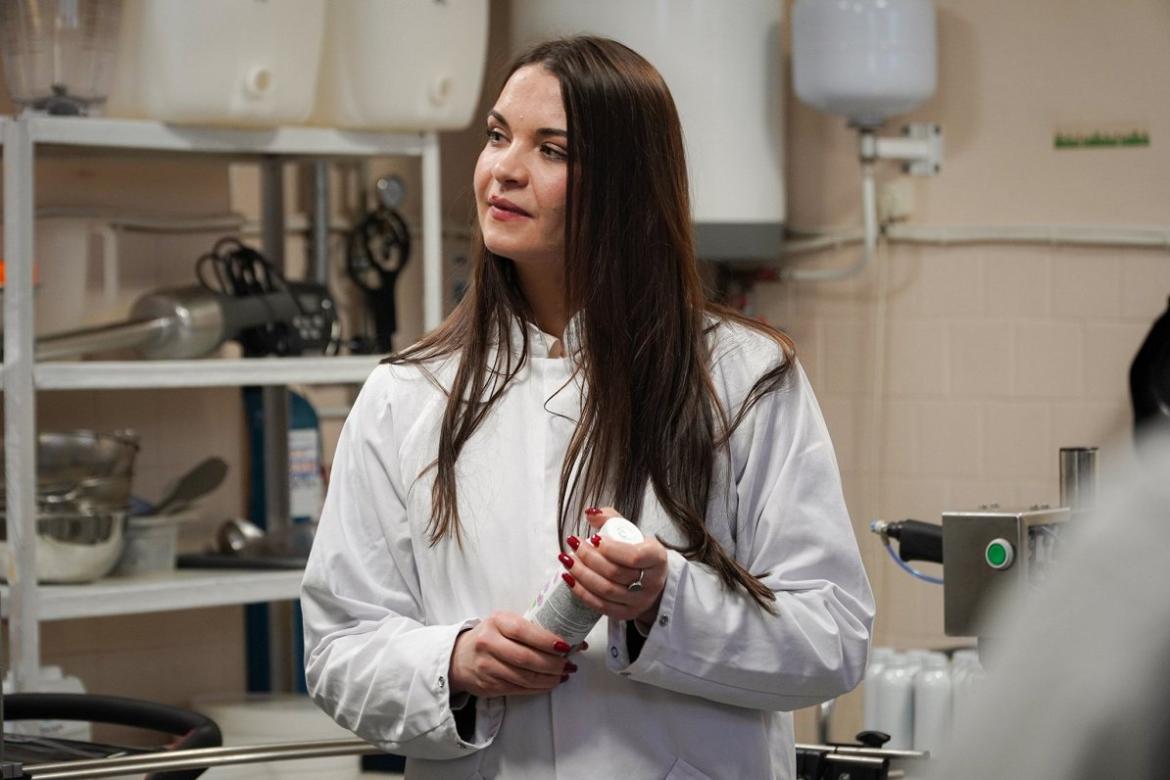
“To develop a product that could be commercialized, we needed more than a year and a half,” Anda Penka explained, noting that the product was created in close collaboration with food technologists and scientists.
“For a year and a half, all we did was test various absolutely awful‑tasting and terrible‑looking solutions from test tubes, write down everything that wasn’t the way we wanted it, and then suddenly the right combination appeared.”
They had to experiment with different proportions of raw materials, the speed and duration of buckwheat grinding, cooking temperatures, and many other nuances.
Buckwheat itself was also a somewhat accidental choice, largely determined by the scientists. It was a grain they had not previously worked with. “They made it clear that they couldn’t work with oats, peas, or hemp, because formulations using those ingredients had already been developed for other companies, which would create a conflict of interest,” Anda Penka briefly explained how Fermentful ended up choosing green buckwheat — which turned out to be a very promising ingredient.
From Organic Shops to Supermarkets
From the very beginning, Anda Penka knew she didn’t want to remain a small home‑producer — she wanted to build a scalable manufacturing business. At first, the product was sold in small organic shops.
“With a trembling heart, I waited for the sales data — it was the next validation stage: whether the product would taste good to people who weren’t our family and friends,” Anda laughs.
She admits that buckwheat kefir is not a product that will appeal to everyone: “Our product is more for people who consciously think about the food they consume and how it affects their long‑term health.”
Today, Fermentful’s largest market is Lithuania, thanks to a newly signed agreement with the supermarket chain IKI. The buckwheat kefir drink is also available in Rimi stores across the Baltic states, but this is only the beginning: “This year we want to expand into Finland and start exports to the Czech Republic and Slovakia.” Anda finds reputable partners abroad herself through the social platform LinkedIn: “I arrange a meeting and present the product. That’s how we found an excellent partner in Austria who believes in Fermentful — and uses it personally.”
Fermentful’s goal for the coming years is to become available in all major retail chains across Europe. Achieving this is made easier by the EU’s Single Market, which guarantees the free movement of goods, services, capital, and people throughout the EU. The European Commission (EC) has also committed to supporting business expansion, emphasizing that the Single Market is Europe’s greatest asset in resisting external pressures.
Interestingly, Fermentful’s product also aligns with the EC’s strategic framework for a competitive and sustainable EU bioeconomy. By using renewable biological resources from land and sea and providing alternatives to critical raw materials, the EU is moving toward a circular and decarbonized economy while reducing dependence on imported fossil fuels. It is worth noting that, for example, the dairy industry generates significant amounts of biomethane gas. If a product equivalent to dairy can be produced using plant‑based ingredients — as in the case of Fermentful — several modern priorities are supported simultaneously.
In the long term, Fermentful does not plan to stop at the European market. The company is already preparing to expand even further globally. At the same time, it emphasizes that production will remain in Latvia, continuing to provide highly qualified jobs locally.
International Recognition for Sustainability
“Sustainability is the criterion I wanted to implement from the very beginning,” Anda Penka explained, noting that a sustainable and responsible approach has been intentionally integrated into the company’s operations. Fermentful is now an organically certified product, and the path to this certification was deliberate. Fermentful is the third company in Latvia to receive the international B Corp™ certification for sustainability and responsible business practices.
“B Corp was my goal — I like their philosophy, which also includes collaboration between companies,” Anda said proudly, emphasizing how important it was for her to prove that Fermentful is a sustainable business.
The ingredients used in Fermentful are organic and scientifically validated, and the drink is bottled in fully recycled plastic bottles. Before Fermentful, only two Latvian companies had earned this certification: Madara Cosmetics and Kalve Coffee.
It is expected that companies that take sustainability seriously will find Europe an even more favorable place to grow in the future. At the end of 2025, the EC introduced a package of measures to simplify environmental legislation in the areas of industrial emissions, circular economy, environmental assessments, and geospatial data. These changes will help reduce administrative burdens for companies while maintaining the EU’s ambitious environmental and public health goals.
Waiting for the First Million
Although Fermentful was founded in 2020 and has already secured impressive contracts with major retail chains across the Baltics, its owner still hesitates to call herself an entrepreneur. She has set herself an emotional milestone — she will truly feel like an entrepreneur once the company reaches one million euros in annual turnover.
And it is expected that this could happen as soon as this year — the company will soon move from its small premises on Avotu Street to a larger production facility, allowing it to triple its manufacturing capacity.
Anda is not worried about a shortage of workers as the company expands — when Fermentful recently sought a new production employee, 400 people applied for the position.
In the early stages, the company received significant support from family and from various entrepreneurship‑support programs, which helped create packaging, purchase the first batches of raw materials, and produce the first product run. The company now also has angel investors. A particularly important milestone in its development was the EIT Food Accelerator in Helsinki.
“It was an extremely valuable experience for us — it gave us greater visibility and validated that this truly is an innovative product,” Anda explained. “We had to prove the innovative aspects of our product through several rounds.”