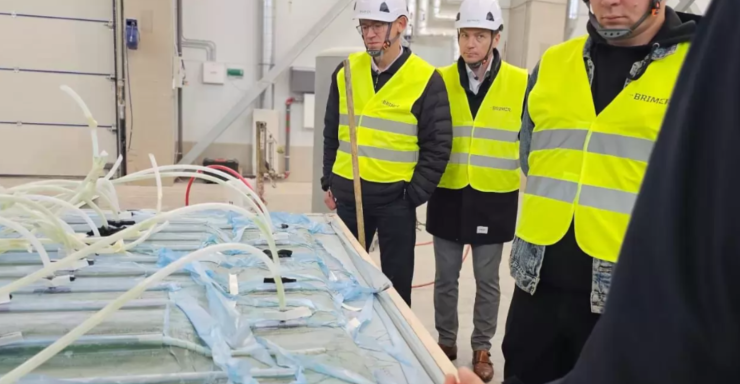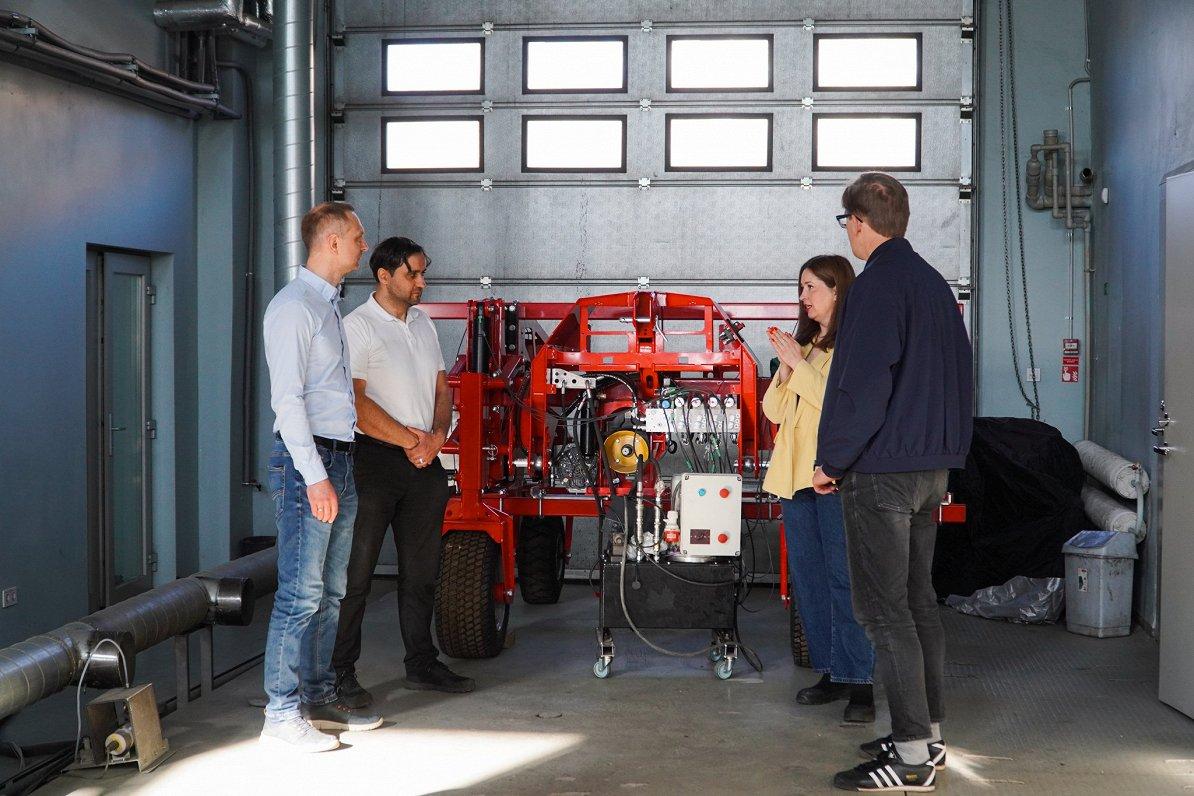
The startup WeedBot has developed an AI‑powered weed‑control machine capable of precisely identifying and eliminating weeds in carrot fields using laser technology. Over six years, the idea has evolved from a research concept into a commercial product, and this spring the company sold its first machine to an organic carrot grower in Belgium. The project has attracted around one million euros in investment from investors in Latvia and several other European countries.
The machine’s target market is organic farms in the European Union and the United Kingdom with at least ten hectares of carrot fields. Although the company operates in a narrow niche, demand for automated weed control is growing. WeedBot aims to scale up production and attract additional investment
IN BRIEF:
- The potential of artificial intelligence in organic farming
- One million euros raised in investments; investors from Latvia, the United Kingdom, Denmark, France, Belgium
- First product sold to a farm in Belgium
- The company must still expand before starting full‑scale production
- Primary customers are organic farms
BUSINESS CARD
In 2025, WeedBot Ltd. reached a net turnover of 143,370 euros, which is 91% more than the year before. The company’s losses last year amounted to 136,664 euros, a 20.8% decrease compared to 2024.
The company was registered in 2020, with a paid‑up share capital of 13,703 euros. WeedBot has more than 20 shareholders, the largest being Jānis Jaško (17.69%), Andrejs Kostromins (14.6%), Vitālijs Osadčuks (14.6%), and Aldis Pecka (14.6%).
Source: Lursoft
The EU aims to become a global leader in AI. At the AI Action Summit held in Paris in February 2025, European Commission President Ursula von der Leyen emphasized that this ambitious initiative seeks to transform Europe’s strong traditional industries and its exceptional talent base into powerful drivers of AI innovation and development. The Latvian company WeedBot is an excellent example of how a very traditional occupation can be completely reshaped by AI.
Fighting Weeds
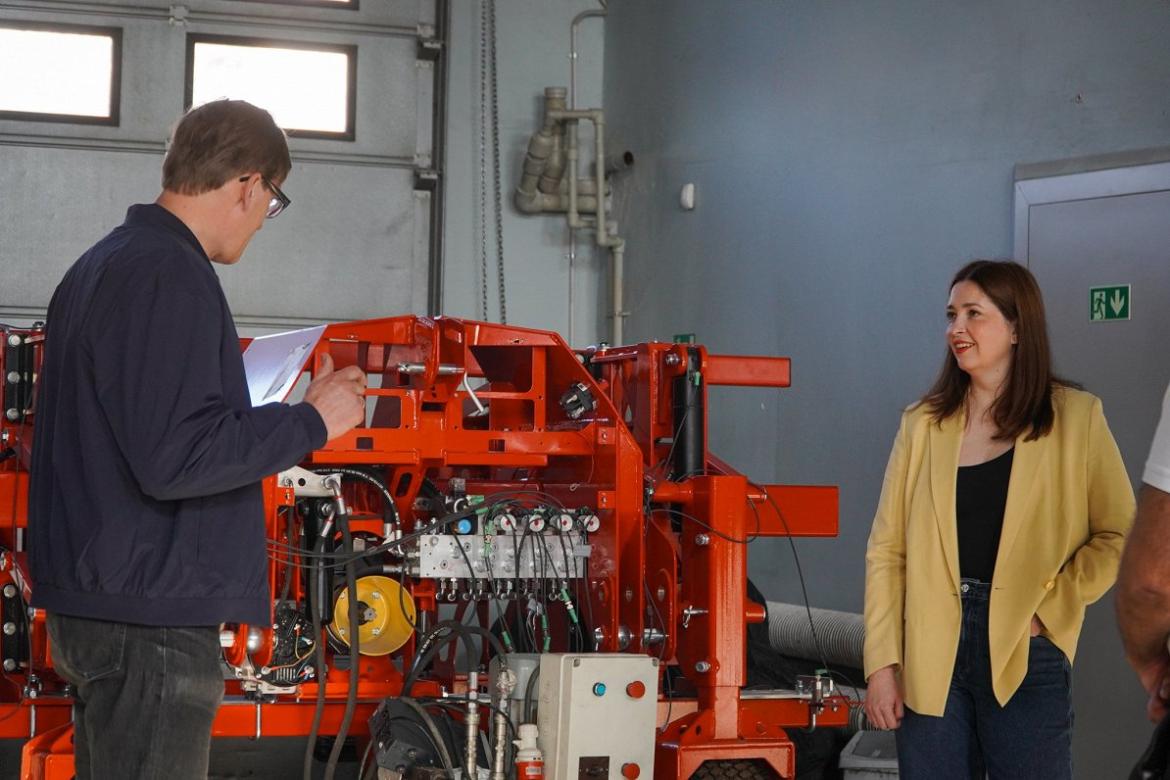
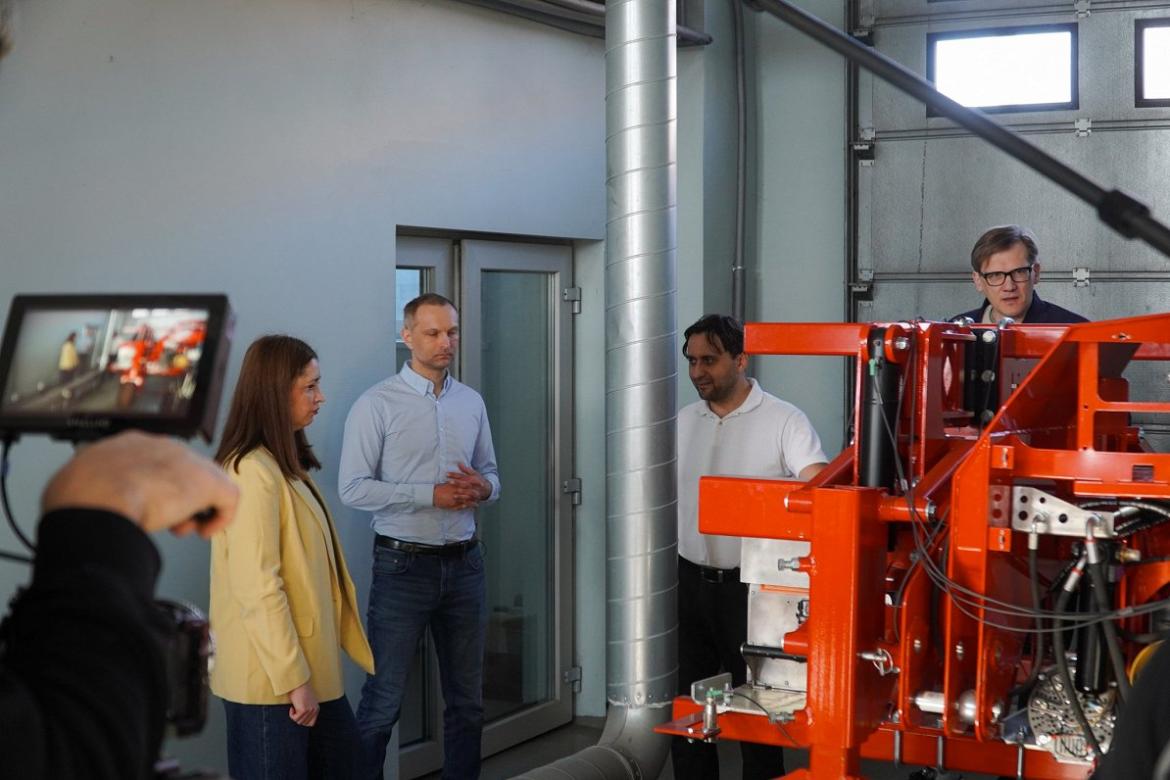
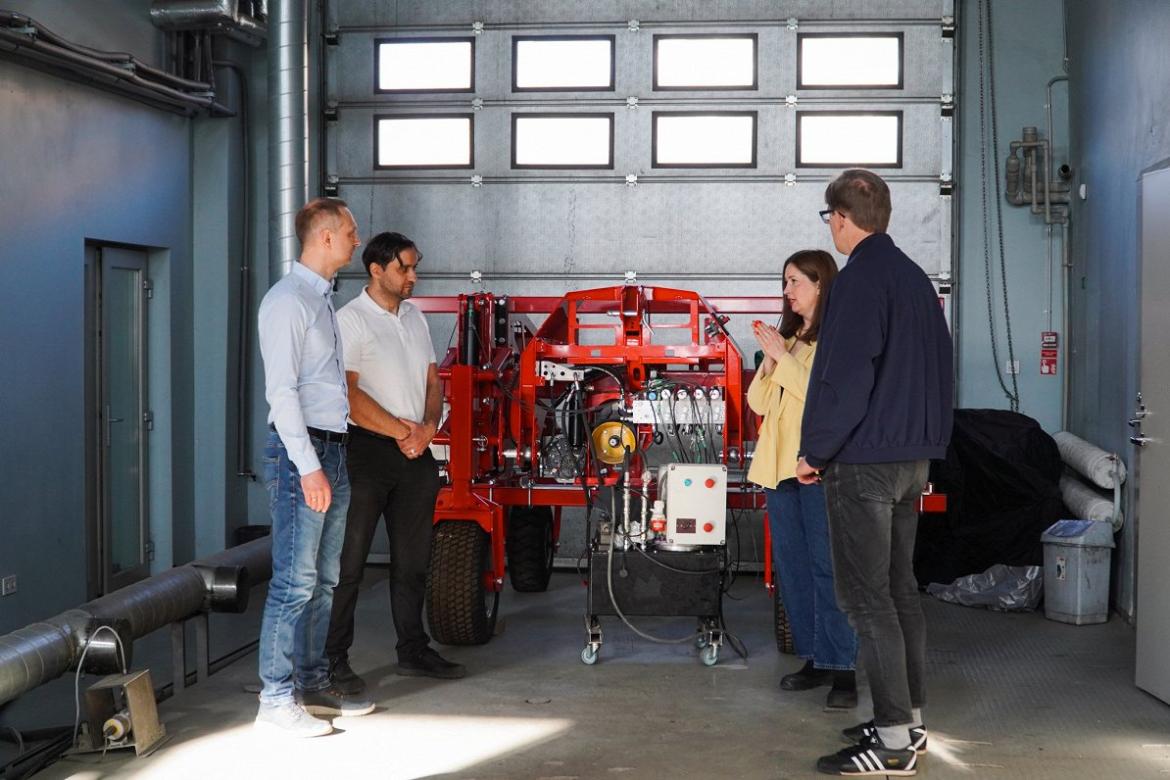
WeedBot is a machine capable of both recognizing and eliminating weeds.
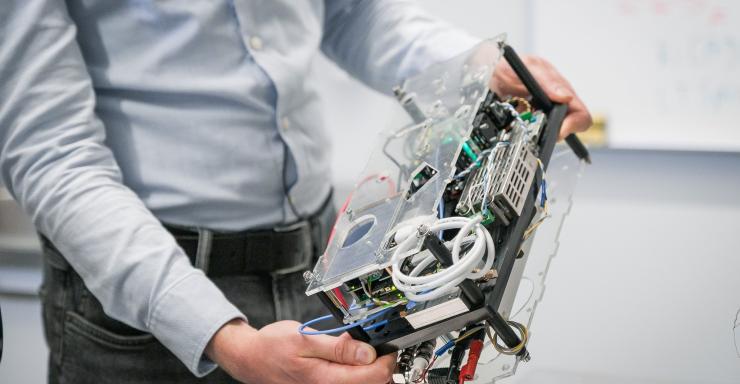
“First, the AI distinguishes weeds from useful plants,” explained WeedBot co‑founder and CEO Jānis Jaško. The machine’s “brain” and main component is a box containing a camera, light motors, and measurement systems. It calculates with high precision where exactly the weed is located in three‑dimensional space and can continuously target it with a laser beam while in motion.
“We’re talking about a 2‑millimeter weed that you can hit. It’s a complex task that must happen within milliseconds,” said Vitālijs Osadčuks, WeedBot co‑founder and lead engineer.
The journey from idea to product took longer than the creators expected — six years. This spring, WeedBot sold its first machine, which went to a carrot grower in Belgium.
The company’s target market is export, as Latvia does not have organic carrot farms large enough to recoup the investment. A typical WeedBot customer is a farmer with at least 10 hectares of carrot fields. The core customers are in the European Union and the United Kingdom, where farms range from 10 to even 100 hectares.
“The largest potential customer from France who has shown interest manages more than 400 hectares of organically grown carrots,” Jaško revealed.
The primary customer is organic farms. Their number is expected to grow, as the European Green Deal sets a target that by 2030 at least 25% of EU agricultural land must be dedicated to organic farming. The share of land used for organic agriculture in the EU has increased from 5.9% in 2012 to 10.8% in 2023. Growth is driven both by rising demand for organic products and by policy‑makers’ support for this type of farming. However, to reach the 2030 target, the growth rate would need to more than double in the remaining years.
Conventional farms are also showing interest in the WeedBot weeding machine. Jaško explained the practical reason: “They use herbicides, but both in Europe and the United States a major problem is weed resistance, as weeds become insensitive to the substances used.”
The device is designed specifically for carrot fields, but in the future it may be adapted for other crops. “Our focus is on crops that provide farmers with high profit per hectare, such as lettuce,” Jaško said.
The decision to start with carrots came from farmers themselves, because in organic farming weeding requires a huge amount of manual labour.
“Since carrots are tiny, mechanical cultivators can’t really reach them. That’s why farmers mostly rely on manual labour: behind the tractor, on a moving platform, several workers lie close together and manually pull out weeds.”
The work is extremely hard, often made worse by heat, and farmers across Europe struggle with labour shortages — which is why WeedBot can significantly ease the workload.
To teach WeedBot to recognize weeds and the crop that must be preserved, the first step is to collect images showing them at different stages and sizes, and then train the AI. For other crops, the machine remains the same — only the algorithm changes.
A weed‑killing robot in every garden?
At the moment, the WeedBot machine truly resembles something out of science fiction — almost like Star Wars. But the founders admit that in the future it will certainly become more accessible. Jaško compares: “Just as many homes now use robotic vacuum cleaners, over time this technology could also enter small gardens, where a tiny robot would weed dill, tomatoes, and other plants. It could just as well become an additional function of robotic lawn mowers.”
The founders do not hide that there is a large gap between an idea at the research stage and a real, profitable business — not only in Latvia, but worldwide. “But we realized that this idea was strong enough: it had the potential to work and become a viable business,” Jaško recalled the moment when it became clear that the idea had commercial potential and a startup had to be founded.
“When we understood that the device could handle weeds in real field conditions, we didn’t want it to just sit on a shelf as another completed project gathering dust.”
The founders compare this development to previous turning points in agriculture: “Just as the shift from horses to tractors was a huge revolution, here too we can move from chemical plant‑protection products and manual labour to fully automated solutions. This will reduce both costs and farmers’ workload, while making the environment greener and more ecological, as herbicides will increasingly be phased out of everyday farming.”
Rapidly growing demand
WeedBot operates in a small, emerging niche. When the idea was born, they were one of only a few companies working in this laser‑based segment; today, there is a small cluster of similar startups. WeedBot is not afraid of competition, as demand is so high that there is room for everyone.
“A typical comparison is with tractor or car manufacturers,” Jaško explained. “There are many brands on the market, and there is space for all of them. A farmer simply chooses what best fits their needs and capabilities.”
To meet demand and begin regular production, the company needs to attract additional investment. So far, around one million euros has been raised from investors in Latvia, the United Kingdom, Denmark, France, and Belgium.
“The initial plan was rapid growth — start with five machines, then 50, 100, quickly scaling up. This goal still stands, but right now we are actively working on the financial model to make it happen. Building a factory is an expensive process, and we need a solid plan to convince investors to commit not just one or two million, but significantly larger sums.”
A closer link between academia and business
Co‑founder Vitālijs Osadčenko is a professor at the Latvia University of Life Sciences and Technologies, where the idea for WeedBot was born — the startup’s connection with science and the university is very close and important.
Jaško emphasized that collaboration between companies and universities is crucial: the best ideas often emerge in academia, while business processes move much faster.
Support received by the company
- LIAA startup tax relief: €31,000
- EIT Food Accelerator Network project: €10,000
- Ventures Thrive project: €90,000
- European Digital Innovation Hub project: €12,000
- Business angels, private investors, investment funds: €965,000
Source: WeedBot
Transferring these ideas into the university environment also helps students understand that not only decades‑old theories matter, but also modern innovations and their practical application. In Western countries, the model where startups grow out of universities has long been common practice, although it requires significant investment.
Knowledge‑intensive companies are the direction of the future — and Latvia should strive for this as well, Jaško stressed. “Overall, it is precisely many small and medium‑sized knowledge‑intensive companies that will shape the future economy. The more successfully we can transfer knowledge from academia to business and back, the greater the benefit for the national economy, new companies, and society as a whole.”
A study by McKinsey shows that by investing in the development of knowledge‑intensive technology companies, Europe’s startup ecosystem could create one trillion dollars in company value by 2030, generating at least one million new jobs. Europe is already gaining momentum — in 2024, 8% of the world’s deep‑tech unicorns (companies valued at over $1 billion) were founded in Europe, compared to just 4% in 2021.
A major boost for knowledge‑intensive startups will also come from EU Inc. — a unified regulatory framework that will allow innovative companies to reach customers in any European country under a single set of rules. This regulation is already in its final stage.