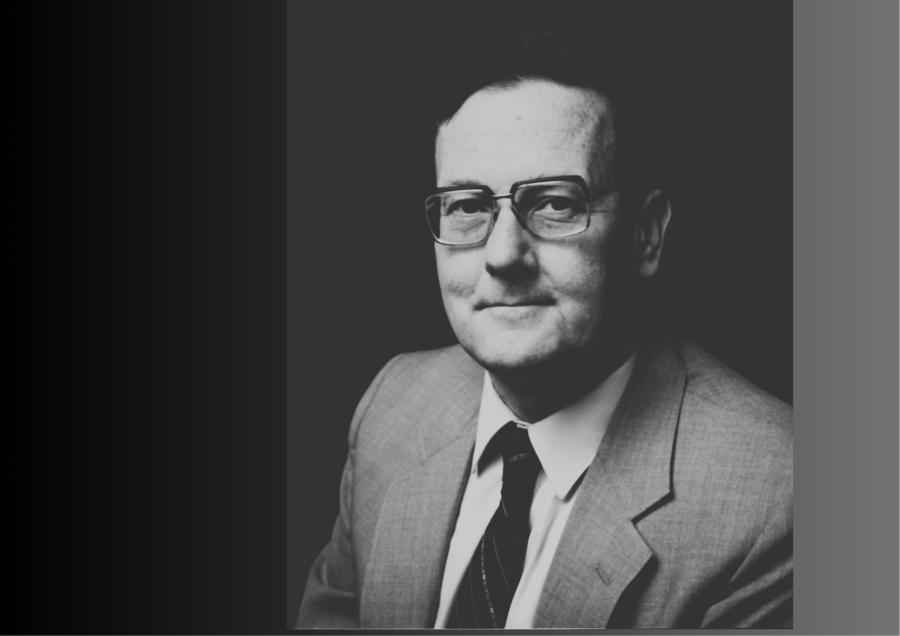
On May 17, 2026, the outstanding physicist of Latvian origin, a pioneer of holography, and foreign member of the Latvian Academy of Sciences, Professor Juris Upatnieks, passed away. He was one of the most significant optical scientists of the 20th century, whose work has had a substantial impact on the development of modern physical optics and coherent optics.
In 1964, Juris Upatnieks and Emmet N. Leith demonstrated the first high‑quality laser holograms, obtained using their developed off‑axis two‑beam recording method. This caused enormous resonance in the global scientific community and essentially marked the beginning of the modern era of holography. Their work became the foundation for many holographic technologies developed later.
For his contribution to holography, he was nominated for the Nobel Prize in Physics together with Denis Gabor, Emmet Leith, and Yuri Denisyuk.
Professor Juris Upatnieks’ scientific work was not limited to fundamental research alone. He held several dozen patents in holography and coherent optics, including in the fields of holographic sighting devices and optical imaging systems. His inventions are used both in civilian technologies and in high‑precision industrial and defense systems.
Juris Upatnieks’ outstanding contribution was recognised with many international awards. In 1965, the International Society for Optics and Photonics awarded him the Robert Gordon Prize. In 1967, the American Society of Magazine Photographers presented him with a Technical Award. In 1975, he received the Robert W. Wood Prize of the Optical Society of America. In 1976, Juris Upatnieks was awarded the Holley Medal and was named U.S. Inventor of the Year. In 1999, he was awarded the Grand Medal of the Latvian Academy of Sciences for the development of the fundamental principles of optical holography and the advancement of its applications worldwide, as well as in 2007 the Valters Caps Award, granted by the Latvian Academy of Sciences and the Patent Office of the Republic of Latvia. In 2010, Juris Upatnieks was awarded the Emmet Leith Medal.
Despite living and working professionally in the United States, Professor Juris Upatnieks always maintained a close connection with Latvia and the Latvian scientific community. Every summer, he travelled to his home in Roja. He actively supported the development of science in Latvia by visiting RTU laboratories and delivering lectures at RTU and at the Institute of Atomic Physics and Spectroscopy of the University of Latvia, sharing his experience with young researchers.
Through his work, Juris Upatnieks brought the name of Latvia into the world of science. For the Latvian Academy of Sciences and its Division of Physical and Technical Sciences, Professor Juris Upatnieks was not only an outstanding scientist but also an inspiring personality, demonstrating that the contribution of Latvian scientists is significant on a global scale.
The Latvian Academy of Sciences expresses its deepest condolences to the family, relatives, colleagues, and the entire global scientific community of Juris Upatnieks. The name of Juris Upatnieks, a foreign member of the Latvian Academy of Sciences, as a pioneer of holography and one of the most outstanding Latvian physicists, will remain inscribed in the history of world science.