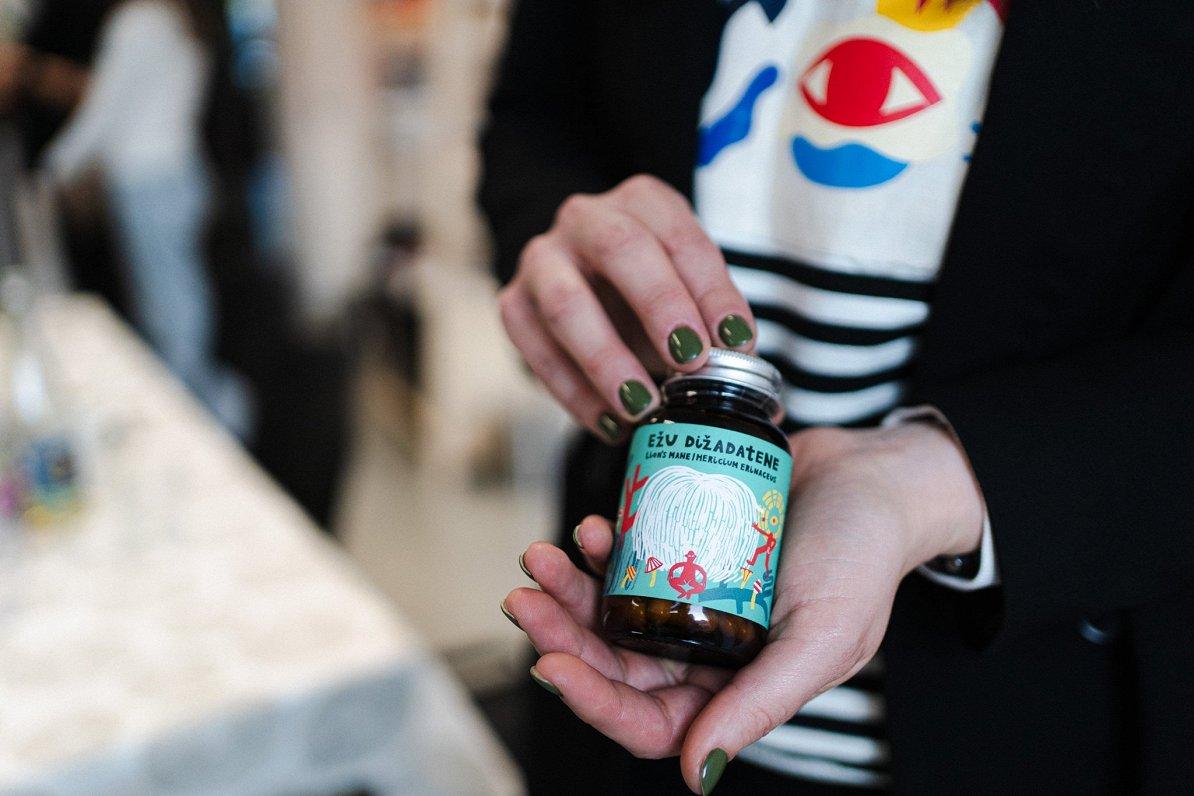
Functional mushrooms are experiencing a surge in popularity worldwide, valued for their benefits in boosting energy, focus, and immunity. In Latvia, this niche is also being developed by “Spora Lab,” a company that cultivates medicinal mushrooms in its laboratory in Cēsis and produces dietary supplements from them. What began as an experiment in a home lab has, within a few years, grown into an innovative business with its own products, a subscription model, and increasing demand.
Passion turns into a business plan
The company was founded by Rihards Grāvis and Šarlote Baškevica—a husband-and-wife team whose educational and professional backgrounds lie in entirely different fields. Rihards is a programmer, while Šarlote is an artist and teacher. Initially, the world of mushrooms was completely unfamiliar to them. During the Covid-19 lockdown, while exploring ways to improve their focus and productivity, they discovered information about mushrooms that have been used in Eastern medicine for centuries.
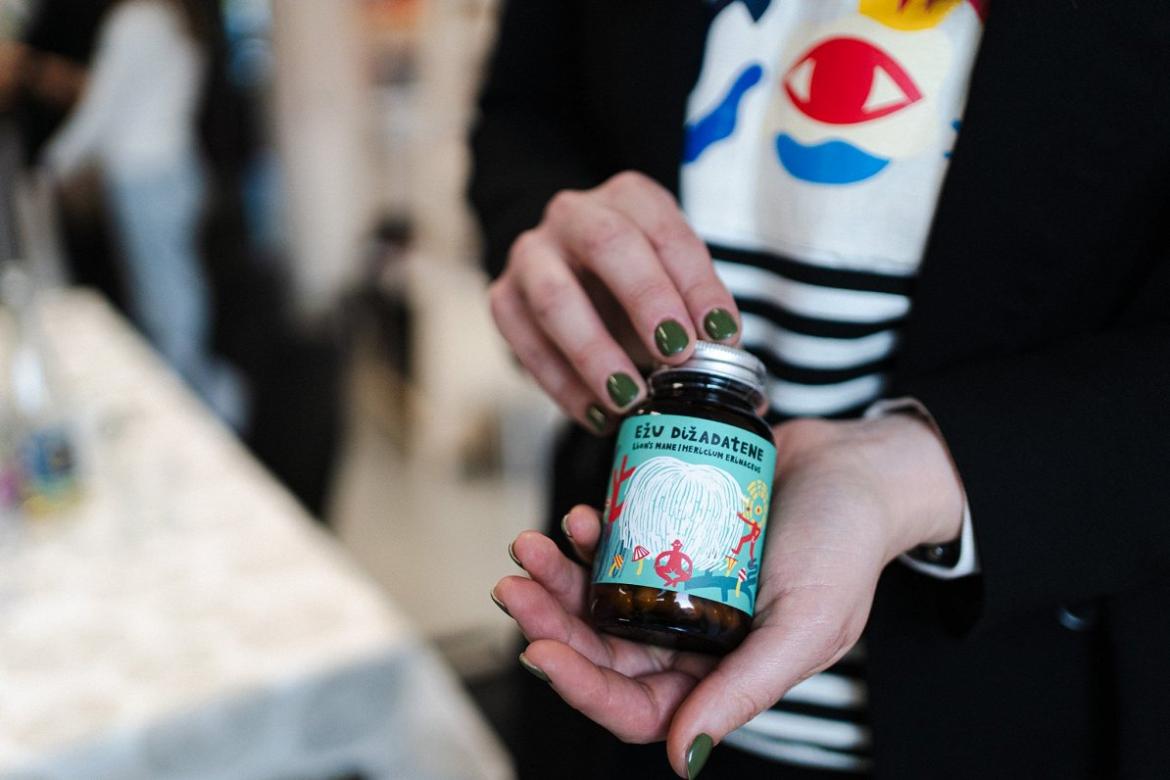
This is how the idea to try cultivating these organisms ourselves was born. A home‑lab experiment gradually turned into a serious and exciting project:
“At some point, the mushrooms simply became so abundant that we couldn’t consume them ourselves.”
A few years later, the company Spora Lab was founded. Today, it grows and processes functional mushrooms into dietary supplements.
Farmers in the heart of Cēsis
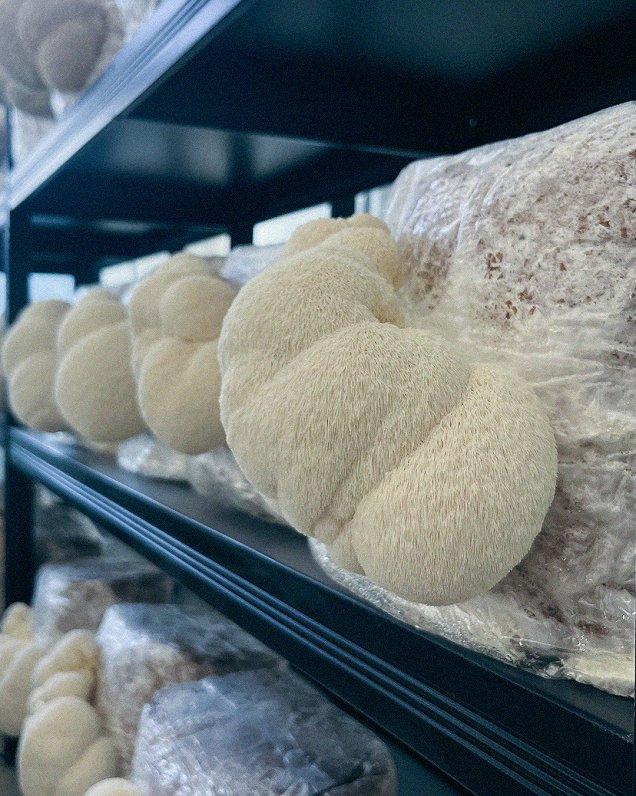
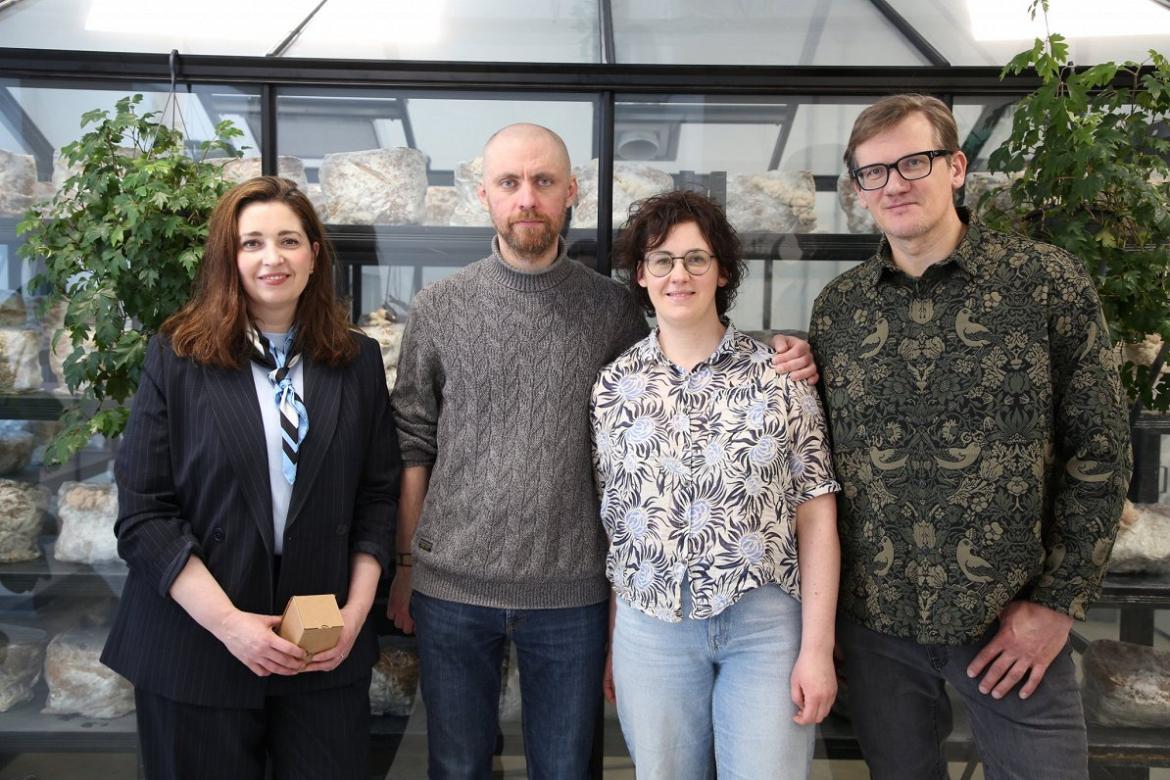
In a greenhouse located in the Rainis Creative Quarter in Cēsis, two types of mushrooms are grown — lion’s mane and reishi. The team is still studying the character and growth habits of reishi, but the company’s main product is an extract made from lion’s mane (Hericium erinaceus).
“We control the temperature, humidity, and oxygen levels — it should feel like a nice crisp autumn in here,” Grāvis explained while showing the mushrooms in the small greenhouse.
The company is developing its operations in Cēsis, and local entrepreneurs praise the town as a supportive and responsive place for this kind of business. The municipality itself also lends a hand, looking for ways to support entrepreneurs. For example, it organizes a grant competition in which the best companies receive combined support — both from the municipality and from the LIFE integrated project ‘Waste as Resources in Latvia – Promoting Regional Sustainability and Circularity’.
Practical support is also available through the incubator program of the Latvian Investment and Development Agency (LIAA). Within this program, the company has received a little over 57,000 euros. Some of the funding has not yet been used, but with active work underway, they expect to make full use of it soon. Spora Lab also noted that the ALTUM Start-up Loan has been helpful.
In Latvia, Spora Lab is the only company that both grows mushrooms and produces its own extract. However, competition in the market is intense, with many offers coming from China — the world’s largest mushroom producer.
Moreover, quality requirements there are significantly lower than in the European Union.
“We have to learn how to talk about ourselves so that people can find us. We’re not the only ones offering this product on the market, but we are the only ones offering a Latvian-made extract,” Grāvis said, naming marketing as one of the main challenges.
Spora Lab’s added value is a fresh extract produced immediately after harvesting the mushrooms.
“If we look at it from pure business logic, we’re doing many things wrong. We shouldn’t start with organic certification and handling the entire process ourselves,” Grāvis admits, pragmatically reflecting on the core values and ambitions of “Spora Lab.”
A different approach would be to source mushrooms in bulk, process them quickly, and scale faster. “But one of our core values from the very beginning has been to do things the right way. It feels wrong to produce such a natural, high-quality product in a less responsible way.” Transparency and honest business practices are key advantages they hope will help them gain trust in Scandinavian markets.
Competing with China through education
However, “Spora Lab” is more than just a cultivation and production facility. Education has naturally become part of their work, as they offer products that many people are encountering for the first time. As Baškevica explains: “Education is one of our core values. We want to talk about mushrooms not only in a technical format, like our workshops, but also through art.”
An example of this connection between mushrooms and art can be found in their office, where a modular synthesizer by “Erica Synths” is used to create music from mushroom mycelium.
From lab to customer
The company’s laboratory is located in the Raiņa Quarter in Cēsis, where the entire process can be observed—from growing mycelium to the final product. “Spora Lab” is the first company in Latvia operating in this field, which means they often need to explain their work to regulatory institutions. Even authorities are still learning how to oversee this type of mushroom cultivation.
“When we received our organic certification last year, the process took several months longer because institutions didn’t yet have protocols for this type of cultivation,” Grāvis explains. “They even had to consult colleagues in Austria.”
The company grows its own mushrooms, extracts active compounds, and produces capsules—ensuring full control and traceability from start to finish. Currently, they produce several hundred extract packages per month, but demand already exceeds capacity. Future plans include expanding production facilities and broadening their product range.
A growing industry
The functional mushroom market has been rapidly expanding worldwide, with applications in supplements, beverages, and cosmetics. The typical “Spora Lab” customer is over 35 years old; these products are not intended for people under 26.
“We’re not primarily looking for people interested in mushrooms,” says Grāvis. “We’re looking for people interested in improving brain performance.”
One of the company’s more innovative solutions is its subscription model. Customers can sign up for regular deliveries, receiving a new package of extract every month—helping ensure consistent access for customers while stabilizing demand for the business.
Step by step into the future
“If you want an honest answer about where we’ll be in five years – we don’t know,” says Grāvis. Instead of long-term predictions, the founders of “Spora Lab” focus on the short term: testing ideas quickly, learning, and adapting. As they admit, in the beginning, more things failed than succeeded.
For now, the business is not yet self-sustaining, and both founders continue working in their original professions. However, they are approaching a key growth phase. In the coming months, production is expected to scale significantly, with new greenhouse facilities and plans for a larger production site that could enable exports.
“Spora Lab” is primarily targeting Scandinavian markets, where consumers value organic certification and transparency in production.
To accelerate growth, the company is also in discussions with potential investors. As Baškevica notes, this early expansion stage is one of the most exciting. For now, both founders are focused on setting and testing short-term goals—looking one or two years ahead, rather than five.