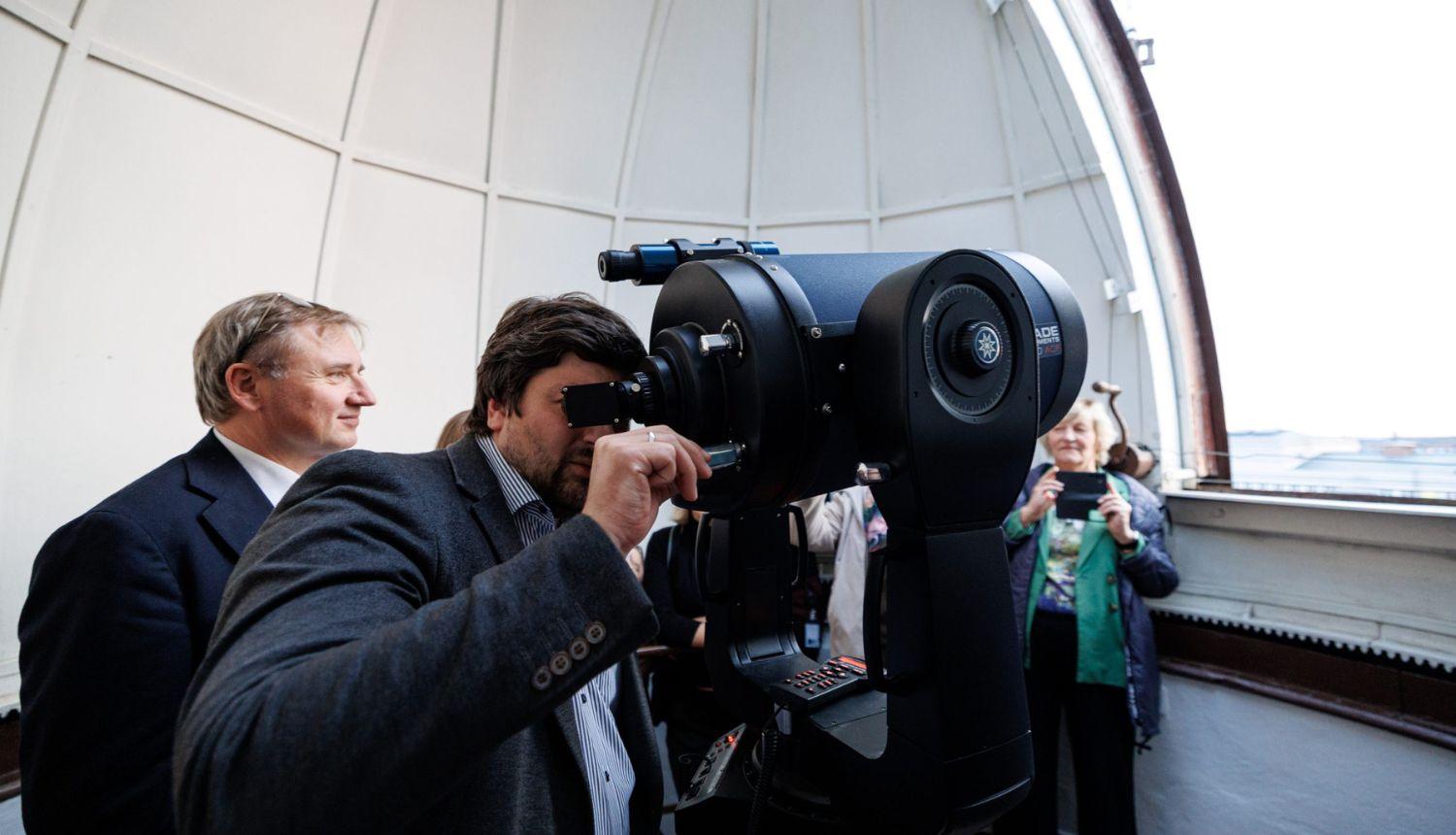
This autumn, the Astronomical Tower of the University of Latvia (UL) begins its 40th season of astronomical demonstrations, promising special celestial observations with the most powerful telescope in the tower’s history. The new telescope will allow visitors to observe fainter celestial objects and, thanks to its precise tracking system, also the hard-to-spot planets Uranus and Neptune. The telescope was acquired in cooperation with the UL Foundation, thanks to 109 donors, as informed by Jana Saulīte, Head of the University’s Public Relations Department.
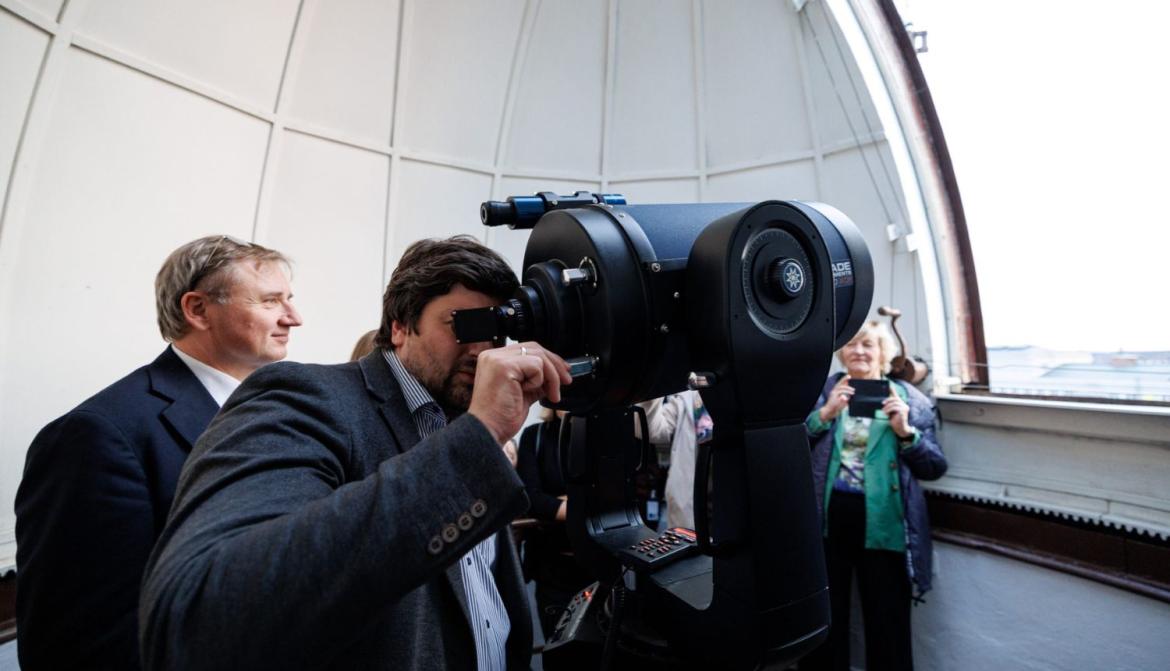
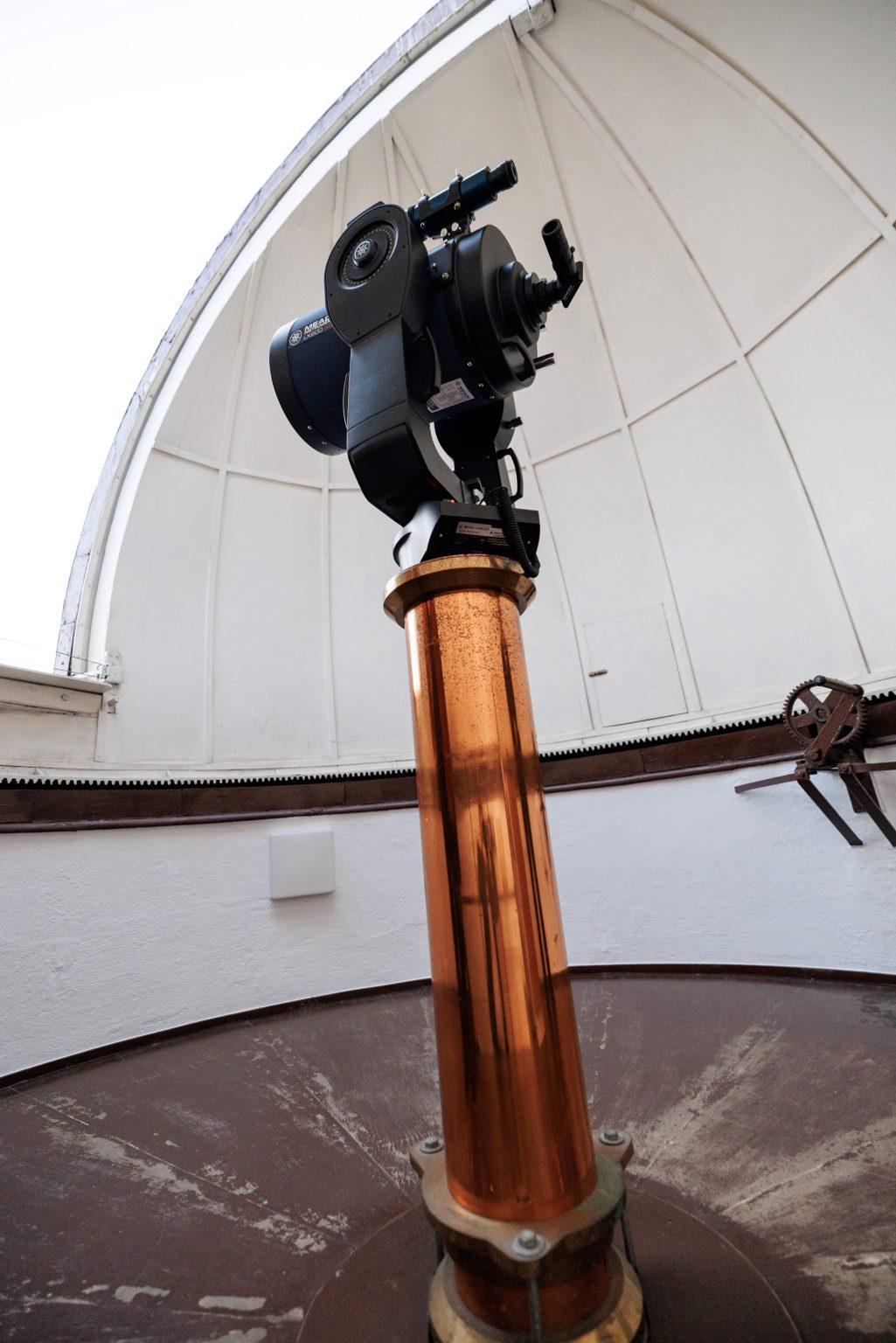
"The new Meade telescope with a 25.4 cm mirror diameter is the largest ever used in the UL Astronomical Tower. It will continue the tower’s tradition - thousands of visitors, from schoolchildren and students to families, have had their very first chance here to see stars, planets, Moon craters, and galaxies," says astronomer Vitālijs Kuzmovs.
This season’s program for astronomy enthusiasts includes the return of Saturn’s rings, Jupiter’s appearance in November, and a planet parade on February 28 next year, when five planets will be visible simultaneously.
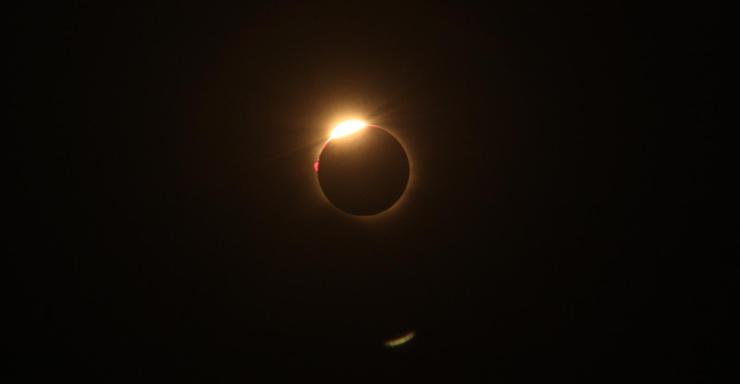
Special attention this season will be devoted to two comets - C/2025 A6 (Lemmon) and the interstellar comet 3I/ATLAS, which will pass by Earth in December. This is only the third known comet to have arrived from another star system. Observers will also be able to see meteor showers, including the Geminids in early December, which promise up to 150 meteors per hour.
The new telescope was purchased thanks to active public involvement, and the names of the donors are inscribed on a plaque of gratitude.
"Thanks to 109 patrons of the UL Foundation, every stargazer will now be able to observe the night sky with a new level of quality! We are deeply grateful to every donor, as each contribution is important for achieving a greater goal," says Zaiga Pūce, Head of the UL Foundation.
Demonstrations at the UL Astronomical Tower take place from early October to the end of March on weekday evenings, weather permitting. During the visit, guests can not only observe stars, planets, galaxies, and constellations, but also ask questions to the astronomers.
The UL Astronomical Tower, which has been a vital site for astronomical observations for over 150 years, commenced its operations with the installation of the Fraunhofer refractor in 1873. In 1921, visitors gained access to the Heyde telescope, which in 1986 was replaced by the Mizar reflector. In 1995 it was followed by a 22 cm Newtonian telescope. The previous Meade reflector telescope with electronic control had been in use since 2007.
Visits to the UL Astronomical Tower must be booked in advance by emailing gunta.vilka@lu.lv, by calling +371 67034033, or by filling in the registration form on the UL Museum website.