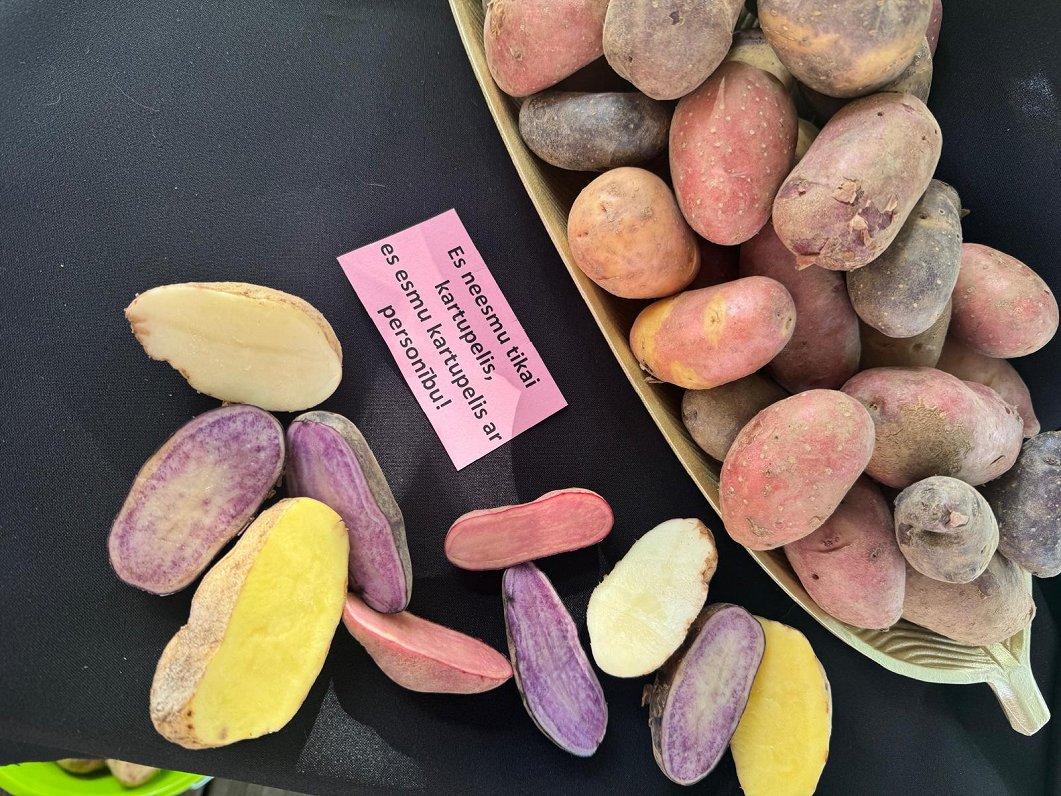
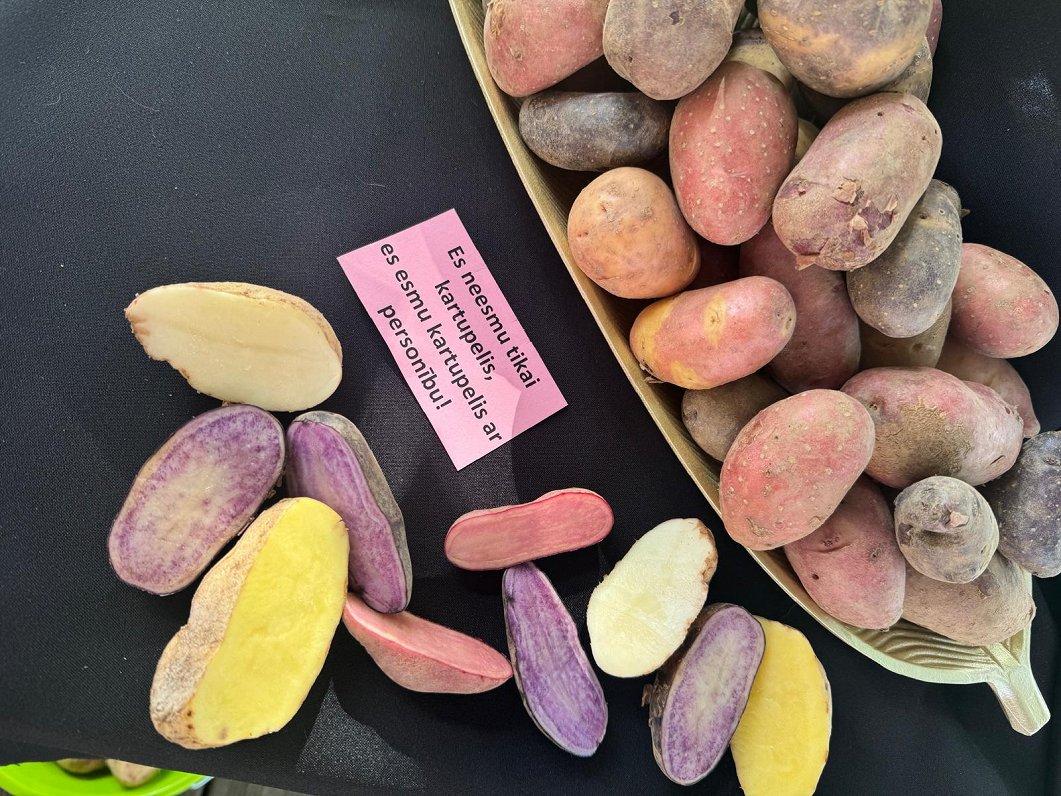
Many rainy days this season have caused serious headaches for farmers. The harvest has been affected, making it difficult to gather crops, and sowing activities have also been hindered. Various crops are grown at the Priekuļi Research Center for research and variety breeding purposes. The trial fields have also received a significant amount of moisture this year. However, some medium-early local potato varieties have yielded well this season, and new varieties of colored potatoes are also in development.
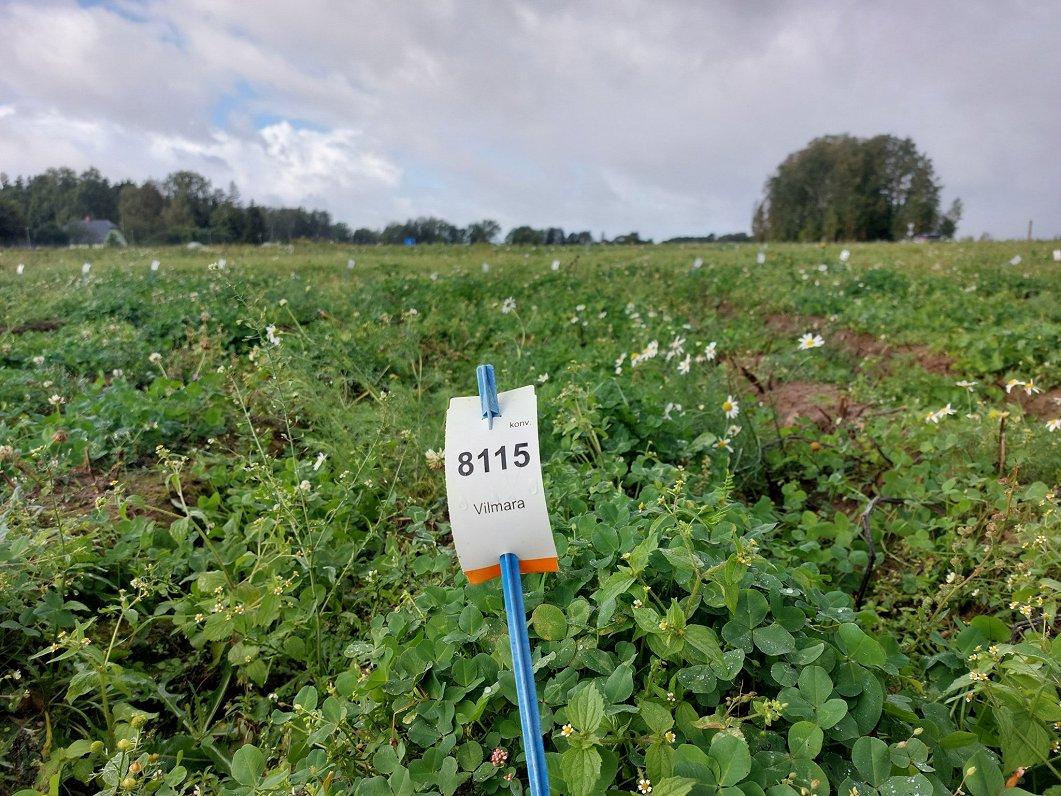
"This is 'Vilmara,' which this year was registered as a new early variety, suitable for early harvest. But here next to it, there’s also the medium-early variety 'Lenora,' which has been known for several years, and it really had a very nice and good yield this year," says Ilze Skrabule, a potato breeder at the Agro Resources and Economics Institute at the Priekuļi Research Center, while showing a three-hectare trial field where different potato varieties are growing in small rows. In some places, researchers have already started harvesting the crop.
However, due to the rainy weather, it is often not possible to get a combine harvester into the fields at Priekuļi. So far, based on the harvested potatoes, the researcher concludes that the yield is not as bad as it might initially seem, though the moisture has increased the risk of plant diseases.
"It’s interesting that there have been many tubers, but this can be understood because during the tuber formation period, it was cool. Not all varieties, but some, experienced cooler conditions, and in such conditions, more tubers are formed, but they are smaller. We can see this in our results. The excessive moisture could also be problematic because it can promote the development of various diseases, which continue to grow in storage. We try to dry them, but sometimes it’s quite difficult. This year, early varieties haven’t grown very well, but the medium-early varieties have a very beautiful yield."
On the issue of late blight, which spreads rapidly in such moist weather, Skrabule mentions that this year, it was easy to see the varieties that are resistant to late blight—they had beautiful green leaves for a long time.
"Of the varieties developed here in Latvia, these are 'Imanta' and 'Jogla,'" says Skrabule.
The breeder continues that these two varieties, which have performed well under this year’s conditions, are particularly suitable for starch production, which is in demand among farmers. Potato growers are also looking for new local varieties. The breeders at Priekuļi Research Center mainly select older varieties that are disease-resistant and generally have good quality traits. They then perform cross-breeding to select the best offspring. However, combining various traits into a new variety before registering it takes a long time—about 10 years or more. The researcher mentions that two new varieties could appear on the Latvian market soon.
"Both of these are medium-early varieties. One is very interesting, with purple skin and white spots, but it is very productive and tasty. Opinions are divided, but mainly younger people say, ‘Yes, we would really like such a variety.’ The other one will have pink skin and a very beautiful, smooth shape."
"We are also working on developing varieties that would be suitable for Latvia’s growing conditions but have colored flesh. These are especially important for their quality traits because these pigments act as antioxidants in the human body, plus they help maintain eye health, as these pigments are similar to those in blueberries. So we are trying to combine this colored flesh with other good traits. But these types usually come with the drawback of having a long growing period, meaning they are late-maturing and low-yielding. Our goal is to create something that would be both productive and, ideally, sufficiently early for Latvia," Skrabule explains.
Meanwhile, seed production agronomist Anda Razgačeva notes that the clover harvest has been particularly poor due to the weather conditions this year, while on another field, she shows the well-grown legumes.
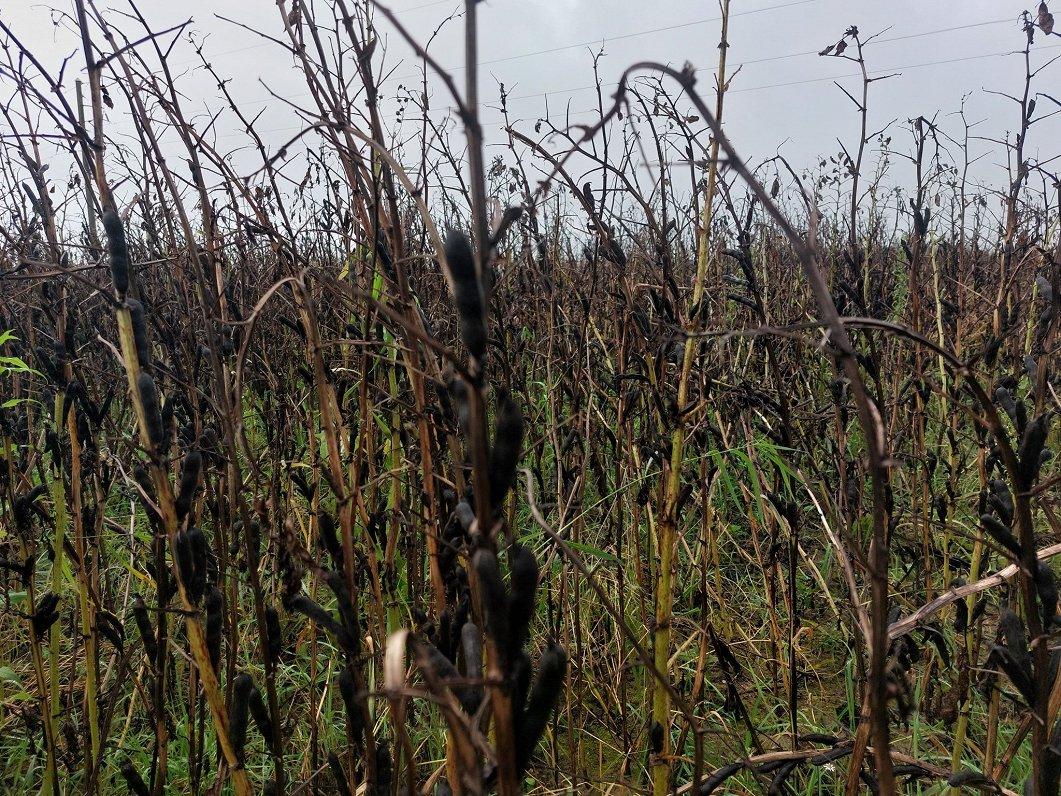
"Normally, beans grow to about 1.5 meters, but this year they’ve reached nearly 2 meters. They would be ready for harvesting, but the weather conditions are still not ideal. From our fields, it seems the legumes are enjoying the weather. We are mostly seed growers, but the grains have very small seeds and low volume," says Skrabule.
According to her, among the cereals, varieties that have coped better with the weather conditions stand out. "I think the new wheat variety 'Brigens' developed by Stende’s breeders has performed quite well, as has our rye variety 'Kaupo.'"
The agronomist also assesses that the seed harvest for various crops in Priekuļi is generally sufficient and will be available for farmers. However, farms are currently facing challenges with the sowing process, which is delayed due to the excessively wet weather.