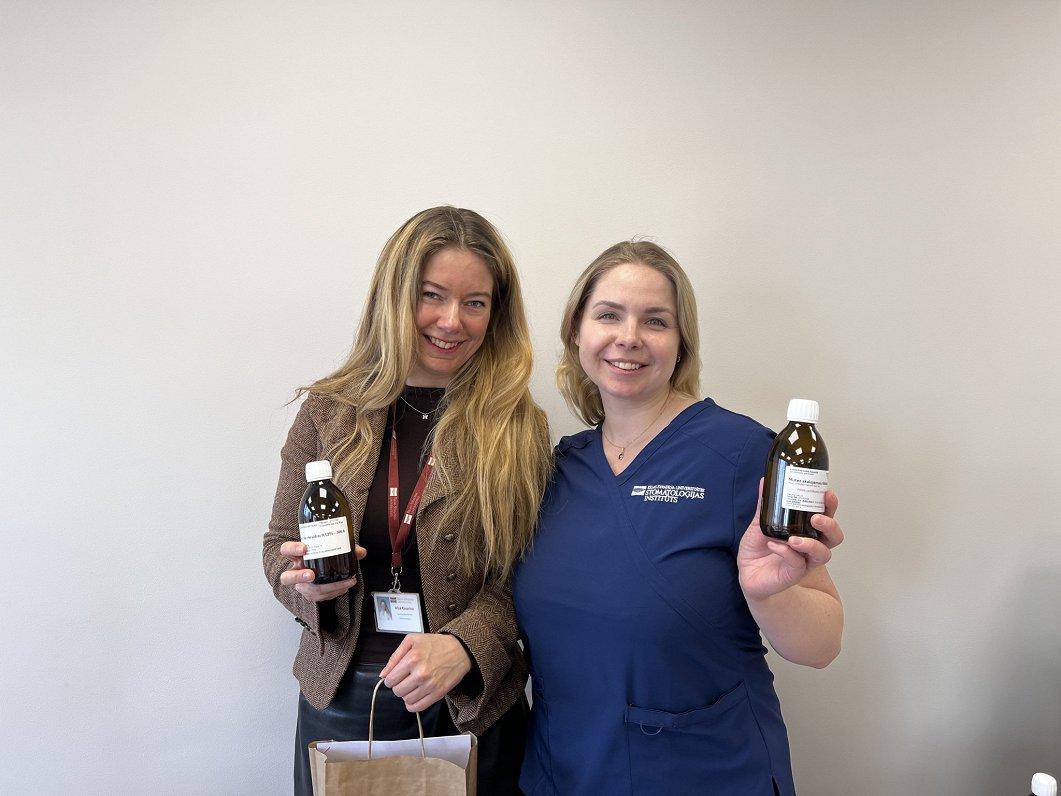
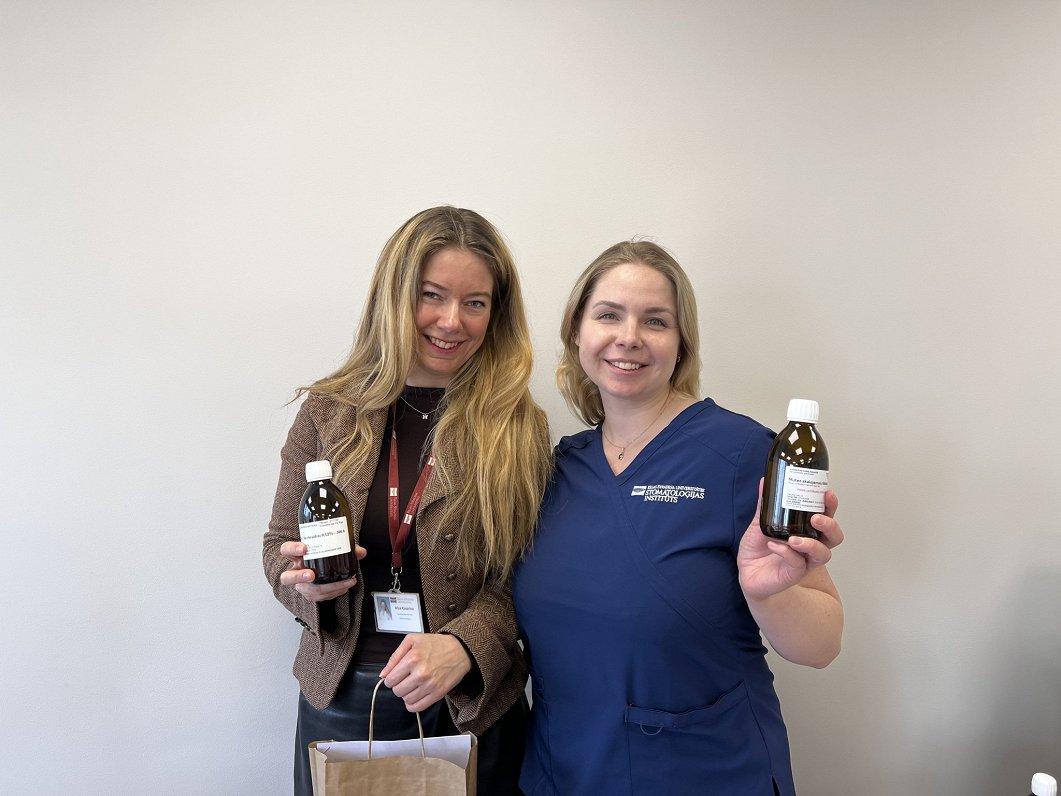
A mouthwash containing natural essential oils and, compared to those currently available, is non-aggressive. This is being developed at the Riga Stradiņš University (RSU), where researchers and dentists have begun offering the first products to patients with periodontitis. This gum inflammation disease was highlighted during the ongoing Science Week at the Riga Stradiņš University.
The researcher behind the new hygiene product, Alisa Kazarina, concludes that after the age of 30, signs of gum disease appear in every second person. To address the issue while not harming a person's health, the researchers are developing a new solution.
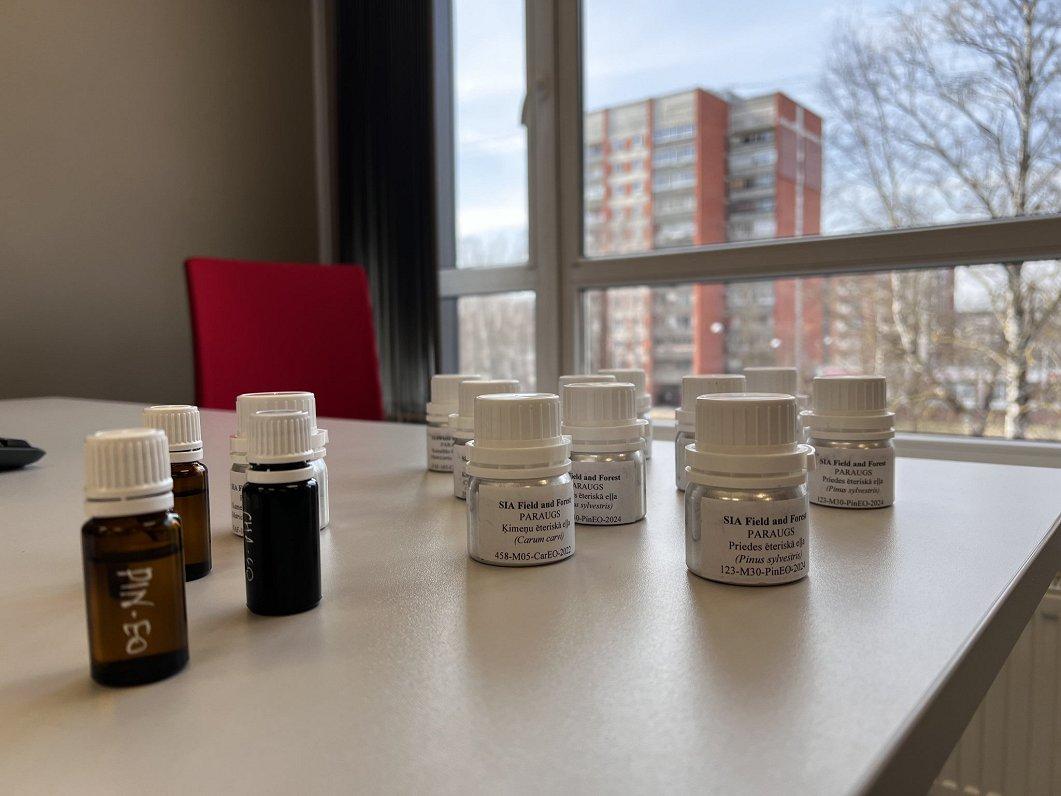
Kazarina hands over small, silvered, and glass bottles containing essential oils made from caraway, chamomile, and pine, all grown in Latvia. Next to these smaller containers are much larger glass bottles with a very low concentration of coriander essential oil. These are the developing mouth hygiene products that will serve as an alternative to the liquids currently used in dentistry.
"There is still the belief that microbes in the mouth are something bad and dangerous to human health. People think they need to get rid of microbes. Often in stores, you can find mouthwashes and oral hygiene products that promise to eliminate bacteria from the mouth by destroying 99.9% of all bacteria, but the latest research shows that this isn’t really the case. People have heard about microbiomes in general, but the oral microbiome is an area that is currently being studied even more intensively.
We know that there are quite a few microbes in the oral microbiome that are very, very necessary for the human body," Kazarina points out.
Essential oils can fight harmful bacteria while preserving the beneficial bacteria necessary for health. The study plans to observe about 60 periodontitis patients, for whom dentists recommend using a mouthwash with coriander essential oil, which has proven to be the most effective.
"We are especially focusing on patients with stage three periodontitis. This is the stage when periodontitis is already quite widespread and challenging to treat. The idea is that these patients use the mouthwash for two weeks. Before using the mouthwash, we collect saliva samples. Then, after two weeks, we collect saliva samples again. We will study the changes in the oral microbiome in the saliva – how the bacteria and viruses in the mouth have changed. At the same time, we will look at inflammation markers – how the human cells and body react to a particular substance or therapy," the researcher explains.
So far, more than 20 people have used the new mouthwash, and the researcher has noticed that inflammation appears to have decreased, with many expressing satisfaction with the results.
The mouthwash is also being offered to patients by dentist-periodontist from the Institute of Dentistry, Dārta Elizabete Emuliņa.
"Currently available chlorhexidine-based products are, so to speak, aggressive. We use them for patients with severe periodontitis in courses – a maximum of two weeks. If used for longer, there can be quite unpleasant side effects. First, it destroys the good bacteria, and it becomes much harder to achieve the healthy balance we want. Secondly, patients also report changes in taste perception, and an unpleasant, hard-to-remove pigment can form on the teeth, which is aesthetically very unappealing. Additionally, tartar forms more quickly, which restarts the cycle – plaque attaches to tartar, and our disease can worsen and become harder to control," explains the dentist.
Emuliņa notes that mouthwashes available on the market should only be used upon a dentist's recommendation.
"The choice is wide, and perhaps the manufacturers haven't always thought about the health of your oral microbiome. If you brush your teeth properly, you might not even need a mouthwash.
The key is not to overdo it. It is definitely worth taking the time to thoroughly clean your teeth, rather than focusing on rinsing," emphasizes the dentist.
On the other hand, the new mouthwash could be used by the general public, potentially even without a dentist's recommendation.
The study with patients is expected to conclude in the next few months, while the entire project will wrap up after a year. Researcher Kazarina is confident that such a product could be manufactured in Latvia.