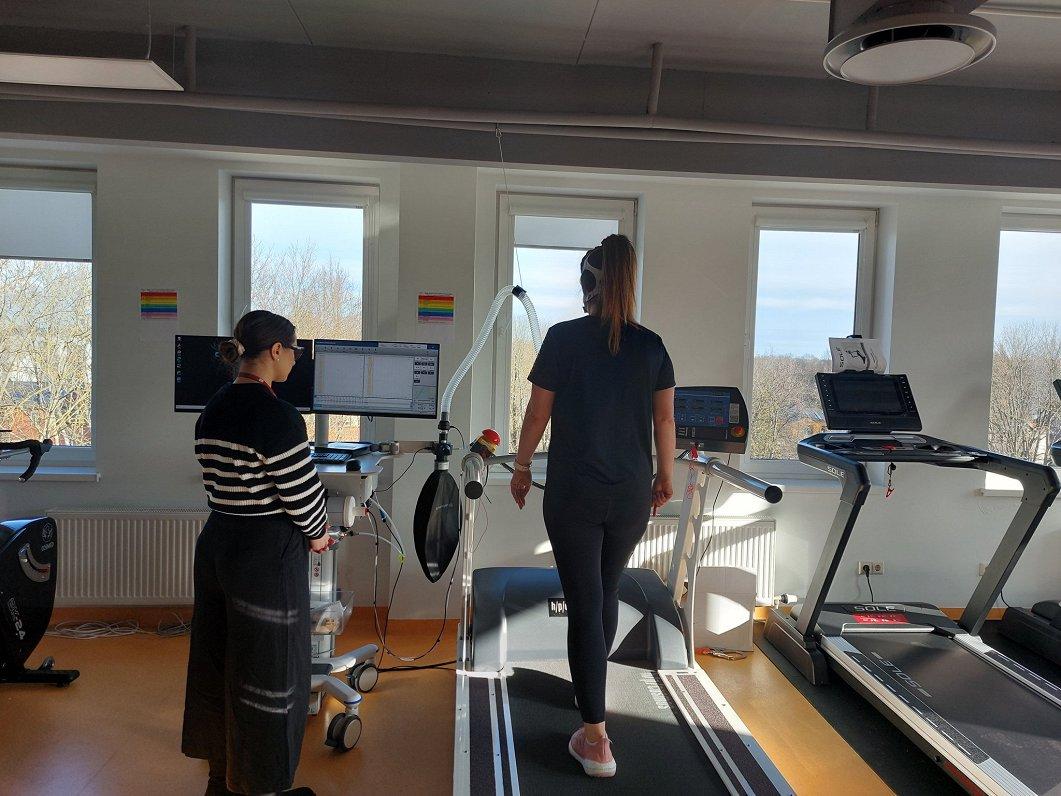
At the Rīga Stradiņš University (RSU) laboratory, exercise tests are being conducted on both cancer patients and healthy women to determine the impact of physical activity on quality of life during oncology treatment. The research results highlight the need for personalized therapy to ensure more effective patient care and treatment.

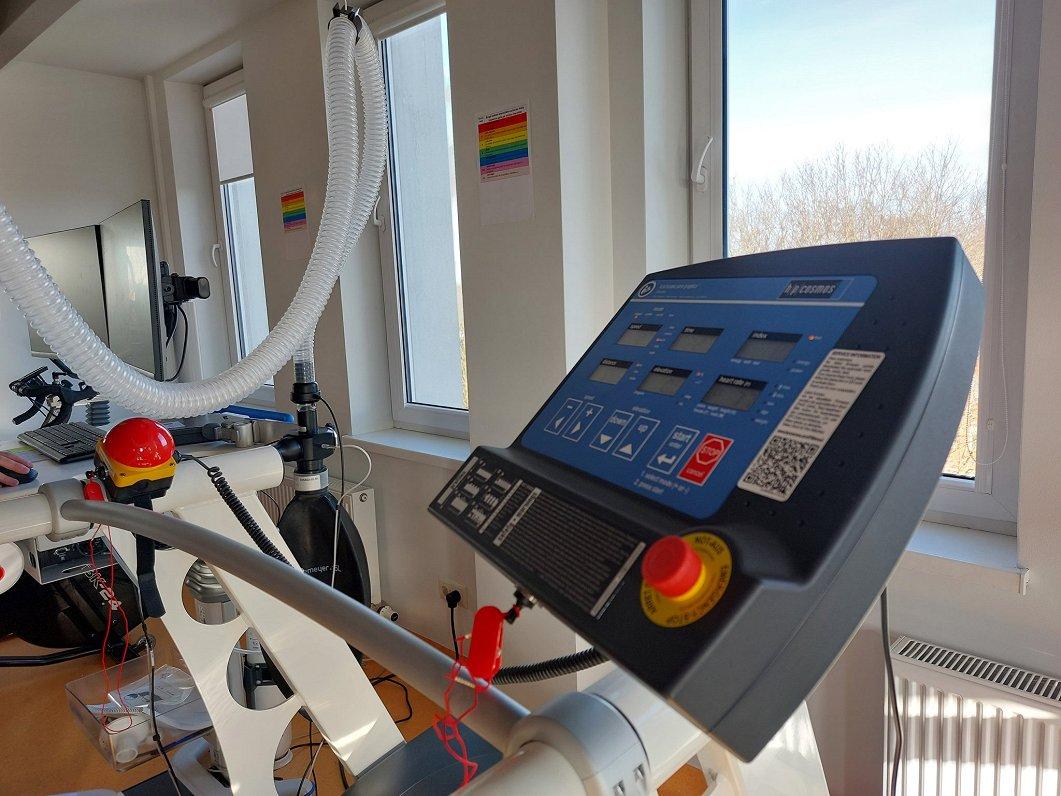
At the RSU Sports and Nutrition Research Laboratory, a study participant performs exercise on a treadmill to help gather data for more effective cancer treatment.
Researchers are analyzing whether acute physical exercise after one workout causes changes in blood composition and could affect the growth of breast cancer cells in artificial laboratory conditions,
said the laboratory director, Dace Reihmane.
“What we do is take a blood sample before and after exercise, place it on a cell culture – these are cells grown in plastic dishes – and observe how the impact on the blood composition differs before and after exercise. (…) These are not patient’s sick cells. These are standardized cell lines that are widely used in research. Originally, they were based on a single cell sample from a breast cancer patient, but they are continuously grown and replicated, and are used worldwide as a model system for cancer research. So, we do not look at our patient’s cell samples,” explained Reihmane.
However, the study uses blood samples from participating cancer patients and has concluded that the cancer cells grow slower when blood samples taken after a specific physical exercise are added to them.
"So, what is happening is very subtle, called proliferation inhibition, which means a decrease in cell division and reproduction. These cells grow slower, which means that physical exercise has created favorable conditions for these cells to not grow, and this is very important. Of course, during therapy, if we think about this supportive effect that reduces, for example, metastases, because metastasis formation primarily happens when cancer cells divide excessively and then detach from the primary tumor, traveling throughout the body. But if during physical exercise we create this cocktail of different chemicals, it could potentially trap and stop the growth of even circulating metastatic cells – that’s very positive," explained Reihmane.
The laboratory’s lead researcher, Aija Kļaviņa, added that in a previous study, a special training group of 23 patients had demonstrated that personalized physical activities during chemotherapy also improve patients' quality of life.
"When we talk in terms of sports science, high intensity is always associated with very intense training and pushing oneself to the limit. And sometimes this creates a contradiction in the understanding of medical professionals about how high intensity can be combined with a severe illness like oncology.
Of course, we want to keep the patients' daily life as close to their normal routine as possible, so they can continue working, caring for their families, while undergoing treatment.
We use remote monitoring and perform high-intensity aerobic activities for them, meaning they walk briskly for four minutes and then reduce the pace for three minutes, allowing the body to recover before the next four minutes. This 4x4 model is very optimal, unique, and widely used in many other disease categories. It takes 36 minutes from your day to do these 4x4 aerobic activities. For the patients who performed these activities after chemotherapy, there were virtually no cancer cells left to use in the second part of the study," explained Kļaviņa.
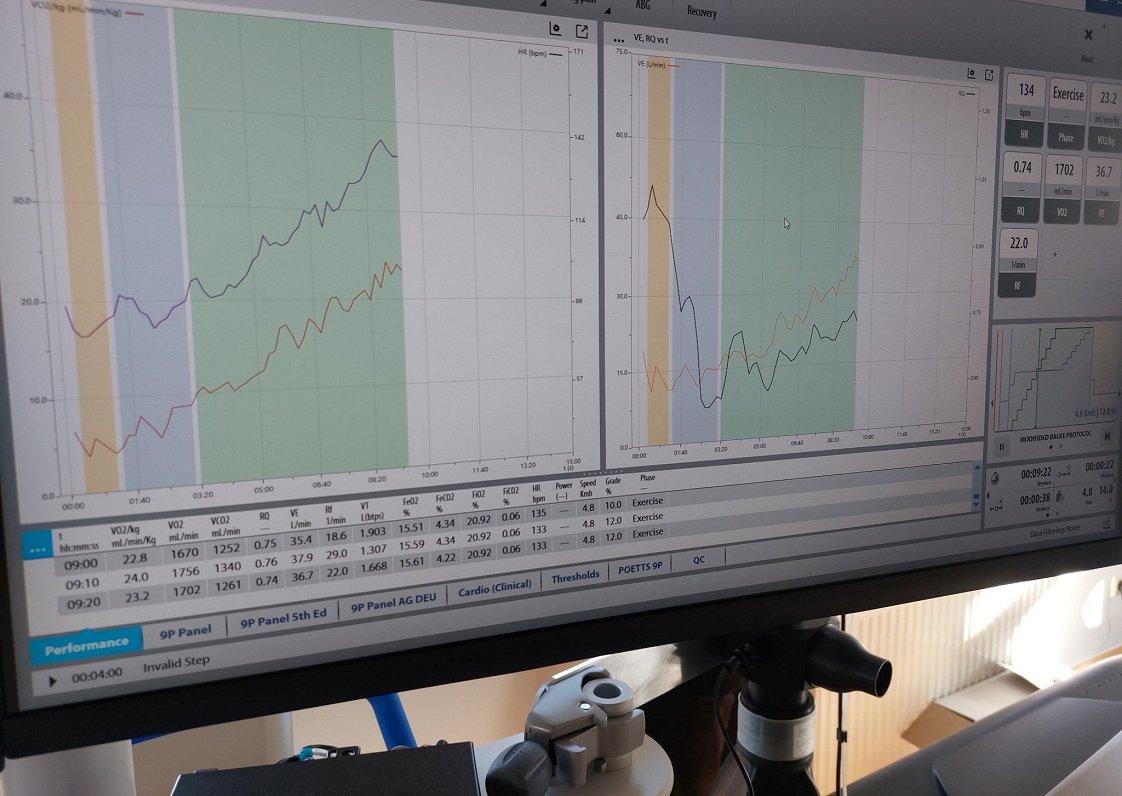
The study involves not only breast cancer patients from all over Latvia, but also healthy women, in order to obtain comparable data. On the day when Latvijas Radio visits the laboratory, the study's volunteer participant Sintija has arrived for her training session.
"Actually, I was approached by an acquaintance who also studied at the RSU and knew about this study, so I became more interested and read about it. It's interesting for me to see what results will come out of it, and of course, it's also a contribution to the researchers who are studying all this," said Sintija. "I’ve already tried [the training] once, and there were no problems, but personally, I just have to overcome a bit of anxiety, especially with the mask, but once you get past that, it's not physically difficult."
The research at the RSU Sports and Nutrition Research Laboratory on tumor cell responses to acute physical exertion will conclude in a year. The researchers are inviting both breast cancer patients and healthy women to participate and sign up for physical exertion tests.
Registration form for those who want to join the study.