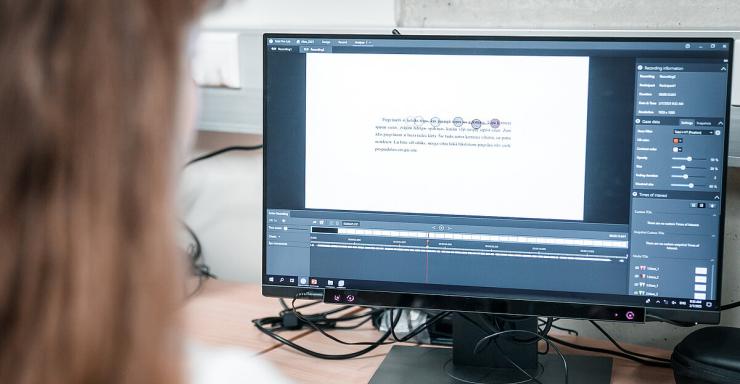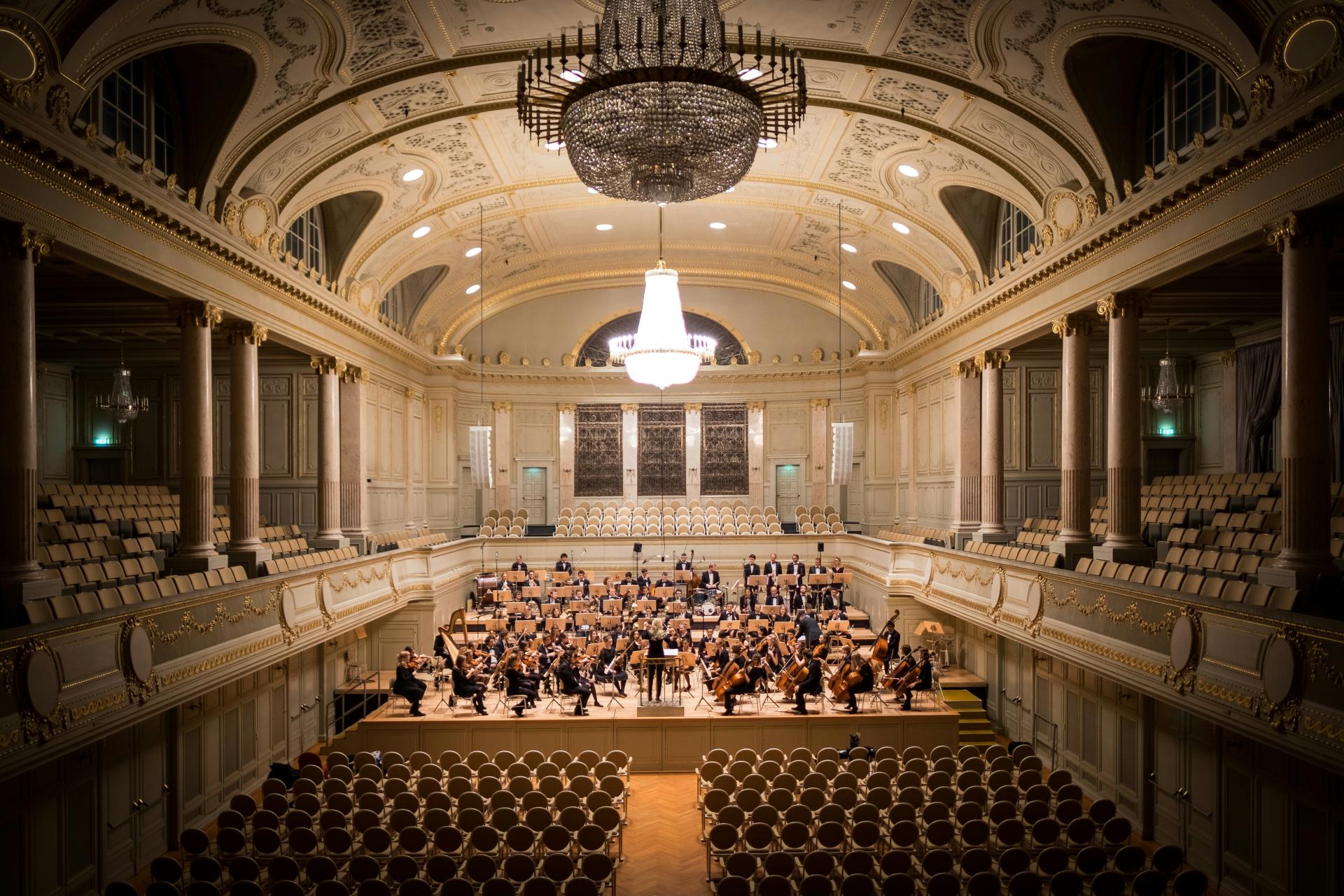
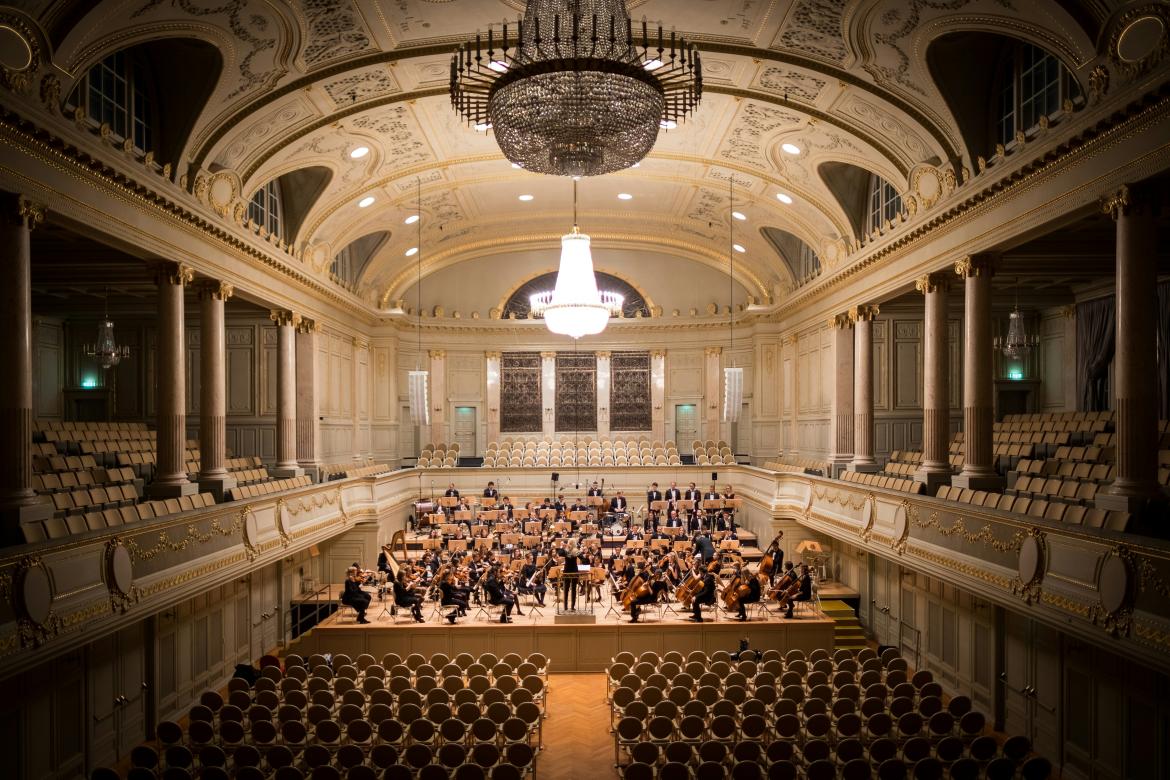
It was during the pandemic, when in-person cultural events were not taking place, and our only opportunity to enjoy, experience, and engage with culture was digitally. How have our habits changed since then? Has the pandemic changed the data and statistics on digital cultural consumption, and what are our lives and the interaction between digital and in-person culture like today?
A study on this topic has been conducted by the Institute of Culture and Arts of the Latvian Academy of Culture, titled “Digital Cultural Consumption Habits of Latvia’s Population”. It was carried out by three researchers: Līga Vinogradova, Lote Katrīna Cērpa, and Andis Daugavvanags.
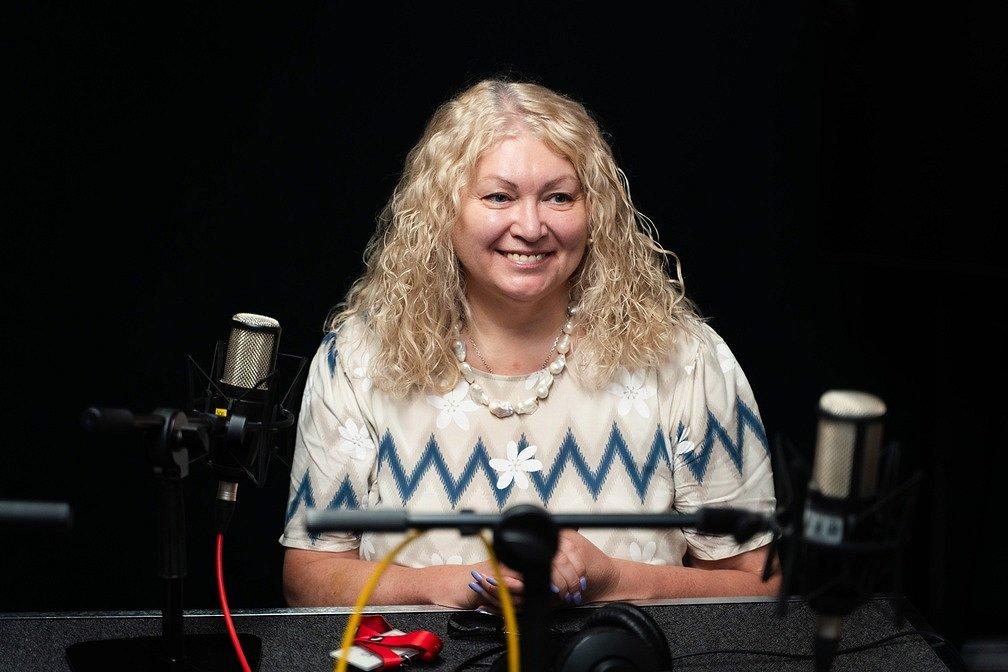
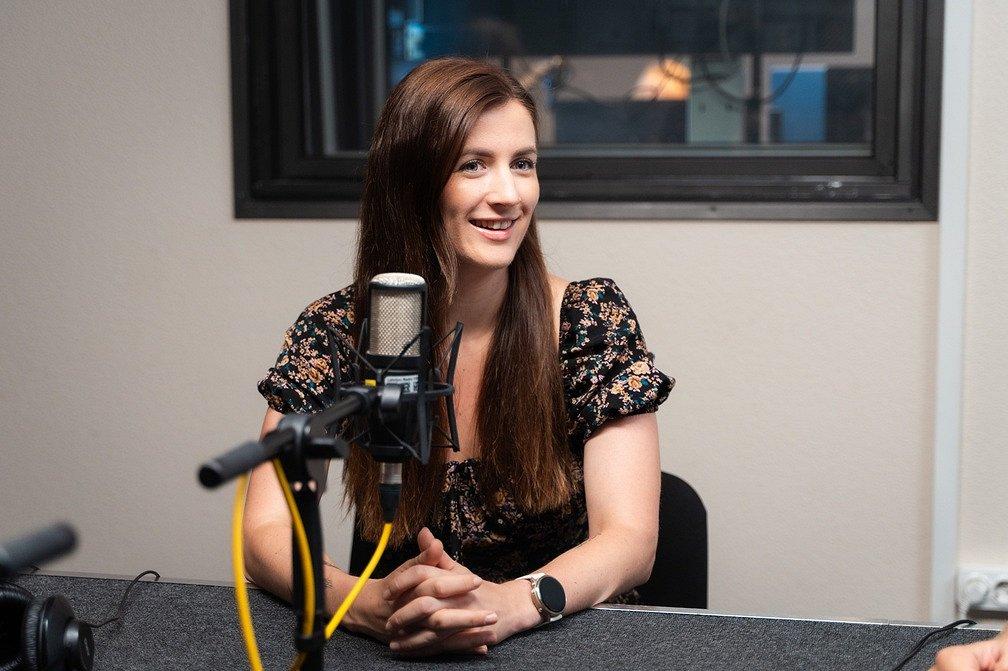
The discussion, initiated by Latvian Radio 3 “Klasika”, was attended by Līga Vinogradova, a researcher at the Institute of Culture and Arts of the Latvian Academy of Culture; Timurs Tomsons, a member of the board of “Latvijas Koncerti”; and Ilona Matvejeva, Head of the Exhibitions and Communications Department at the Latvian National Museum of Writing and Music.
Culture Remains on Screen, but People Want to Be There in Person
Following the Covid-19 pandemic, cultural life has largely returned to concert halls, museums, and other in-person events, yet digital culture has not disappeared. A study by the Institute of Culture and Arts of the Latvian Academy of Culture on digital cultural consumption habits shows that digital solutions are becoming an important complement to cultural experiences, although they cannot replace the feeling of being there in person.
Anete Ašmane-Vilsone: During the pandemic, digital culture experienced very rapid growth. Līga, what is the situation now that events are once again taking place in person? It seems that digital culture has not been completely displaced after all.
Līga Vinogradova: We already touched on this topic to some extent in the 2022 cultural consumption study: the first trends were already emerging, showing that we were returning to in-person culture.
A more in-depth examination of people’s preferences showed that they still wanted an in-person experience. Even during the pandemic, there were people who continued trying to experience it – as far as that was possible.
When we talk about digital culture and its consumption, according to the study and also looking at international experience, we see that digital cultural consumption is developing in two directions: the first consists of everyday activities and practices that we already engage in in our daily lives – listening, watching audiovisual content, and so on. As regards the products or offerings created by cultural institutions, this is no longer quite what we saw during the pandemic: if at that time we tried to imitate the in-person experience, digital cultural consumption now needs to move in a different direction, serving more of a supporting and complementary function. (..)
Digital Tools Help Reach Those Who Cannot Attend in Person
A question for Timurs and Ilona: how do you see the role of the digital cultural offering in the cultural ecosystem as a whole? Timurs, you had experience at Liepāja’s “Great Amber” – you created the digital concert hall specifically during the pandemic. How do you see it now?
Timurs Tomsons: Although this project in Liepāja was indeed created during the Covid period, it had actually been planned beforehand. To ensure quality in the field of music, not only video equipment but also audio equipment is needed, and we had already purchased that earlier. We only needed to add the visual component in order to carry out the digitisation process.
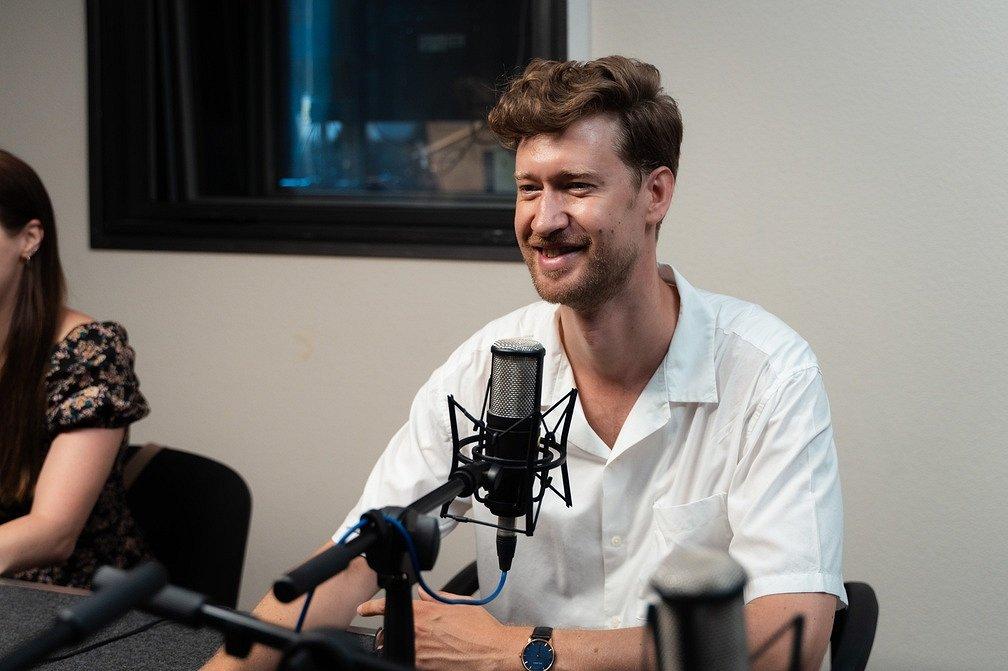
However, at no point was our aim to use digitisation to replace the in-person experience. It was a tool that enabled us to reach a different audience, which is extremely important for a regional concert hall. We were also quite successful in doing so.
(..) The aim of the digital concert hall is to reach people who, for various reasons, are unable to attend a particular concert in person. It also serves social purposes: perhaps people are elderly and cannot come to us; likewise, geographical limitations prevent them from being with us in person. Another aspect is ticket prices. We have discussed this topic extensively, and it encompasses a very broad range of issues. This is important today – even my parents’ generation makes extensive use of digital tools, and at some point they will be the ones who are no longer able to experience culture in person. I believe that we must now make substantial investments in digital content.
The website of the Latvian National Museum of Writing and Music has an e-museum section. Was it also created as a result of the pandemic, when in-person experiences were unavailable? Ilona, how do you view this tool in the context of your museum?
Ilona Matvejeva: Our museum has had a somewhat different experience with digital communication, because for more than twenty years we did not have a permanent exhibition, even though this is one of a museum’s main forms of communication. Consequently, all communication of our content also took place through our website before the pandemic: there were many different thematic sections through which we communicated with people.
Since the pandemic, both the status of our museum has changed, and we also have a new website containing a great deal of content from the previous website. We also have an e-museum containing our archive – we supplement it with several programmes in which we have shifted towards an informative and “hook” function: we want to tell people about ourselves and encourage them to visit us in person as well. There are also podcasts that help people understand or become acquainted with the personalities featured by our museum, because ours is a museum of personalities. (..)
Audience Attention Spans Are Becoming Increasingly Shorter
Timurs and Ilona, from your perspective, do these tools, or this “hook”, work? (..)
Ilona Matvejeva: Since launching our new website, the number of followers has doubled.
We monitor the statistics very carefully – how long a person spends on our website or social media. People have become increasingly hurried – the average visit lasts one and a half minutes. Consequently, we need to think about formats.
Currently, the most popular format is vertical video, which receives more views even without text than long blocks of text. Habits are changing, and people’s attitudes towards time are changing as well. (..)
Timurs Tomsons: (..) Digitisation is a tool for reaching audiences. When we talk about access to culture in general, streaming helps achieve this very effectively. (..) For us as a regional concert hall, this was a huge opportunity to connect with the diaspora abroad. We calculated it approximately like this: we could see how many people were in the hall, and digitisation roughly doubled that number, which was also reflected in the figures. And importantly, it is live broadcasts that attract audiences. As soon as an event becomes a recording, no one is interested in it anymore. (..)
Digitisation Requires a Long-Term Strategy
We talk a great deal about the accessibility of cultural events for people in the regions. If we regard digital culture as an opportunity to reach a wider public, how successfully is this being achieved? The study shows that the data are not particularly encouraging.
Līga Vinogradova: Yes. If we move beyond bubble conversations in which everyone consumes culture and actively engages in something, the overall picture in Latvia is different.
A statistically more accurate picture is also provided by international studies, which show that digital content does not truly broaden access for the groups we would like to reach, as was initially hoped in international policy reports.
This means that those who consume culture in person are also the ones who consume culture digitally. And those who do not consume it continue not to do so.
Līga Vinogradova: Yes, unfortunately. (..) Interest in culture remains as it is, and the primary form is in-person participation.
Timurs Tomsons: In terms of digitisation, we are at the starting point, because strategically this issue has never been addressed. Digitisation is also linked to co-financing – we have carried it out within the existing budget, although no programme required us to do so. Therefore, no programme provided additional funding either, but we had our own criteria and have pursued it.
An audience also needs to be built in the digital environment. We are doing this, but when it is done spontaneously rather than strategically and consistently, we see that we feed this audience a little, then leave, and then do it again. This model is still in its infancy and has also been relegated to the role of a stepchild on paper.
In the development of the Riga Philharmonic, I serve on the design supervision committee, and I saw that the digitisation aspect had not yet been fully thought through. But in the 21st century, we cannot afford not to take these matters into account: the correct cabling must be installed and spaces for cameras must be planned, because this is one of the elements of the future that we must consider in cultural institutions.
Ilona, looking at this from the perspective of a museum and also from the perspective of a state institution – given that we often hear about salary levels in museums and the overall budget framework, is there an opportunity to allocate resources to the development of digital products?
Ilona Matvejeva: A lack of money fosters creativity, so we look for formats and analyse what works better and how people respond. For example, Facebook and TikTok are two different formats, and they also require different language. At present, we are trying to implement this using our own resources; our marketing and communications department has both a video operator and a copywriter, so we are in a good position in terms of human resources. (..)
A Museum Sells Stories, Not Information
While concert streaming, filming, and broadcasting are easier-to-understand digital products, what could the ideal digital product be in a museum context?
Ilona Matvejeva: In this case, we focus on research resources. We offer content: interviews with personalities and introductions to objects in our collection. We are a “millionaire museum” – we have more than a million items, so we have plenty to share. We work closely with our researchers, who devote time to introducing interesting facts or objects from the collections of various personalities.
We have also presented this in our new exhibition “Procrastination and Creation” on Mārstaļu Street, because a museum is, after all, an in-person experience. Digitally, however, we can either provide information about what you can find at our museum or offer popular science discussions and materials. (..) We have a regular publication, “Stāstnesis”, in which our researchers publish various types of materials that are useful both to specialists and to anyone who is simply interested. There is also “Siltumnīca” – a podcast created by Gusts Ābele.
We do not look only at the past: there are so many writers and musicians around us who will one day become part of history, but who are with us today. Our museum’s founder, Jānis Greste, also began by approaching his contemporaries and asking them for personal items – he was building a collection of contemporary figures. Today, we are following a similar path. We had a feature called “Object of the Month”, in which contemporary artists donated an object with a story to the museum.
Because information itself is no longer as important as the story surrounding it. And this story is the hook that can spark interest. The way in which we tell this story is also very important.
One aspect examined in the study is people’s willingness, or rather unwillingness, to pay for digital content – for example, to subscribe to a music streaming platform. The study shows that only around seven per cent are willing to pay regularly for cultural content created in Latvia.
Līga Vinogradova: The study clearly showed that willingness to pay for in-person culture is much higher than for digital culture. The amounts people are willing to pay for digital content are much lower. Here we can return to the direction outlined by Timurs: we are at the beginning of the digital journey and are gradually moving forward. The value of a digital product may never be as high as that of an in-person product, but once people recognise the value, quality, and significance of a particular digital product, their willingness to pay for such products may also increase. For now, however, we still live in an environment where digital content is considered less important. (..)
Timurs Tomsons: (..) It must be said that, from a business perspective – and I also come from a management background – if you enter into an agreement with artists and discuss streaming for non-commercial purposes, you can negotiate for the contract amount not to be increased. But as soon as you say that you will stream for commercial purposes, entirely different discussions begin, and management or agents immediately raise the fees. (..) Therefore, I do not think that we can move towards paid content in Latvia: it will indeed have more of a social or public-service dimension.
The Digital Environment Must Be Planned into the Infrastructure from the Outset
Timurs, you mentioned the Liepāja experience, but you are now a member of the board of “Latvijas Koncerti”. How do you see the digital cultural offering within this company?
Timurs Tomsons: In Liepāja, we were fortunate to have our own building, and that is hugely important in terms of infrastructure. In Riga, this issue has not been resolved. (..) Speaking about the Riga Philharmonic, it is quite clear that the digital aspect simply needs to be integrated into the infrastructure. We discussed this with both the architects and the engineers, and they are very receptive.
In my opinion, the ministry also heard and understood that this is necessary. Until now, it has not been considered – it has not been a priority.
Ilona, and what about in the context of the museum?
We also have an additional task of strengthening the brand, given that our museum was without exhibitions for a long time. There are now two. We are located at three addresses, so presenting us as a single museum with two permanent exhibitions is a complex task that we want to accomplish digitally. Our website is our digital museum, where everything is brought together in one place. The change of the museum’s name also had an impact, so strengthening the brand is one of our main tasks. (..)
In the Future, Digital Culture Will Complement Rather Than Replace the Cultural Experience
In the context of digital culture, can you predict what our conversation might be like in the future?
Līga Vinogradova: I have a feeling that we will still be talking about in-person culture. Digital products will simply have become more established and more developed, but we will approach them somewhat more selectively – when it comes to cultural institutions, we will have understood what works and what does not. Perhaps we will indeed have some very prominent products, such as computer games before a museum visit and similar things. But I do not think the in-person experience will disappear.
Timurs Tomsons: The in-person experience has enormous value! Latvian Radio was already broadcasting Puccini’s “Madama Butterfly” a hundred years ago and continues to do so today. Then came the television era, but now we are in the internet era, so cultural institutions must adapt to different formats. However, the core value will not disappear. And interestingly, we planned to stream on a large screen, with good sound, so that people could watch, but the statistics show that most people watch streams on their smartphones. As a cultural institution, we must take this into account – we simply have to accept these nuances.
Ilona Matvejeva: Digital opportunities should be used in a healthy way to expand one’s possibilities.