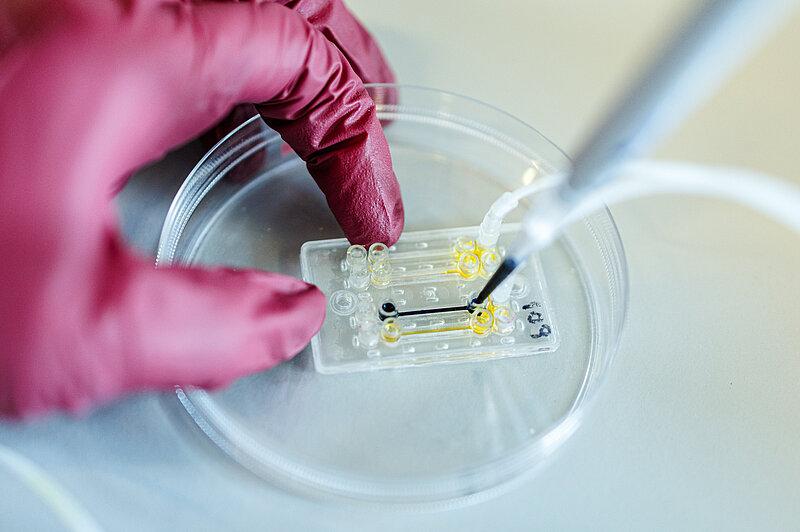
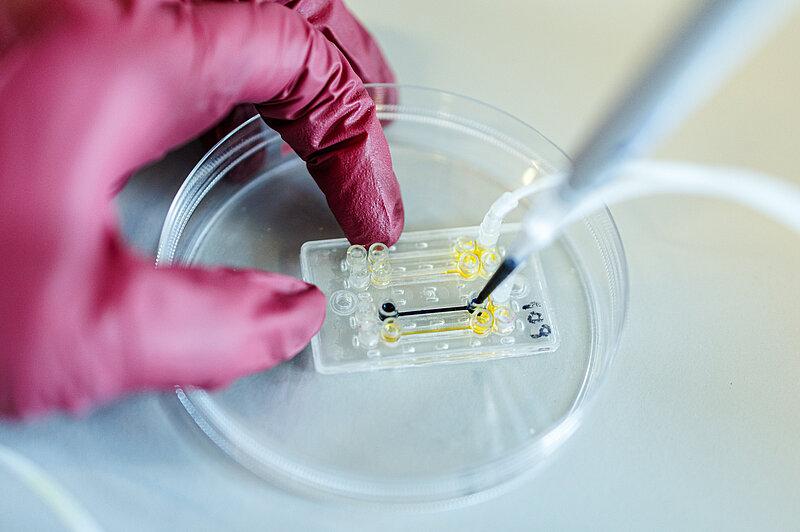
Researchers from the Department of Pharmaceutical Sciences at the Faculty of Medicine and Life Sciences of the University of Latvia (UL) are developing a new laboratory platform that could help determine which medicines may be most effective for individual pancreatic cancer patients in the future. The platform is based on a “tumour-on-a-chip”, a microfluidic model that makes it possible to replicate the interaction between a tumour and blood vessels in the laboratory and test the effects of medicines.
Pancreatic cancer is one of the most aggressive malignant tumours. It is often diagnosed at a late stage, treatment options are limited, and mortality remains very high. According to statistical data available from the Centre for Disease Prevention and Control, 364 new cases of pancreatic cancer were registered in Latvia in 2024, while 420 people died from the disease during the year.¹ This means that the disease places a heavy burden on public health: many patients receive their diagnosis when the tumour has already spread to other organs and treatment has become much more complicated.
The most common form of pancreatic cancer is pancreatic ductal adenocarcinoma. In its early stages, it usually causes no specific symptoms, so the disease is often mistaken for other health problems or detected late. Latvian data confirm this trend: in 2024, stage IV pancreatic cancer was diagnosed in 170 patients, while only 33 patients were diagnosed at stage I. It most commonly affects people aged 65 to 69. The risk increases with age, but lifestyle and other health conditions also play a significant role.¹
Treatment Helps, but Not Everyone Equally
Pancreatic cancer treatment may include surgery, radiotherapy, chemotherapy or a combination of all these methods. If the tumour is detected early and is operable, surgical treatment combined with additional therapy offers the best chances. However, at the time of diagnosis, surgery is only possible for some patients.
Although the chemotherapy drugs and their combinations available today can prolong patients’ survival, they are not always equally effective for everyone. Moreover, treatment can cause severe side effects, which may force some patients to discontinue therapy.
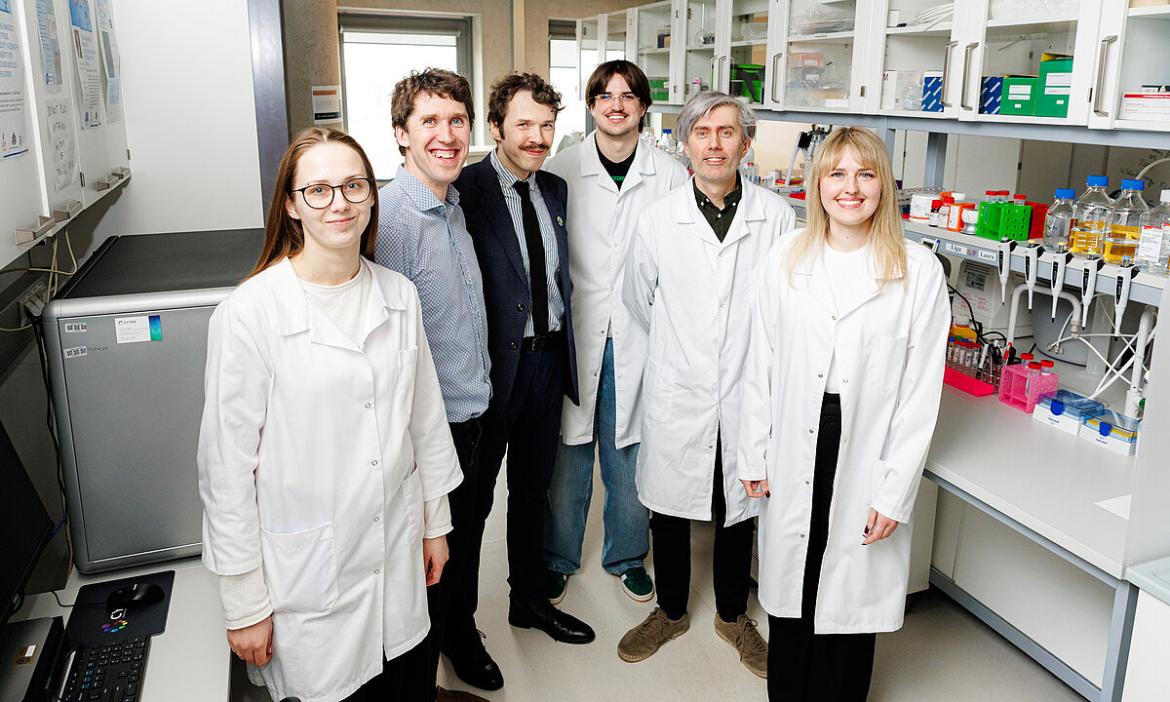
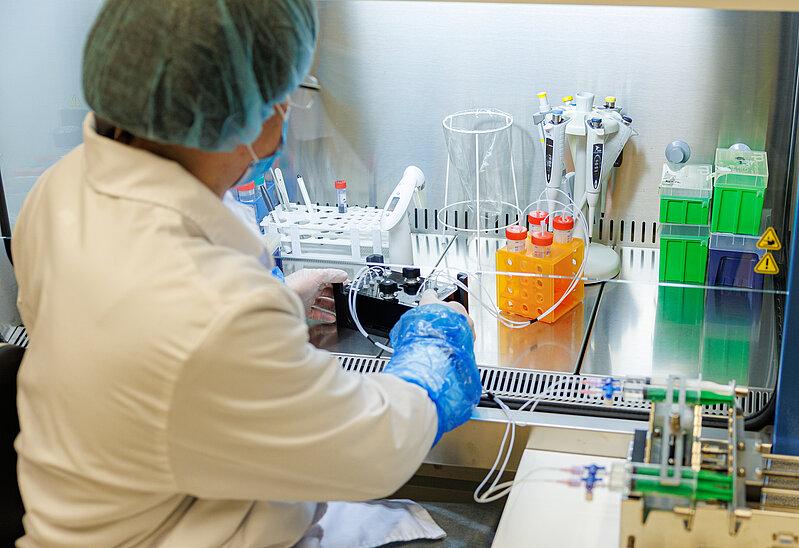
Therefore, one of the challenges of personalised medicine is to better understand in advance how an individual patient’s tumour might respond to different medicines. To investigate this, a team of UL researchers, in collaboration with doctors from Riga East University Hospital, is implementing the PREDICT-PDAC project, which has received funding from the Biomedical and Photonics Innovation Platform “BioPhoT”. The aim of the project is to develop a laboratory platform for testing the efficacy and toxicity of pancreatic cancer drugs.
The researchers are developing a so-called “tumour-on-a-chip”, a microfluidic device that makes it possible to replicate the interaction between a tumour and blood vessels, drug flow and the tissue environment in the laboratory much more closely to how these processes occur in the human body. In the future, such an approach could help doctors choose the most appropriate therapy for each patient, avoid unnecessarily intensive treatment and, at the same time, serve as a new tool in the development of anticancer drugs.
What Is a “Tumour-on-a-Chip”?
Unlike traditional cell culture models, a microfluidic chip makes it possible to simulate fluid flow, the physical properties of tissues, the delivery of nutrients and drugs, as well as the interaction between a tumour and blood vessels.
This is particularly important in the case of pancreatic cancer, as tumour cells are surrounded by a pronounced, dense layer of connective tissue and other cells of the microenvironment, which can limit the access of drugs to the tumour and affect its response to therapy.
Visually, the chip consists of two interconnected channels separated by a porous membrane. This allows nutrients and drugs to pass through while making it possible to simulate the interaction between a tumour and a blood vessel in the body. Blood vessel cells are grown in one channel, while the tumour microenvironment is recreated in the other. When a chemotherapy drug is introduced into the blood vessel channel, it can also reach the tumour cells through the blood vessel barrier. This makes it possible to assess not only how the tumour responds to therapy, but also what happens to the blood vessel cells, for example, how severely the cells are damaged by chemotherapy.
Why Is an Individualised Treatment Approach Necessary, or Why Does One Treatment Regimen Not Fit Everyone?
Pancreatic cancer is complex not only because of the tumour cells themselves. The characteristics of the tumour microenvironment, a dense layer of connective tissue, the structure of blood vessels, reduced blood supply and complex interactions with surrounding cells also play a significant role, substantially affecting how drugs work.
Therefore, genetic information alone cannot always accurately predict how a tumour will respond to specific drugs. This is where functional precision medicine becomes important – an approach in which treatment selection could, in the future, be based not only on the tumour’s molecular profile but also on its actual response to drugs in a laboratory-developed model.
A Step Closer to More Precise Cancer Treatment
The long-term goal of PREDICT-PDAC is much broader: to develop a clinically applicable platform that could help doctors make treatment decisions. In the future, such a system could be used to test several treatment options available to a patient and select the one that provides the best results in that particular case with the lowest risk of toxicity.
Such an approach would be particularly important in situations where there is no clear choice of standard therapy. For example, for patients who are not strong enough to undergo intensive chemotherapy, it would be possible to compare less toxic drug combinations. For patients with an operable tumour, a functional test could help select the most appropriate therapy before or after surgery. Currently, the work is still at an early stage of research: the platform itself is being developed and characterised to assess how reliably it can reflect a tumour’s response to drugs.
The PREDICT-PDAC solution could be important not only for personalised treatment but also for the development of new anticancer drugs. A significant challenge in the pharmaceutical industry is that many drug candidates appear promising in laboratory studies but later fail to demonstrate the expected effect in clinical trials or cause unacceptable toxicity.
More physiologically accurate “organ-on-a-chip” models make it possible to evaluate the effects of drugs under conditions that more closely resemble the human body than traditional cell cultures. This could help identify the most promising drug candidates at an earlier stage and reduce the risk of failure in the later stages of drug development.
Although organ-on-a-chip technologies have not yet become a routine clinical standard, their potential is increasingly recognised by regulatory authorities. In September 2024, the US Food and Drug Administration’s Center for Drug Evaluation and Research accepted an organ-on-a-chip technology submission for review under the ISTAND pilot programme for the first time. This system is designed to predict the potential toxic effects of drug candidates on the liver.²
The research is being carried out within the framework of the Biomedical and Photonics Innovation Platform “BioPhoT” project “PREDICT-PDAC: A Platform for Real-Time Drug Efficacy and Integrated Cytotoxicity Testing in Pancreatic Adenocarcinoma”, No. OSI_PIP_BioPhoT-2025/2-0095.
References
Centre for Disease Prevention and Control Health Statistics Database. Retrieved from: https://statistika.spkc.gov.lv/pxweb/lv/Health/Health__Saslimstiba_Slimibu_Izplatiba__Onkologija/?tablelist=true
FDA’s ISTAND Pilot Program accepts a submission of first organ-on-a-chip technology designed to predict human drug-induced liver injury (DILI). Retrieved from: https://www.fda.gov/drugs/drug-alerts-and-statements/fdas-istand-pilot-program-accepts-submission-first-organ-chip-technology-designed-predict-human-drug