Using the language of cinema to discuss groundbreaking scientific discoveries is a direction that director Andris Gauja has been exploring for some time. He delves into this subject in his upcoming doctoral dissertation, which is also at the heart of his documentary film cycle, "The Wonderful Trilogy," currently in active development.
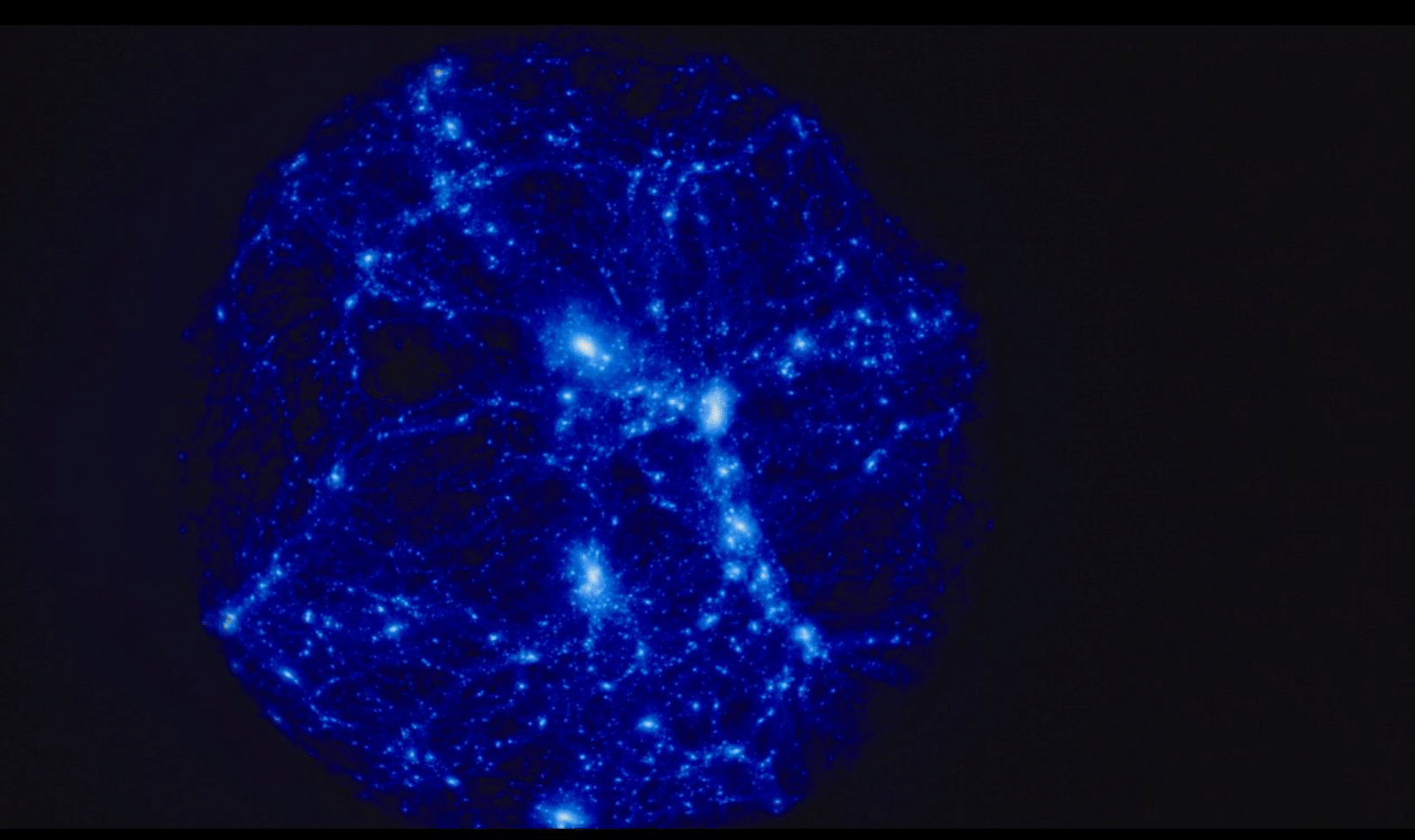
As a prelude to the cycle, Gauja's short film "The Art of Observation" explores a discovery about the mysterious pattern of the Universe—one that weaves through the world on both the grandest and smallest scales. The film has already received recognition at several international festivals and will have its Latvian premiere on March 3.
The short film "The Art of Observation" is a joint project between Latvia and Estonia. When Tartu was the European Capital of Culture, a special documentary film series was created, and Estonian filmmakers invited Andris Gauja to direct one of the films.
He had two science-related topics in mind. The first was the increasingly popular research on slime molds, which is widely studied in both Latvia and Estonia. The second was space exploration, particularly because he had the opportunity to meet renowned Estonian astrophysicist Jaan Einasto, who is now 96 years old.
Gauja initially planned to explore both topics separately, but he had no idea how closely they might be connected—until he received an unexpected question from Estonian astrophysicist Mareta Einasto, Jaan Einasto’s daughter:
"Have you read the scientific paper about the use of slime mold patterns in understanding space?"
At first, Gauja thought she was joking—how could such a coincidence be real?
"But she told me that this is a hot, cutting-edge study happening in the U.S. right now. That’s when I truly stepped deeper into the world of science and realized—yes, these things are much more connected than I had ever imagined."
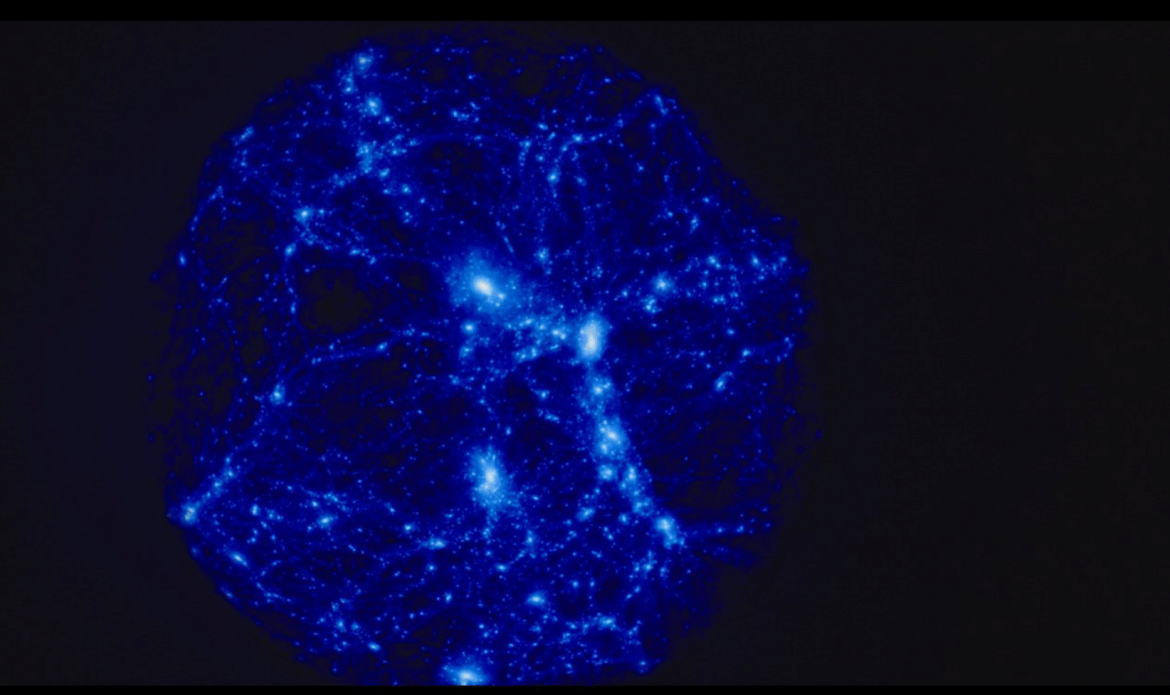
The film also takes viewers to New Mexico, USA, where American astrophysicist Joe Burchett and Slovak computer scientist Oskar Elek discuss their discoveries. They explore the striking similarity between slime mold growth patterns and the cosmic intergalactic web, as well as the potential breakthroughs this finding could lead to.
Among the film’s featured experts are the previously mentioned Jaan Einasto, Australian slime mold researcher Karina Knight, and other specialists.
The film offers a visually striking comparison of both networks, showing them separately and then merging them to highlight their astonishing resemblance. Director Andris Gauja explains:
"Space researchers have scanned and analyzed both slime mold growth patterns and massive data sets of cosmic intergalactic web structures. When they overlay these datasets, they are stunned to find the same network structure, the same pattern, the same intricate design."
"It might sound like a fairy tale, but the film leads us to a fascinating conclusion—astrophysicists and space scientists have actually started using the mysterious growth patterns of slime molds to understand how the universe is structured and even to predict what it might look like in regions beyond the reach of our telescopes."
"The Art of Observation" serves as a prelude to a larger feature-length documentary trilogy that Andris Gauja has titled "The Wonderful Trilogy", focusing on metaphysical themes.
Currently, Gauja is actively working on the first film in the series, "The Wonderful Emptiness." One of its main figures is Italian quantum physicist Carlo Rovelli. Gauja shares:
"Carlo Rovelli offers us a completely new perspective on the tangible world around us. He explains that when we zoom in to the quantum level, there are no solid objects, nothing fixed, nothing to hold onto. That’s why he uses the term ‘emptiness’—not in a nihilistic sense of nothingness, but quite the opposite: everything exists, everything flows, bubbles, and moves in constant motion, yet nothing has a fixed, tangible nature."
The second film in the trilogy, "The Wonderful Death," will explore groundbreaking research on the process of dying.
While these feature films are still in development, "The Art of Observation" will have its Latvian premiere on March 3 at Splendid Palace cinema during the Artdocfest/Riga festival.