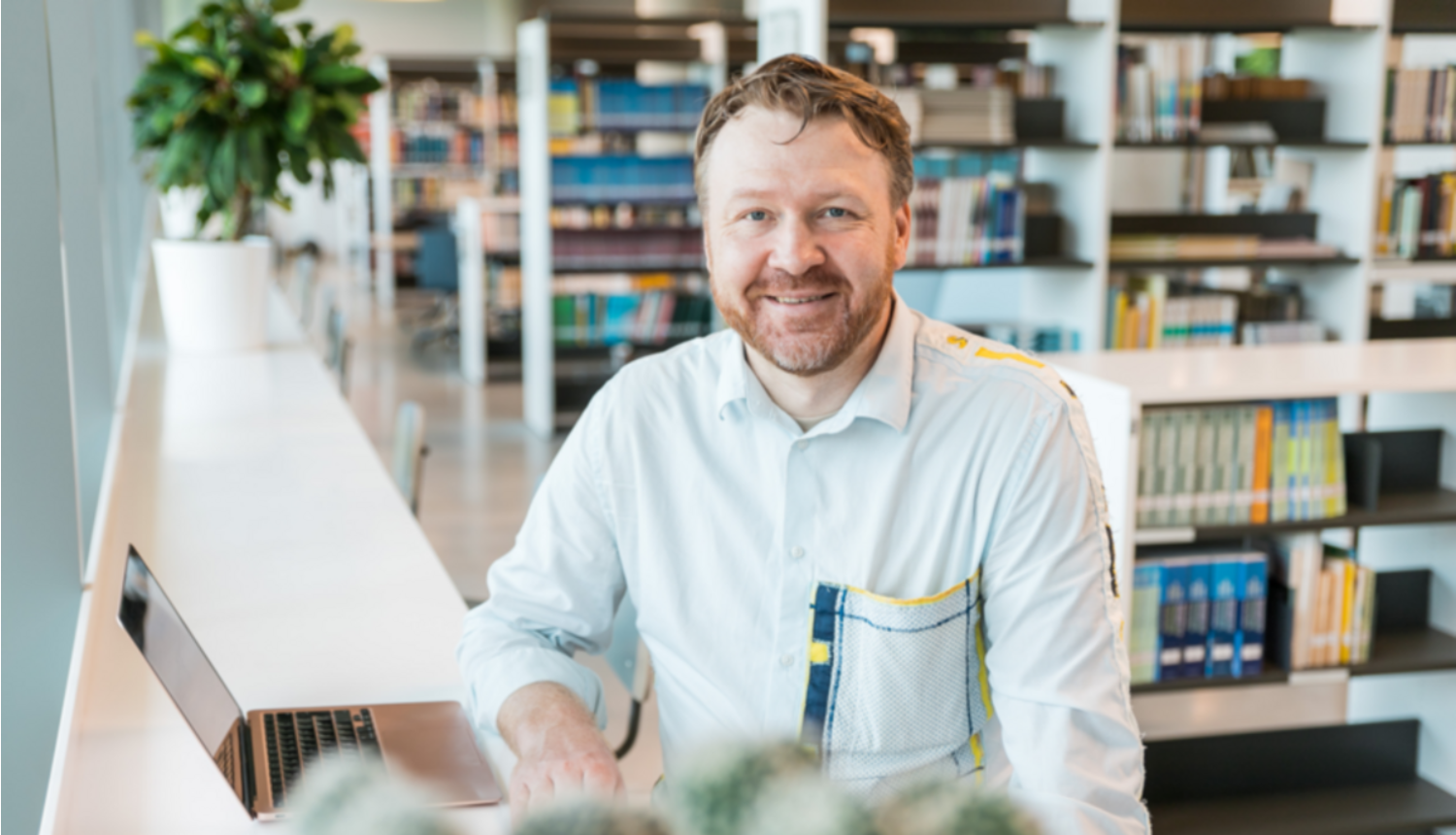
Haralds Matulis’ work as a doctoral student at the University of Latvia (UL) takes place at an exciting crossroads between the humanities and technology - between life stories and computer programming. Using digital methods, he studies the ways people represent themselves in autobiographical texts.
“I think every doctoral student is different, and that should be the basis for finding your own true and unique research field,” he says.
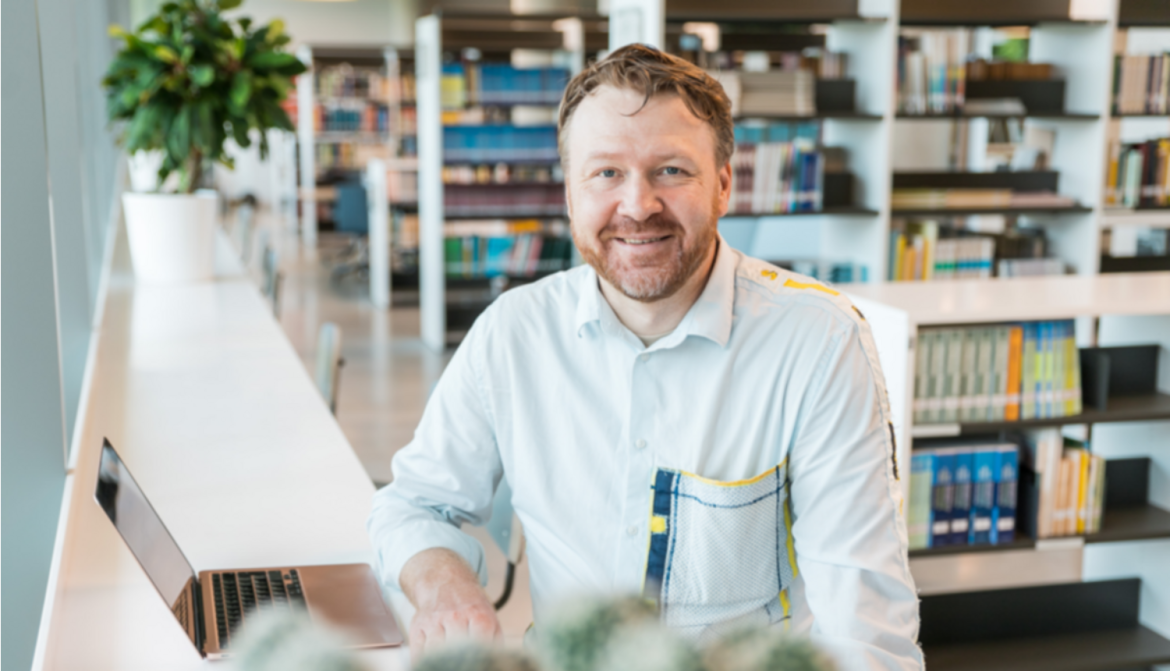
H. Matulis’ professional path has been multifaceted - he is known as a writer, has previously worked in the field of cultural policy, and has taught philosophy and writing-related courses at several universities. After many years in the cultural sector, he decided to find something new and exciting in life and began learning data analysis and programming. “It wasn’t easy, but it was exciting,” he recalls. This interest led him to study at the University of Helsinki, where he earned a master’s degree in Digital Humanities - a field where statistical methods, corpus research, and artificial intelligence tools enhance the traditional humanities approach.
Today, H. Matulis is enrolled in the Doctoral Program in Languages and Cultural Studies at the UL Faculty of Humanities (FH) and works as a research assistant at the UL FH Digital Humanities Centre.
“I’m very curious to see how the new UL Doctoral School concept will evolve and develop. I enjoy taking part in its activities, and I’m really inspired by the opportunities to collaborate with doctoral students from other disciplines,” he says, reflecting on how his daily academic life is influenced by the new doctoral model introduced in Latvia last year.
H. Matulis believes that one of the key challenges of contemporary research lies in rapidly changing technologies: “It’s no longer just about which digital methods and tools you’ve mastered, but also about how you learn - how quickly you can adapt, because everything is changing so fast right now.” He actively uses AI tools as coding assistants and sees great potential for them in the humanities, as critical thinking and the ability to formulate research problems - rather than mastering code syntax - are becoming increasingly essential in data-driven research. He is passionate about introducing the possibilities of digital methods and tools not only to colleagues but also to the general public, including through a podcast dedicated to digital humanities.
H. Matulis’ dissertation focuses on life writing, specifically comparing 20th-century handwritten diaries with recorded life stories. “My research aims to understand how the language of self-expression in autobiographical materials changes depending on genre, period, and format,” he explains. His typical workflow relies on the Python programming language, along with Pandas and Matplotlib libraries. But what sets digital humanities apart from mere programming or data analysis is precisely the data criticism, source criticism, methodological critique, and the combination of quantitative and qualitative methods. This synthesis of digital and humanistic approaches allows Haralds to view autobiographical materials not only as narratives but also as data structures, revealing imprints of era, genre, and human thought.
“A doctorate is truly meaningful if it aligns with your professional and personal calling to be a researcher,” H. Matulis emphasises.
He encourages future doctoral students to be realistic and choose topics that are both scientifically valuable and personally engaging. He also emphasises the importance of effective collaboration with one’s supervisor, which he views as a crucial factor for a successful PhD experience and practical involvement in research projects.
In his everyday work, Haralds Matulis participates in several research projects, collaborating with researchers from leading digital humanities institutions, such as the UL Institute of Literature, Folklore, and Art, the National Library of Latvia, and the UL Institute of Mathematics and Computer Science. While much of his work is done individually, he stresses that an essential part of the process is dialogue with colleagues, exchanging ideas, and reflecting - including on the researcher’s own well-being:
“The process of science has to remain human. Well-being and emotional health are not obstacles to academic excellence - they are its foundation.”
In his story, H. Matulis combines technical expertise and deep cultural understanding, merging a humanistic approach with data analysis, research, and pedagogy. He is an example of how a person with a creative and analytical mind can successfully integrate diverse life experiences into scientific work.