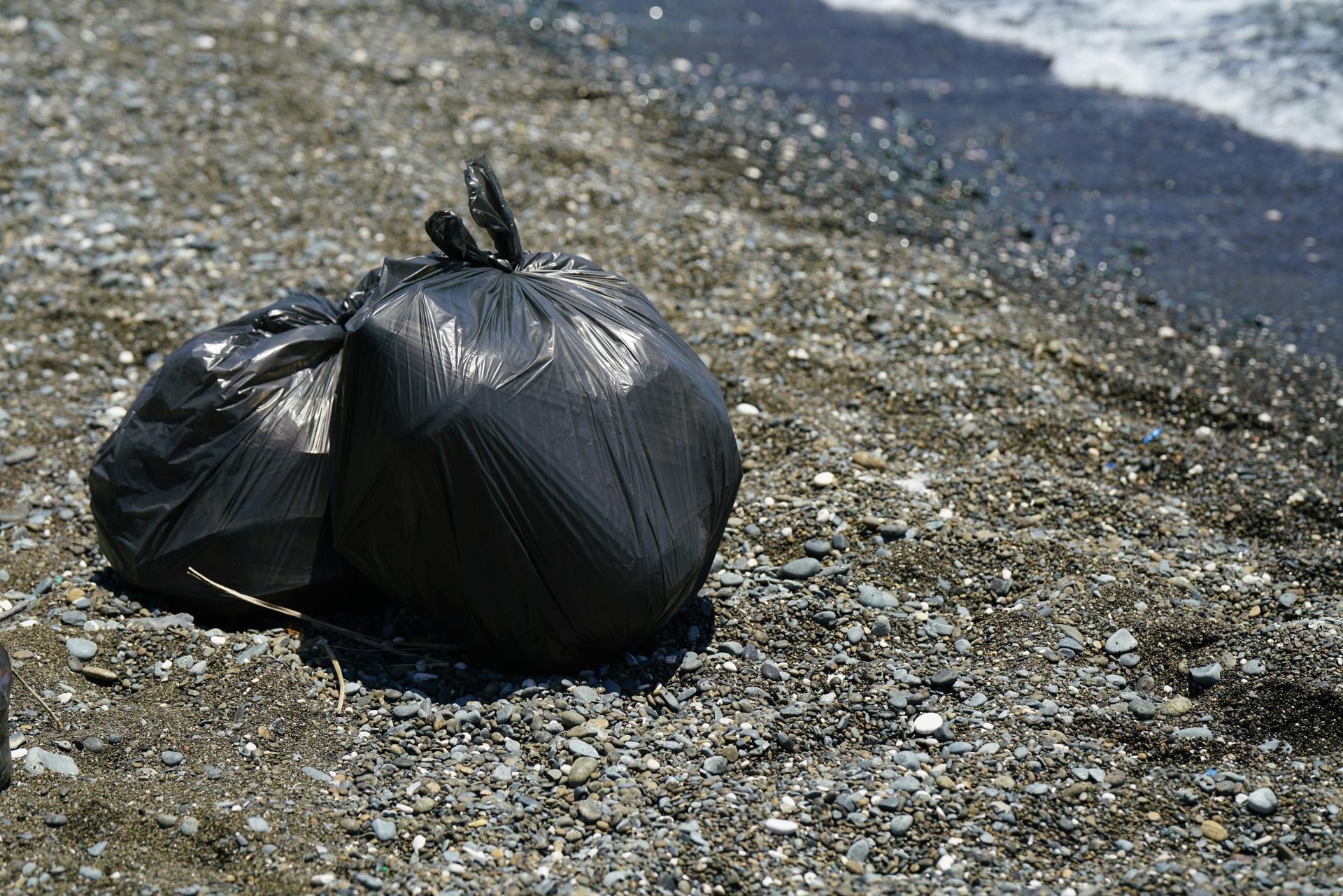
Microplastics are one of the most dangerous and also one of the most common types of pollution worldwide. On World Environment Day, everyone had the opportunity on the Liepāja beach to assess how much microplastic is currently present on the seashore and to learn how it can be collected.
Equipped with sieves provided by the event organisers and beginning to sift, one can quickly find a handful of various waste.
World Environment Day is dedicated each year to a theme related to marine biology and ecology. This year, there is a special focus on microplastics — small particles scattered in the sand as larger plastic items break apart: bottles, containers, bottle caps, as well as fibres from clothing and tyres. The Latvian Institute of Aquatic Ecology is currently working on a broader study.
Institute researcher Marta Barone explained: “Microplastics are one of the newest types of pollution. This also means that they are among the least studied. And the findings obtained during research are quite ambiguous. We are working specifically to increase the amount of data on how much microplastic is present on the beach. We are simplifying research methods so that anyone can collect samples.”
The event is also engaging for visitors whose daily work is related to environmental and ecological issues.
Laima Druva, an environmental monitoring and quality specialist at the company “Liepājas RAS”, said: “My colleague and I came today to see how research is done and how much microplastic pollution there is by the sea. It is one of the topics we care deeply about and, unfortunately, also a painful one, because marine pollution is also visible here, in our own surroundings.”
Head of the Environment Department of Liepāja City Council, Dace Liepniece, emphasized: “It promotes a change in mindset. If we think — why do we need to introduce things like deposit cups, containers or single‑use straws… By engaging in this kind of activity and reflecting, you realise that plastic does not disappear anywhere, but breaks down and ends up in fish, birds, and even in ourselves…”
For some of the people in Liepāja who were interviewed, environmental issues are not unfamiliar:
“I sort waste as much as possible. When I am outside, for example on hikes, I usually have some kind of bag for rubbish and I collect it.”
“More or less, we follow it. We also sort waste and pay attention to it. If we ourselves do not do it and do not set an example for children and those around us, then who else will do it?”
The Latvian Institute of Aquatic Ecology will continue the research, but also invites residents themselves to collect microplastics and report the amounts to scientists via an app "Rosgis". Meanwhile, at the Liepāja beach rescue station, sample collection kits and instructions for their use can be obtained.