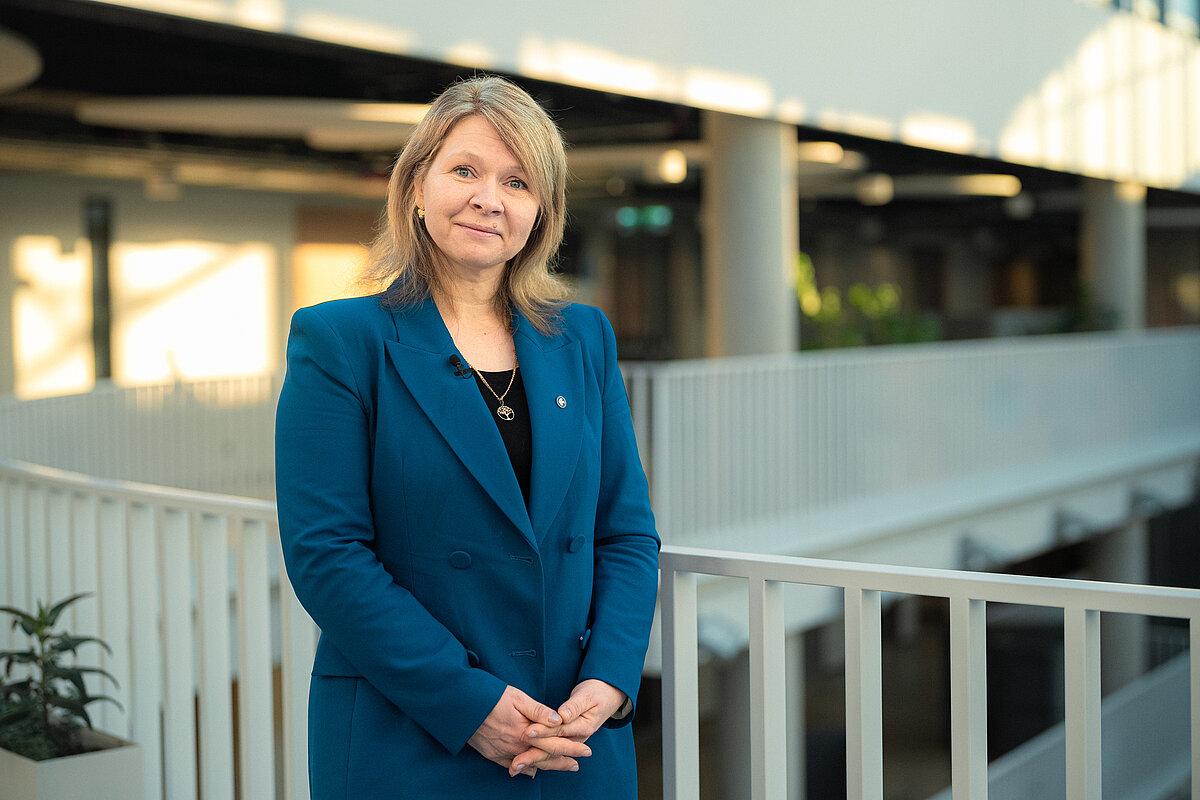
On December 3, the recipients of Europe’s most prestigious research grant—the European Research Council (ERC) grant—were announced. After a break of over a decade, a Latvian scientist has been awarded this honor. Sociologist and tenured professor at the University of Latvia (UL), Inta Mieriņa, will lead an international team of researchers over the next five years to study public attitudes toward migrants in the context of the Russia-Ukraine war.
Regarding this achievement, UL Vice-Rector for Science, Guntars Kitenbergs, stated: “As a research university, the University of Latvia must strive for scientific excellence. However, few objective indicators truly confirm excellence. Among them are ERC grants, highly sought after by researchers from Europe’s most prestigious scientific institutions. Therefore, I am delighted that Latvian science, and the University of Latvia, have once again received such a high recognition.”
The ERC is an independent scientific body established by the European Union and is the leading European funding organization for scientific excellence. ERC grants enable scientists to pursue the boldest research endeavors, as the council's mission is to promote top-tier research. Latvian sociologist Inta Mieriņa is now among 103 distinguished researchers in her field awarded this year’s grants.
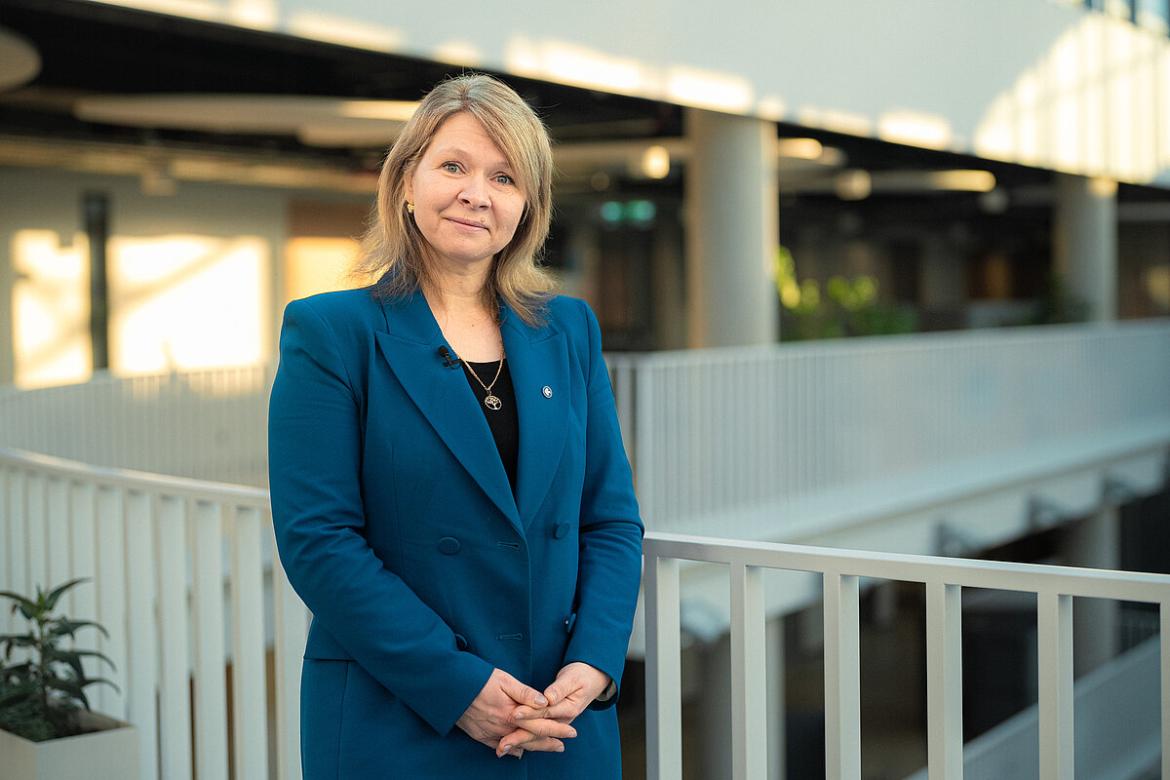
Inta Mieriņa, a tenured professor at UL’s Faculty of Business, Management, and Economics and Director of the Center for Diaspora and Migration Research, is a prominent scholar whose work significantly influences not only Latvian but also European and global sociology. Her research focuses on migration, diaspora, social cohesion, and sustainable development, making a substantial contribution to the fields of sociology and political sociology.
“Attitudes toward immigration are a controversial issue in modern Europe, making their study both important and fascinating. Why do we reject some while welcoming others? The situation with Ukrainian refugees offers a unique opportunity to better understand ourselves and society,” Mieriņa explains.
With nearly €2 million in funding, Mieriņa’s international team will investigate migrant reception in Central and Eastern Europe (CEE) in the context of Russia’s invasion of Ukraine. The war has triggered Europe’s largest refugee crisis since World War II. Historically, CEE countries have shown strong anti-immigrant sentiment, yet Ukrainian refugees were met with notably different attitudes. The study aims to answer: “How do attitudes toward migrants evolve, considering historical, geopolitical, and ideological factors?”
Mieriņa’s research challenges traditional narratives that explain migrant attitudes through xenophobia, ethnic nationalism, racial prejudice, and resource competition. Instead, it highlights the role of historical memory, collective trauma, shared adversaries, and security fears. Using an innovative methodological approach, the study will reveal how migrant attitudes are nuanced, context-specific, and shaped by both the newcomers and the host communities. The research will analyze four countries: Latvia, Poland, Hungary, and, for comparative context, Italy, to understand how these factors influence public attitudes toward refugees and migrants. In this unique historical context, the study aims to enhance societal understanding and offer solutions for improving migrant reception conditions.
The ERC offers five types of grants based on researchers' career stages. Inta Mieriņa has received a Consolidator Grant, designed for experienced scientists with 7 to 12 years of post-PhD experience. This year, 2,313 projects applied for the Consolidator Grant, including 733 in social sciences and humanities, with only 14.2% receiving funding.
Since its establishment in 2007, the ERC has awarded a research grant in Latvia only once before: in 2013, UL Faculty of Computing professor Andris Ambainis received an Advanced Grant for his research on quantum computing algorithms. Additionally, in 2024, a Synergy Grant was awarded for a collaborative project on historical pandemics, involving four prominent scientists, with UL Faculty of Geography and Earth Sciences professor Normunds Stivriņš representing Latvia as a partner.