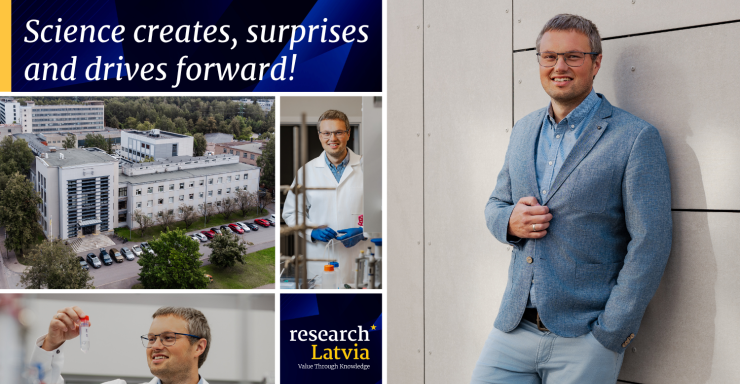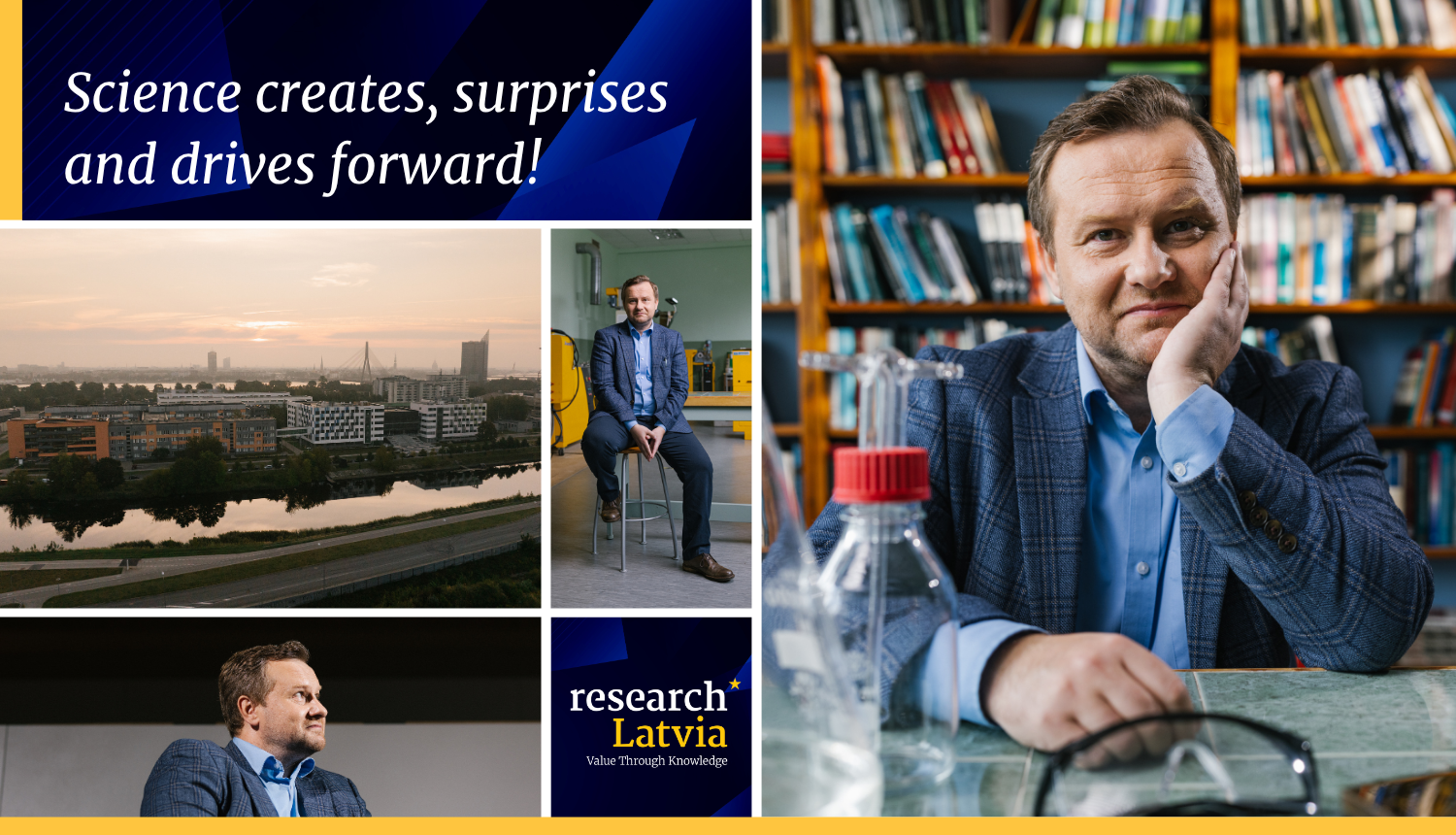
Research into sustainable materials has become one of the most important directions for reducing environmental pollution and advancing the circular economy. Polymers derived from biomass can replace traditional plastics while maintaining high technological performance and significantly reducing waste. Dr. sc. ing. Sergejs Gaidukovs, a tenured professor at the Faculty of Natural Sciences and Technologies of Riga Technical University (RTU), has made a significant contribution to developing such solutions.
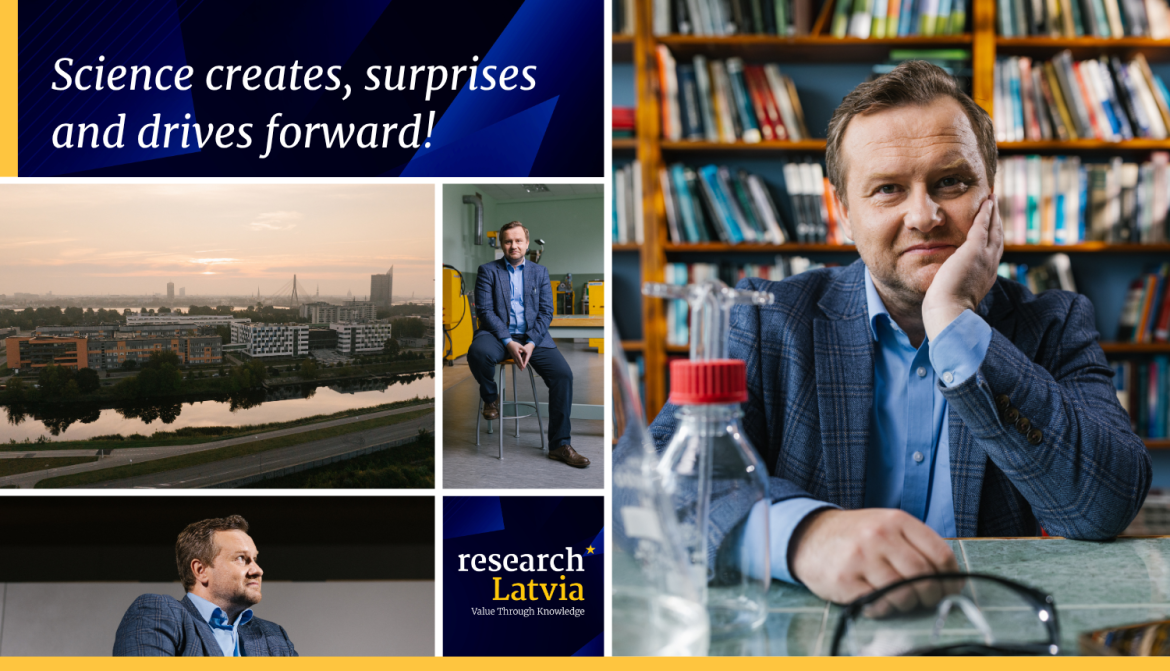
Materials science is a field where scientific knowledge transforms into practical applications. It examines the materials and how their composition and structure determine their properties and potential uses. It is an interdisciplinary science that combines chemistry, physics, mechanics, and engineering to create new materials for the future.
"Society wants to live in favourable conditions – in a safe and sustainable environment. The task of modern polymer science is precisely to address this issue – to collect and reuse polymer materials. If that is not possible, they should at least have biodegradable properties,"
explains researcher Sergejs Gaidukovs, one of Latvia’s leading polymer scientists.
His work, together with that of his colleagues, forms the foundation of sustainable materials science and environmentally friendly industry.
PhD Gaidukovs specialises in biopolymer research, developing solutions that allow forestry and agricultural by-products to be converted into bioplastics – materials that biodegrade after use. In 2024, he received the RTU “Scientist of the Year” award.
At RTU’s Institute of Chemistry and Chemical Technology, Professor Gaidukovs leads a research group that develops new biocomposites (biological raw materials combined with polymer binders) and polymer materials for 3D printing, in collaboration with companies and international partners. Under his supervision, the group produces both scientific publications (more than 117 papers indexed in Scopus) and trains a new generation of researchers, students and doctoral candidates learning to connect science with practical solutions.
"If I had to choose my career again, I wouldn’t change a thing. Science gives the mind freedom, demands perfection from a person, and provides immense satisfaction when the knowledge or product you create helps everyone live better," emphasises Dr. sc. ing. Sergejs Gaidukovs.
Through the studies led by PhD Gaidukovs, it becomes clear that sustainable manufacturing and science can go hand in hand, ensuring that the materials of the future are both innovative and environmentally friendly. His work offers a tangible contribution to society’s well-being, demonstrating how engineering can create new technologies while tackling global environmental challenges.
--
About the science calendar “Research Latvia 2025”
This activity is implemented within the ERDF project No. 1.1.1.1/1/24/I/001 “More Effective and Smarter Implementation and Management of Latvia’s Science Policy” carried out by the Ministry of Education and Science. Developers: the creative team of “Entuziasti Digital” Ltd., including Mārtiņš Pavasaris, video director Kristaps Mozgirs, photographer Mārtiņš Goldbergs and the researchLatvia team.
Since 2018, the science calendar “Research Latvia” and travelling exhibition have been created to promote the visibility of Latvian researchers’ achievements, to strengthen public understanding of the importance of science, and to inspire young people to pursue science.