The Faculty of Civil Engineering and Mechanical Engineering at Riga Technical University (RTU) invites master's students to engage in research on advanced construction and road-building technologies and materials. Participants will receive remuneration and the opportunity to conduct research for three months at the Swiss Federal Laboratories for Materials Science and Technology (Empa).
The Institute of Sustainable Construction Materials and Building Systems is announcing a vacancy for a master's thesis project under the supervision of RTU leading researcher Gennadiy Shahmenko. The thesis topic is “Ultra-High Performance Fibre-Reinforced Concrete (UHPFRC) for Spray Application Technology.”
More information is available.
Meanwhile, the Institute of Civil Engineering is looking for master's students to conduct research on the following topics:
- “Characterisation of RAP Mastic Using the DSR Test Method”
- “Development of Enhanced Pavement Structures to Mitigate the Urban Heat Island Effect”
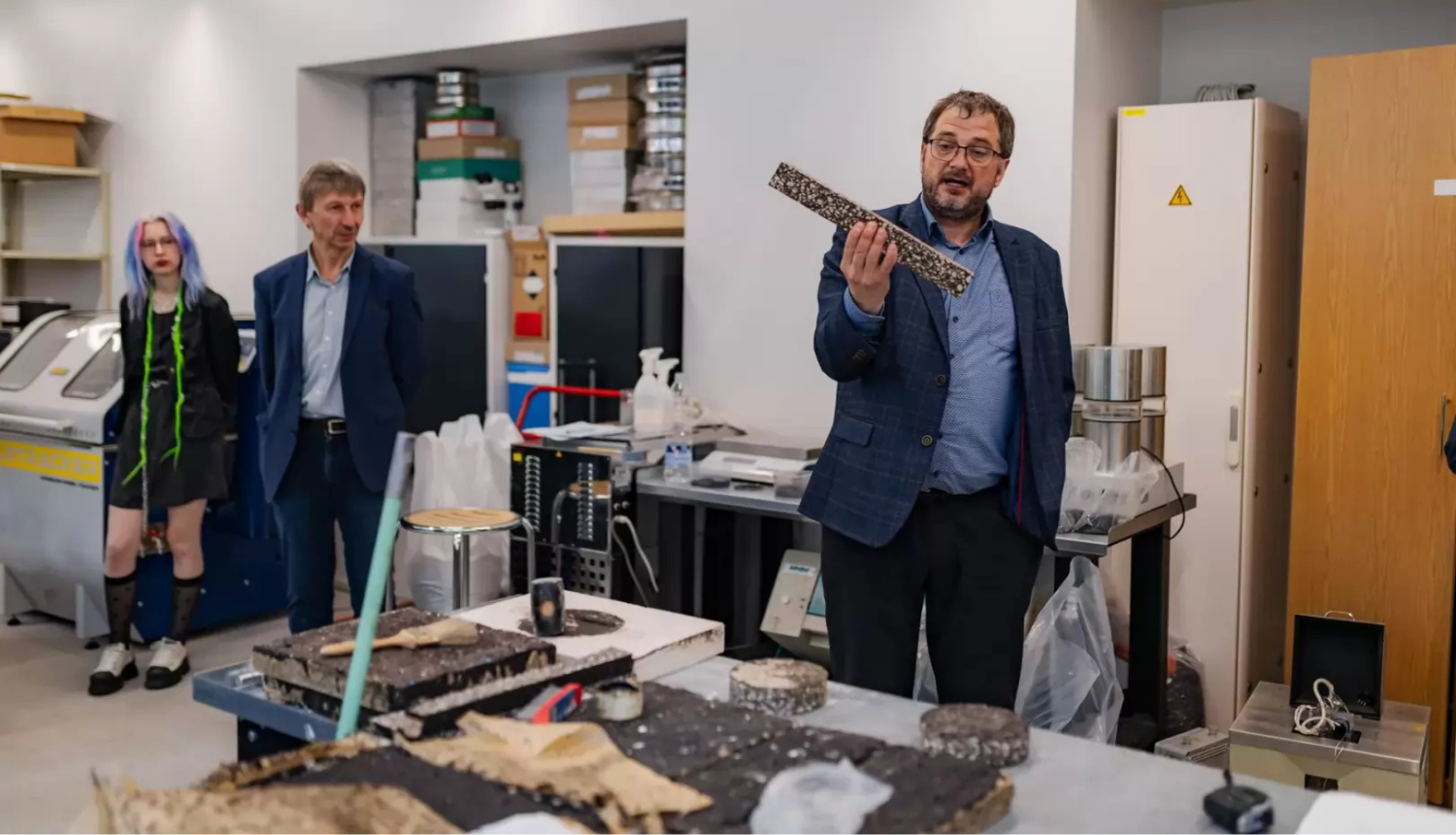
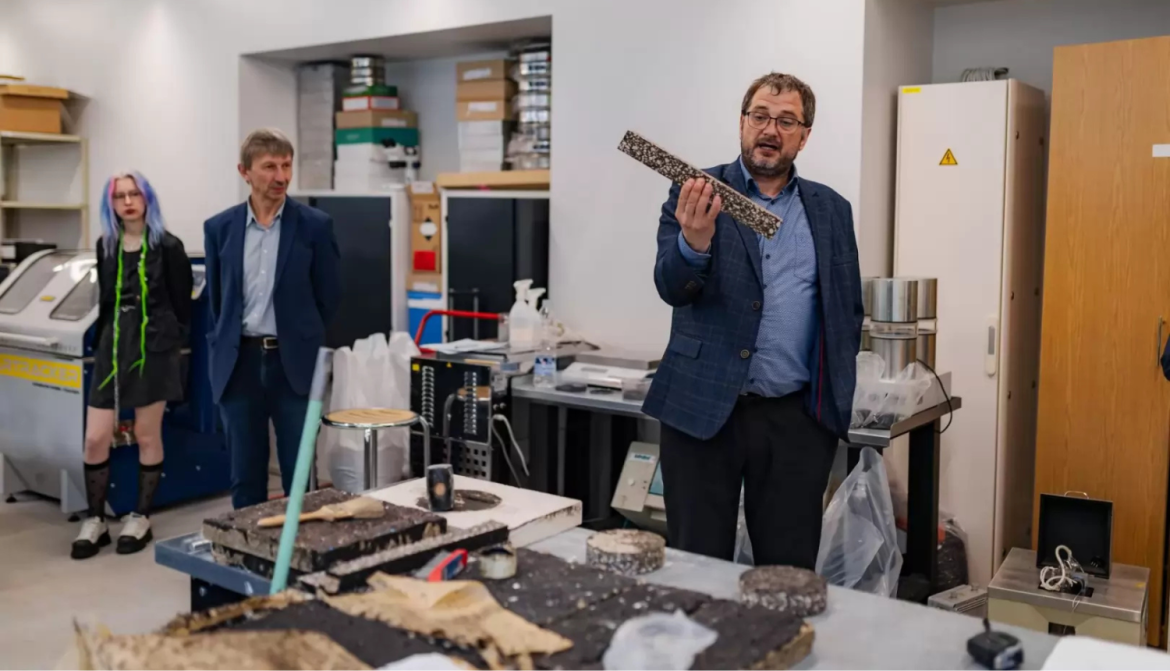
These projects will be supervised by RTU Associate Professor Viktors Haritonovs and Empa Bitumen Materials Group Leader Mārtiņš Zaumanis.
More information is available.
Also watch the video story about Dr.sc.ing. Mārtiņš Zaumanis work in road construction technology and materials research. In 2022, Mārtiņš was one of the 12 scientific personalities in the science calendar created by the Ministry of Education and Science. He is currently a project manager at the Swiss Institute for Materials and Technology Empa.
The vacancies are announced within the framework of the Swiss–Latvian cooperation program “Applied Research” project LACHMAT.
As part of the project, master's students will receive a salary of €12/hour for 160 hours per month for six months and will spend three months at Empa.
To apply, candidates must have a bachelor’s degree in civil engineering, transport construction, materials science, or an equivalent field. They must also have Latvian language proficiency at A2 level and English at B2 level, an interest in laboratory work, the ability to collect and analyse results, and write scientific publications.
Applicants are invited to send a motivation letter expressing their interest in the specified topic and a CV to: lachmat@rtu.lv
Applicants will be evaluated by the project’s supervisory board, composed of scientists from RTU and Empa. The RTU board members include Viktors Haritonovs, Māris Šinka, Rem Merijs-Meri, Gennadiy Shahmenko, Mārtiņš Vilnītis, and Jānis Braunfelds. Empa is represented by Mārtiņš Zaumanis, Nikolajs Toropovs, Pietro Lura, Kristina Primerano, Martin Hugener, Martin Arraigada, Ellina Bernard, and Jānis Justs.
The LACHMAT project under the Swiss–Latvian cooperation program “Applied Research” will be implemented until 2029. Researchers from the RTU Faculties of Civil and Mechanical Engineering and Natural Sciences and Technologies will closely collaborate and with Empa scientists. The collaboration will focus on improving technologies for pavement recycling and incorporating bio-based additives into asphalt development, making the road construction industry more environmentally friendly. It will also contribute to the development of ultra-high-performance sprayable concrete, extending bridge lifespans and reducing the need for reconstruction.
Additionally, work will continue on sensor technologies embedded in pavement to monitor changes in surface condition and traffic and to help adapt roads to climate change. To promote the sustainability of 3D-printed concrete, scientists will also develop concrete mixtures using locally sourced minerals.
The “Applied Research” program is part of Switzerland’s contribution to EU member states, aimed at promoting scientific excellence, innovation, and economic development. Latvia has been allocated €12.3 million for scientific and research development under this program, enabling the implementation of major projects, the creation of innovations, and the strengthening of international cooperation.
Vacancies for doctoral and postdoctoral positions have already been announced. In autumn, the first competition for school students will be launched, offering scholarships for scientific research projects. School and university students interested in participating are encouraged to contact the project implementers.
More information about the project is available.